• Fri frakt över 249 kr
  • •
  • Snabba leveranser
  • •
  • Billiga böcker
Kundservice

Du är på sajten för privatpersoner.

Företag, bibliotek eller offentlig verksamhet?

Du handlar på classic.bokus.com, där alla dina funktioner finns intakta.
Till classic.bokus.com
Bokus logotyp. Gå till startsidan.
  • Erbjudanden
  • Nyheter
  • Student
  • Topplistor
  • Barn & ungdom
  • Bokus Play
  • E-böcker
  • Pocketböcker
  • Spel & pussel

10% rabatt på allt med kod: NYSTART10 →

Sidfot

Mina sidor

    Hjälp

    • Kundservice
    • Vanliga frågor och svar
    • Frakt och leverans
    • Retur vid ångerrätt
    • Reklamera vara
    • Betalning
    • Köpvillkor
    • Allmänna villkor
    • Information om webbplatsens tillgänglighet

    Om Bokus

    • Om oss
    • Pressrum
    • För studenter
    • För företag
    • För bibliotek och offentlig verksamhet
    • För leverantörer
    • Hållbarhet

    Populärt

    • Aktuella erbjudanden
    • Presentkort
    • Studentlitteratur
    • Nya böcker
    • Topplistor
    • Signerade böcker
    • Engelska böcker

    Inspiration

    • Boktips
    • BookTok
    • Populära bokserier
    • Barnbokskaraktärer
    • Populära författare
    Logotyp för Bokus
    Följ oss på Facebook (extern länk)Följ oss på Instagram (extern länk)Följ oss på YouTube (extern länk)Följ oss på TikTok (extern länk)
    bokus @ CookiesAnpassa cookiesIntegritetspolicyKöpvillkor
    Till Citymail hemsida (extern länk)Till Budbee hemsida (extern länk)Till Postnord hemsida (extern länk)Till Schenker hemsida (extern länk)Till Early Bird hemsida (extern länk)Till Walleys hemsida (extern länk)
    1. Naturvetenskap och teknik
    2. Matematik och naturvetenskap
    3. Biologi
    4. Biovetenskap

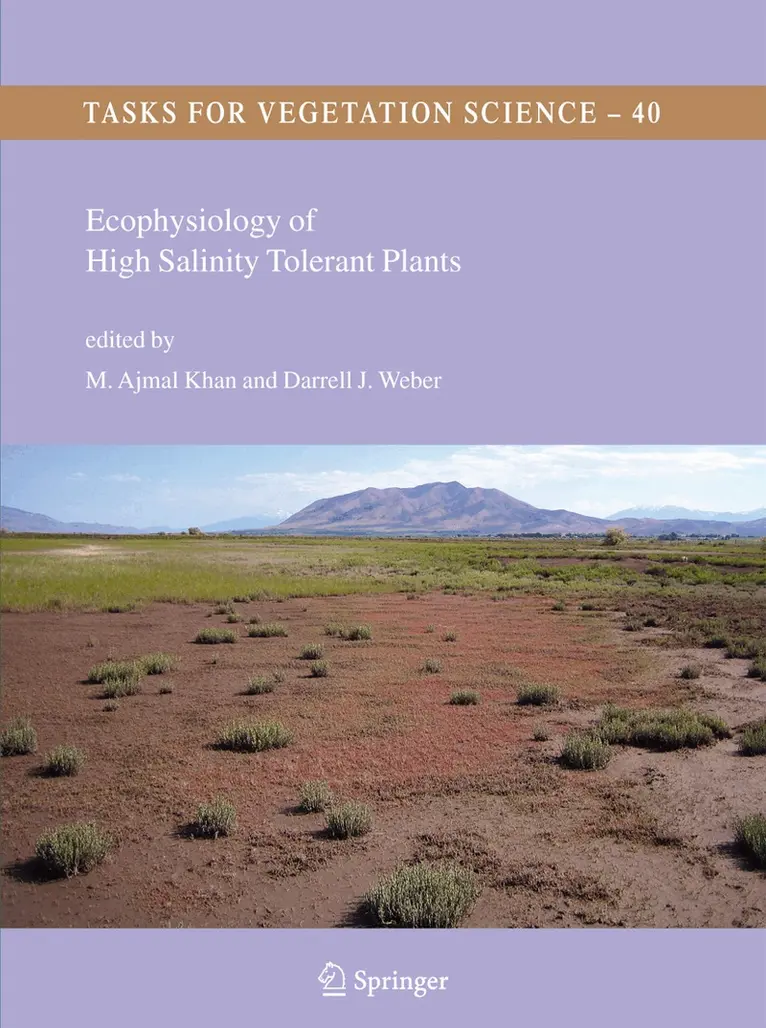
    Ecophysiology of High Salinity Tolerant Plants

    AvM. Ajmal Khan,Darrell J. Weber

    Häftad, Engelska, 2008

    Del 40 i serien Tasks for Vegetation Science

    2 165 kr

    Beställningsvara. Skickas inom 10-15 vardagar. Fri frakt över 249 kr.

    Beskrivning

    The halophytes are highly specialized plants, which have greater tolerance to salt. They can germinate, grow and reproduce successfully in saline areas which would cause the death of regular plants. Most halophytic species are found in salt marsh systems along seashores or around landlocked inland lakes and flat plains with high evaporation. The halophytes play very significant role in the saline areas specially in the coast by overcoming the salinity in different ways, viz. with regulating mechanisms in which excess salts are excreted and with out regulating mechanism, which may include succulents or cumulative types. Besides that they protect coast from erosion and cyclones, provide feeding ground and nursery for fish, shrimps and birds. Halophytes get increasing attention today because of the steady increase of the salinity in irrigation systems in the arid and semi-arid regions where the increasing population reaches the limits of freshwater availability. In many countries, halophytes have been successfully grown on saline wasteland to provide animal fodder and have the potential for rehabilitation and even reclamation of these sites. The value of certain salt-tolerant grass species has been recognized by their incorporation in pasture improvement programs in many salt affected regions throughout the world. There have been recent advances in selecting species with high biomass and protein levels in combination with their ability to survive a wide range of environmental conditions, including salinity.

    Produktinformation

    • Utgivningsdatum:2008-10-10
    • Mått:193 x 260 x 23 mm
    • Vikt:872 g
    • Format:Häftad
    • Språk:Engelska
    • Serie:Tasks for Vegetation Science
    • Antal sidor:399
    • Upplaga:2006
    • Förlag:Springer-Verlag New York Inc.
    • ISBN:9781402092985

    Utforska kategorier

    • Biovetenskap inom Naturvetenskap och teknik

    Innehållsförteckning

    • How Salts Of Sodium, Potassium, And Sulfate Affect The Germination And Early Growth Of Atriplex Acanthocarpa (Chenopodiaceae).- Halophyte Seed Germination.- Salt Tolerance Of Some Potential Forage Grasses From Cholistan Desert Of Pakistan.- Variability Of Fruit And Seed-Oil Characteristics In Tunisian Accessions Of The Halophyte Cakile Maritima (Brassicaceae).- Salt Tolerant Plants From The Great Basin Region Of The United States.- Role Of Calcium In Alleviating Salinity Effects In Coastal Halophytes.- Calorespirometric Metabolism And Growth In Response To Seasonal Changes Of Temperature And Salt.- Evaluation Of Anthocyanin Contents Under Salinity (Nacl) Stress In Bellis Perennis L..- A Comparative Study On Responses Of Growth And Solute Composition In Halophytes Suaeda Salsa And Limonium Bicolor To Salinity.- Alleviation Of Salinity Stress In The Seeds Of Some Brassica Species.- Saline Tolerance Physiology In Grasses.- Localization Of Potential Ion Transport Pathways In The Salt Glands Of The Halophyte Sporobolus Virginicus.- Cellular Responses To Salinity Of Two Coastal Halophytes With Different Whole Plant Tolerance: Kosteletzkya Virginica (L.) Presl. And Sporobolus Virginicus (L.) Kunth.- Eco-Physiological Studies On Indian Desert Plants: Effect Of Salt On Antioxidant Defense Systems In Ziziphus Spp.- Sabkha Edge Vegetation Of Coastal And Inland Sabkhat In Saudi Arabia.- Analysis Of The Soil Sustaining Salt Grass (Distichlis Spicata (L.) Greene) Wild Populations In A Semiarid Coastal Zone Of Mexico.- Comparative Salt Tolerance Of Perennial Grasses.- Commercial Application Of Halophytic Turfs For Golf And Landscape Developments Utilizing Hyper-Saline Irrigation.- Salt Tolerance Of Floriculture Crops.- Utilization Of Salt-Affected Soils By Growing Some Acacia Species.- Soil Remediation Via Salt-Conduction And The Hypotheses Of Halosynthesis And Photoprotection.- Mechanisms Of Cash Crop Halophytes To Maintain Yields And Reclaim Saline Soils In Arid Areas.- Halophyte Uses For The Twenty-First Century.- Halophyte Research And Development: What Needs To Be Done Next ?.