• Fri frakt över 249 kr
  • •
  • Snabba leveranser
  • •
  • Billiga böcker
Kundservice

Du är på sajten för privatpersoner.

Företag, bibliotek eller offentlig verksamhet?

Du handlar på classic.bokus.com, där alla dina funktioner finns intakta.
Till classic.bokus.com
Bokus logotyp. Gå till startsidan.
  • Erbjudanden
  • Nyheter
  • Student
  • Topplistor
  • Barn & ungdom
  • Bokus Play
  • E-böcker
  • Pocketböcker
  • Spel & pussel

10% rabatt på allt med kod NYSTART10 →

Sidfot

Mina sidor

    Hjälp

    • Kundservice
    • Vanliga frågor och svar
    • Frakt och leverans
    • Retur vid ångerrätt
    • Reklamera vara
    • Betalning
    • Köpvillkor
    • Allmänna villkor
    • Information om webbplatsens tillgänglighet

    Om Bokus

    • Om oss
    • Pressrum
    • För studenter
    • För företag
    • För bibliotek och offentlig verksamhet
    • För leverantörer
    • Hållbarhet

    Populärt

    • Aktuella erbjudanden
    • Presentkort
    • Studentlitteratur
    • Nya böcker
    • Topplistor
    • Signerade böcker
    • Engelska böcker

    Inspiration

    • Boktips
    • BookTok
    • Populära bokserier
    • Barnbokskaraktärer
    • Populära författare
    Logotyp för Bokus
    Följ oss på Facebook (extern länk)Följ oss på Instagram (extern länk)Följ oss på YouTube (extern länk)Följ oss på TikTok (extern länk)
    bokus @ CookiesAnpassa cookiesIntegritetspolicyKöpvillkor
    Till Citymail hemsida (extern länk)Till Budbee hemsida (extern länk)Till Postnord hemsida (extern länk)Till Schenker hemsida (extern länk)Till Early Bird hemsida (extern länk)Till Walleys hemsida (extern länk)
    1. Ekonomi och Ledarskap
    2. Ledarskapsböcker

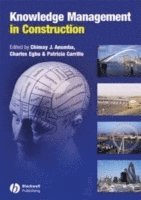
    Knowledge Management in Construction

    AvAnumba,Carrillo

    Inbunden, Engelska, 2005

    1 505 kr

    Beställningsvara. Skickas inom 5-8 vardagar. Fri frakt över 249 kr.

    Beskrivning

    A key problem facing the construction industry is that all work is done by transient project teams, and in the past there has been no structured approach to learning from projects once they are completed. Now, though, the industry is adapting concepts of knowledge management to improve the situation. This book brings together 13 contributors from research and industry to show how managing construction knowledge can bring real benefits to organisations and projects. It covers a wide range of issues, from basic definitions and fundamental concepts, to the role of information technology, and engendering a knowledge sharing culture. Practical examples from construction and other industry sectors are used throughout to illustrate the various dimensions of knowledge management. The challenges of implementing knowledge management are outlined and the ensuing benefits highlighted.

    Produktinformation

    • Utgivningsdatum:2005-05-06
    • Mått:253 x 178 x 20 mm
    • Vikt:560 g
    • Format:Inbunden
    • Språk:Engelska
    • Antal sidor:240
    • Förlag:John Wiley and Sons Ltd
    • ISBN:9781405129725

    Utforska kategorier

    • Ledarskapsböcker inom Ekonomi och Ledarskap
    • Byggnadsteknik inom Naturvetenskap och teknik

    Mer om författaren

    Chimay Anumba is Professor of Construction Engineering and Informatics, and Founding Director of the Centre for Innovative Construction Engineering, at Loughborough University.Charles Egbu is Professor of Construction and Project Management at Glasgow Caledonian University.Patricia Carrillo is Senior Lecturer in Construction Management in the Department of Civil & Building Engineering, Loughborough University.

    Recensioner i media

    'This book provides practical guidance and I consider it essential reading for all participants in the construction process.' Sir Michael Latham 'This book gives us many excellent examples of the importance of KM and how KM can be used and implemented in a project-based industry such as construction' Journal of Human Resource Costing & Accounting

    Innehållsförteckning

    • Chapter 1 INTRODUCTION. Chapter 2 NATURE AND DIMENSIONS OF KNOWLEDGE MANAGEMENT.2.1 Introduction; 2.2 Why knowledge management now? The Drivers; 2.3 Nature of knowledge; 2.4 Extra organisational knowledge and absorptive capacity; 2.5 Key knowledge processes; 2.6 Conclusions.Chapter 3 CONSTRUCTION AS A KNOWLEDGE-BASED INDUSTRY.3.1 Introduction; 3.2 Construction industry and knowledge intensive products and services; 3.3 Knowledge production in Construction; 3.4 Communicating and sharing knowledge; 3.5 Creating and sustaining a knowledge culture; 3.6 Conclusions.Chapter 4 THE BUSINESS CASE FOR KNOWLEDGE MANAGEMENT.4.1 Introduction; 4.2 What does Knowledge Management mean to Construction?; 4.3 What Knowledge Management strategy should be adopted?; 4.4 Delivering Knowledge Management in practice; 4.5 A business case for Knowledge Management; 4.6 The Future.Chapter 5 ORGANISATIONAL READINESS FOR KNOWLEDGE MANAGEMENT.5.1 Introduction; 5.2 Importance of knowledge lifecycle management (KLM); 5.3 Preparing the organisational context for KLM; 5.4 Conclusions.Chapter 6 TOOLS AND TECHNIQUES FOR KNOWLEDGE MANAGEMENT.6.1 Introduction; 6.2 Knowledge management tools; 6.3 Selecting Knowledge management tools; 6.4 The SeLEKT approach; 6.5 Conclusions.Chapter 7 CROSS-PROJECT KNOWLEDGE MANAGEMENT.7.1 Introduction; 7.2 Nature of projects; 7.3 Construction projects; 7.4 Cross project knowledge transfer; 7.5 Live capture and re-use of project knowledge; 7.6 Conclusions.Chapter 8 KNOWLEDGE MANAGEMENT AS A DRIVER FOR INNOVATION.8.1 Introduction; 8.2 Knowledge management and innovations - building and maintaining capabilities; 8.3 Knowledge management and improved innovations: Issues of strategy, process, structure, culture and technology; 8.4 Managing knowledge for exploitations: Implications for managers; 8.5 Conclusions.Chapter 9 PERFORMANCE MEASUREMENT IN KNOWLEDGE MANAGEMENT.9.1 Introduction; 9.2 Why measure the performance of knowledge management and knowledge assets; 9.3 Types of performance measures; 9.4 Measurement approaches; 9.5 Application tools; 9.6 Conclusions.Chapter 10 KM STATEGY DEVELOPMENT: A CLEVER APPROACH.10.1 Introduction; 10.2 The CLEVER project; 10.3 The Clever Framework; 10.4 Utilisation and Evaluation of the Framework; 10.5 Conclusions;.Chapter 11 CORPORATE MEMORY.11.1 Introduction; 11.2 Research Methodology; 11.3 Related Research; 11.4 Tacit knowledge, capture, sharing and reuse; 11.5 Tacit and explicit knowledge capture, sharing and reuse; 11.6 Conclusions.Chapter 12 BUILDING A KNOWLEDGE SHARING CULTURE IN CONSTRUCTION PROJECT TEAMS.12.1 Introduction; 12.2 Case study; 12.3 Discussion; 12.4 Conclusions.Chapter 13 CONCLUDING NOTES.13.1 Introduction; 13.2 Summary; 13.3 Benefits of knowledge management to construction organisations; 13.4 Issues in knowledge management implementation; Future directions