Charles Egbu – författare
1 756 kr
Läs direkt efter köp
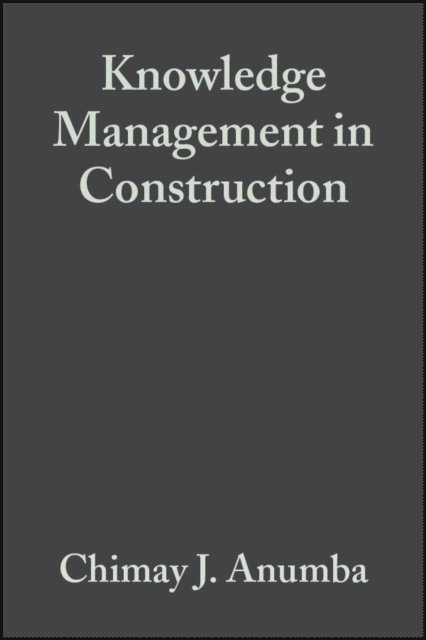
This book brings together 13 contributors from research and industry to show how managing construction knowledge can bring real benefits to organisations and projects. It covers a wide range of issues, from basic definitions and fundamental concepts, to the role of information technology, and engendering a knowledge sharing culture. Practical examples from construction and other industry sectors are used throughout to illustrate the various dimensions of knowledge management. The challenges of implementing knowledge management are outlined and the ensuing benefits highlighted.
908 kr
Läs direkt efter köp
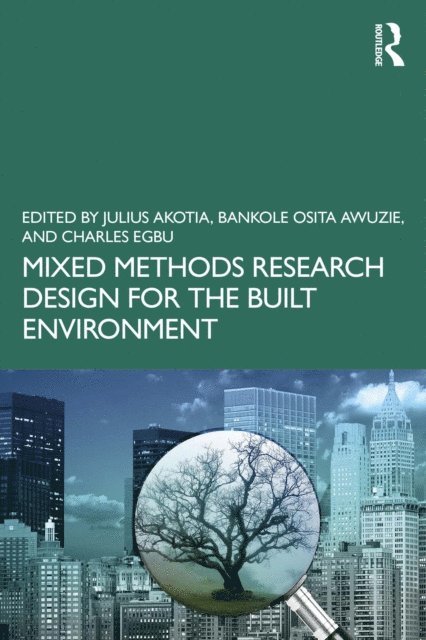
The application of mixed methods research design in the built environment discipline by students and academics has continued to grow exponentially. However, with no dedicated mixed methods research design textbook in this domain, students have struggled to conduct research projects involving a mixed methods research design.
Mixed Methods Research Design for the Built Environment provides a useful research methodology resource for students, academics, and researchers across various disciplines in the built environment such as construction management and project management, property and real estate management, quantity surveying and commercial management, building surveying, building services engineering, civil and geodetic engineering, and other built environment disciplines. The book can also be useful for students and academics outside the built environment knowledge domain.
This textbook offers practical and step-by-step guidance on how to apply mixed methods research design, including an elucidation of the various philosophical and methodological underpinnings upon which the choice of a particular variant of the mixed methods research design is predicated. It provides practical case examples and guidance on the processes involved to design and undertake mixed methods research, the advantages and disadvantages of using mixed methods research, and how multiple sources of qualitative and quantitative data can be combined and applied to carry out research projects.
908 kr
Läs direkt efter köp
The application of mixed methods research design in the built environment discipline by students and academics has continued to grow exponentially. However, with no dedicated mixed methods research design textbook in this domain, students have struggled to conduct research projects involving a mixed methods research design.
Mixed Methods Research Design for the Built Environment provides a useful research methodology resource for students, academics, and researchers across various disciplines in the built environment such as construction management and project management, property and real estate management, quantity surveying and commercial management, building surveying, building services engineering, civil and geodetic engineering, and other built environment disciplines. The book can also be useful for students and academics outside the built environment knowledge domain.
This textbook offers practical and step-by-step guidance on how to apply mixed methods research design, including an elucidation of the various philosophical and methodological underpinnings upon which the choice of a particular variant of the mixed methods research design is predicated. It provides practical case examples and guidance on the processes involved to design and undertake mixed methods research, the advantages and disadvantages of using mixed methods research, and how multiple sources of qualitative and quantitative data can be combined and applied to carry out research projects.
765 kr
Skickas inom 10-15 vardagar
2 422 kr
Skickas inom 10-15 vardagar
962 kr
Skickas inom 10-15 vardagar
358 kr
Skickas inom 10-15 vardagar
421 kr
Läs direkt efter köp
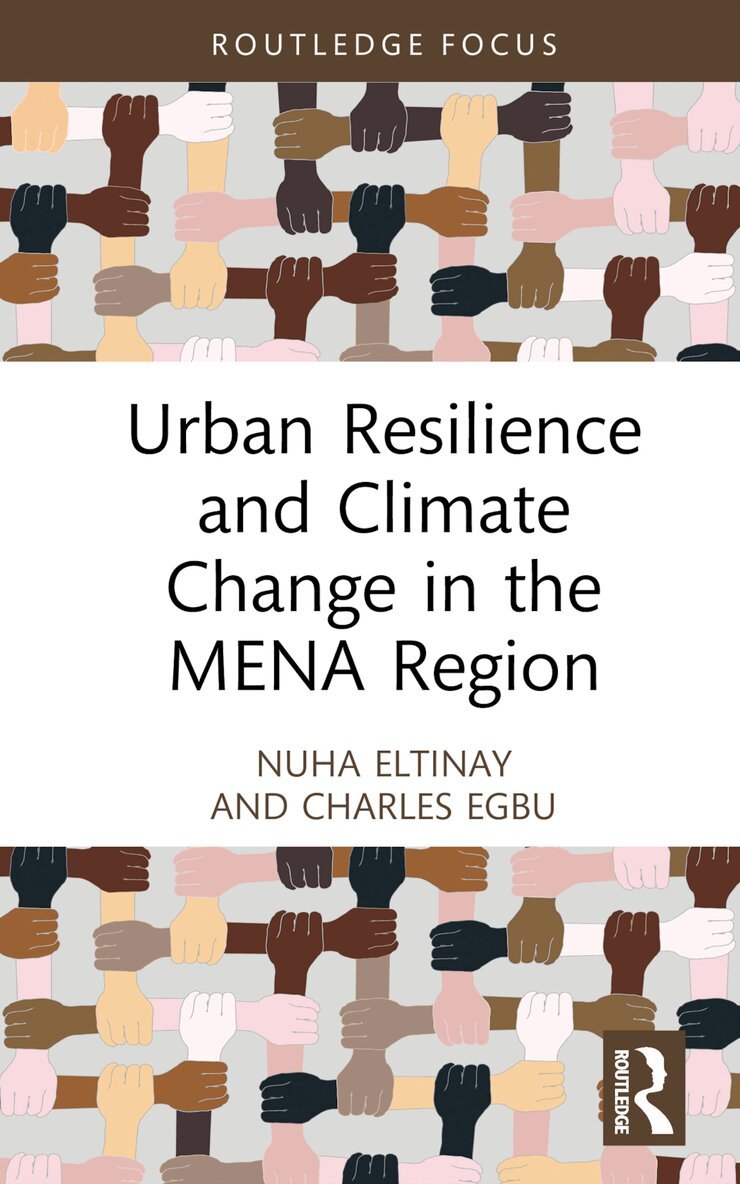
This book provides an overview of the geopolitical context and climate change risk profile of the Middle East and North Africa (MENA) Region.
Mapping existing scientific literature and key reports on MENA climate change impacts and future projections, Nuha Eltinay and Charles Egbu establish links between the Conference of the Parties (from COP26, COP27 to COP28) Glasgow–Sharm el-Sheikh Work Program for Progress on the Global Goal on Adaptation, and regional climate adaptation financing targets, national government investments, and human security in local case studies. They also address gaps in disaster risk reduction institutional governance for sustainable development in the region. The authors move beyond the existing theoretical understanding of urban resilience to investigate how it is being measured and assessed in MENA in alignment with the IPCC’s climate change adaptation indicators. Finally, they explore how disasters and conflict displacement vulnerabilities and fragility affecting the communities most in need are being measured and integrated into cities’ resilience action plans and national disaster risk policies.
Providing guidance and policy recommendations based on empirical research and key stakeholder engagement observations, this book will be of great interest to students, scholars, and professionals who are researching and working in the areas of climate change, urban planning, and environmental policy and governance.
As this book comes out just after the closure of The United Nations Climate Change Conference COP28 negotiations, it sets the scene for pre-COP regional context, and paves the way for researchers and practitioners to undertake post-COP28 key takeaways and multi-level government commitments into action, for better climate mitigation and adaptation investments, resilient and sustainable future for all.
421 kr
Läs direkt efter köp
This book provides an overview of the geopolitical context and climate change risk profile of the Middle East and North Africa (MENA) Region.
Mapping existing scientific literature and key reports on MENA climate change impacts and future projections, Nuha Eltinay and Charles Egbu establish links between the Conference of the Parties (from COP26, COP27 to COP28) Glasgow–Sharm el-Sheikh Work Program for Progress on the Global Goal on Adaptation, and regional climate adaptation financing targets, national government investments, and human security in local case studies. They also address gaps in disaster risk reduction institutional governance for sustainable development in the region. The authors move beyond the existing theoretical understanding of urban resilience to investigate how it is being measured and assessed in MENA in alignment with the IPCC’s climate change adaptation indicators. Finally, they explore how disasters and conflict displacement vulnerabilities and fragility affecting the communities most in need are being measured and integrated into cities’ resilience action plans and national disaster risk policies.
Providing guidance and policy recommendations based on empirical research and key stakeholder engagement observations, this book will be of great interest to students, scholars, and professionals who are researching and working in the areas of climate change, urban planning, and environmental policy and governance.
As this book comes out just after the closure of The United Nations Climate Change Conference COP28 negotiations, it sets the scene for pre-COP regional context, and paves the way for researchers and practitioners to undertake post-COP28 key takeaways and multi-level government commitments into action, for better climate mitigation and adaptation investments, resilient and sustainable future for all.
622 kr
Skickas inom 5-8 vardagar
1 509 kr
Skickas inom 5-8 vardagar