• Fri frakt över 249 kr
  • •
  • Snabba leveranser
  • •
  • Billiga böcker
Kundservice

Du är på sajten för privatpersoner.

Företag, bibliotek eller offentlig verksamhet?

Du handlar på classic.bokus.com, där alla dina funktioner finns intakta.
Till classic.bokus.com
Bokus logotyp. Gå till startsidan.
  • Erbjudanden
  • Student
  • Topplistor
  • Barn & ungdom
  • Bokus Play
  • E-böcker
  • Ljudböcker
  • Pocketböcker
  • Spel och pussel

Pocketfynda! Hundratals böcker för 49 kr/st →

Sidfot

Mina sidor

    Hjälp

    • Kundservice
    • Vanliga frågor och svar
    • Frakt och leverans
    • Retur vid ångerrätt
    • Reklamera vara
    • Betalning
    • Köpvillkor
    • Allmänna villkor
    • Information om webbplatsens tillgänglighet

    Om Bokus

    • Om oss
    • Pressrum
    • För studenter
    • För företag
    • För bibliotek och offentlig verksamhet
    • För leverantörer
    • Hållbarhet

    Populärt

    • Aktuella erbjudanden
    • Presentkort
    • Studentlitteratur
    • Nya böcker
    • Topplistor
    • Signerade böcker
    • Engelska böcker

    Inspiration

    • Boktips
    • BookTok
    • Barnbokskaraktärer
    • Populära författare
    Logotyp för Bokus
    Följ oss på Facebook (extern länk)Följ oss på Instagram (extern länk)Följ oss på YouTube (extern länk)Följ oss på TikTok (extern länk)
    bokus @ CookiesAnpassa cookiesIntegritetspolicyKöpvillkor
    Till Citymail hemsida (extern länk)Till Budbee hemsida (extern länk)Till Postnord hemsida (extern länk)Till Schenker hemsida (extern länk)Till Early Bird hemsida (extern länk)Till Walleys hemsida (extern länk)
    1. Filosofi och religion
    2. Filosofi
    3. Filosofiska discipliner

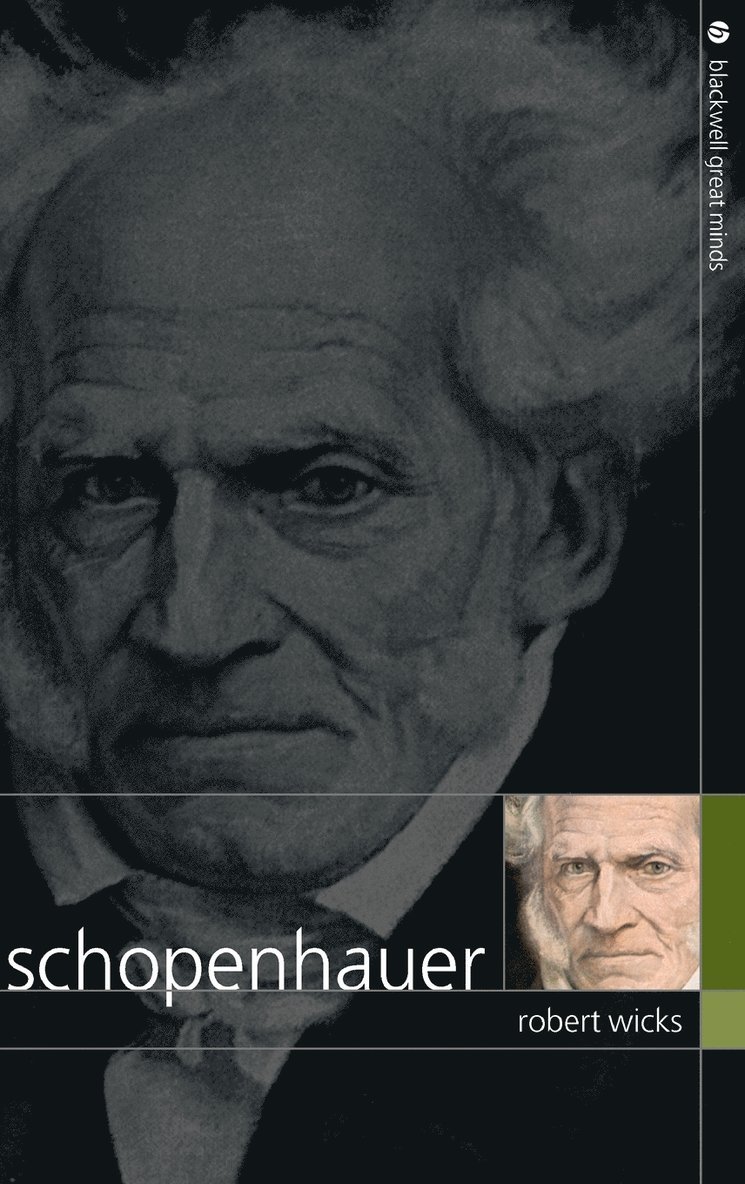
    Schopenhauer

    AvRobert J. Wicks

    Inbunden, Engelska, 2008

    Del 25 i serien Blackwell Great Minds

    1 160 kr

    Beställningsvara. Skickas inom 5-8 vardagar. Fri frakt över 249 kr.

    Fler format och utgåvor

    E-bok

    1 341 kr

    Häftad

    374 kr

    Beskrivning

    This innovative volume presents an insightful philosophical portrait of the life and work of Arthur Schopenhauer. Focuses on the concept of the sublime as it clarifies Schopenhauer's aesthetic theory, moral theory and asceticismExplores the substantial relationships between Schopenhauer's philosophy and Buddhism, Hinduism, and ChristianityDefends Schopenhauer's position that absolute truth can be known and described as a blindly striving, all-permeating, universal "Will";Examines the influence of Asian philosophy on SchopenhauerDescribes the relationships between Schopenhauer's thought and that of Hegel, Nietzsche, and Wittgenstein.

    Produktinformation

    • Utgivningsdatum:2008-03-28
    • Mått:165 x 239 x 23 mm
    • Vikt:463 g
    • Format:Inbunden
    • Språk:Engelska
    • Serie:Blackwell Great Minds
    • Antal sidor:216
    • Förlag:John Wiley and Sons Ltd
    • ISBN:9781405134798

    Utforska kategorier

    • Filosofiska discipliner inom Filosofi och religion

    Mer om författaren

    Robert Wicks is Associate Professor of Philosophy at the University of Auckland. He is the author of Modern French Philosophy: From Existentialism to Postmodernism (2003), Nietzsche (2002), and Hegel's Theory of Aesthetic Judgment (1994). He is also the author of the Stanford Encyclopedia of Philosophy entry on Schopenhauer.

    Recensioner i media

    “Perhaps because its potential readership is scarcely larger than the potential authorship, the genre of introductory books on Schopenhauer is of uniformly high quality. The great pessimist would surely be confounded and joyful at the situation, but books whose titles contain little if anything other than the name ‘Schopenhauer’ are generally excellent. I am pleased to report that Robert Wicks's recent effort is no exception.” (Notre Dame Philosophical Reviews)

    Innehållsförteckning

    • Preface. Acknowledgments.Abbreviations.Chapter One: The Philosophy of a Nonconformist (1788-1860).I. The Unsettled Years: 1788-1831.II. The Stable Years: 1833-1860.Part I: Schopenhauer’s Theoretical Philosophy.Chapter Two: Historical Background.I. Mind-Dependent Qualities versus Mind-Independent Qualities.II. Space and Time.Chapter Three: The Principle of Sufficient Reason.I. The Root of All Explanation.II. The Four Basic Forms of Explanation.Chapter Four: Schopenhauer’s Idealism and his Criticism of Kant.I. The Rejection of a Mind-Independent Reality.II. Kant’s Theory of Perception.III. Kant’s Use of the Term “Object”.IV. The Logic of Manifestation.Chapter Five: The World in Itself as a Meaningless and Almighty Will.I. Universal Subjectivity.II. The World as Will.III. The Two-Tiered Objectification of the Will: Platonic Ideas and Spatio-Temporal Individuals.Chapter Six: Critical Interpretations of the World as Will.I. Scientific Knowledge, Philosophical Knowledge, and Mystical Knowledge.II. Regular Time versus the Eternal Present.Part II: Schopenhauer’s Practical Philosophy.Chapter Seven: Endless Suffering in the Daily World.I. A Universal Will Without Purpose.II. The Purposelessness of Schopenhauer’s Thing-in-Itself.III. Life as Embittering: Schopenhauer and Buddhism.Chapter Eight: Tranquility I: Sublimity, Genius, and Aesthetic Experience.I. Platonic Ideas and Aesthetic Experience.II. Artistic Genius and the Communication Theory of Art.III. The Hierarchy of the Visual and Verbal Arts.IV. Tragedy and Sublimity.V. Music and Metaphysical Experience.Chapter Nine: Tranquility II: Christlike Virtue and Moral Awareness.I. Empathy as the Foundation of Moral Awareness.II. Intelligible, Empirical, and Acquired Character.III. Humanity’s Sublime Anguish.Chapter Ten: Tranquility III: Asceticism, Mysticism, and Buddhism.I. The Possibility of the Denial-of-the-Will.II. Christian Quietism, Yogic Ecstasy, and Buddhist Enlightenment.III. Asceticism and Spiritual Purification.Part III: Schopenhauer in Perspective.Chapter Eleven: Schopenhauer, Nietzsche, and Eternal Life.I. The Question of Life’s Value.II. Funereal Imagery and Nietzsche’s Theory of Tragedy.III. Schopenhauer’s Moral Awareness and Eternal Recurrence.IV. The Eternalistic Illusion of Supreme Health.V. Nietzsche’s Madness and Eternalistic Consciousness.Chapter Twelve: Schopenhauer, Hegel, and Alienated Labor.I. The World’s Essence: Rational or Irrational?.II. Labor, Imprisonment, and Christianity.III. The World as Will and Representation and “Self-Consciousness” in Hegel’s.Phenomenology.Chapter Thirteen: Schopenhauer, Wittgenstein, and the Unspeakable.I. The Quest for Absolute Value.II. What the Philosophical Investigations Cannot Say.Conclusion: Idealism and the Will to Peace.I. The Plausibility of Schopenhauer’s Idealism.II. The Explanatory Weakness of a Blind and Senseless Will.III. The Prospect of Peace.Bibliography