• Fri frakt över 249 kr
  • •
  • Snabba leveranser
  • •
  • Billiga böcker
Kundservice

Du är på sajten för privatpersoner.

Företag, bibliotek eller offentlig verksamhet?

Du handlar på classic.bokus.com, där alla dina funktioner finns intakta.
Till classic.bokus.com
Bokus logotyp. Gå till startsidan.
  • Erbjudanden
  • Nyheter
  • Student
  • Topplistor
  • Barn & ungdom
  • Bokus Play
  • E-böcker
  • Pocketböcker
  • Spel & pussel

10% rabatt på allt med kod: NYSTART10 →

Sidfot

Mina sidor

    Hjälp

    • Kundservice
    • Vanliga frågor och svar
    • Frakt och leverans
    • Retur vid ångerrätt
    • Reklamera vara
    • Betalning
    • Köpvillkor
    • Allmänna villkor
    • Information om webbplatsens tillgänglighet

    Om Bokus

    • Om oss
    • Pressrum
    • För studenter
    • För företag
    • För bibliotek och offentlig verksamhet
    • För leverantörer
    • Hållbarhet

    Populärt

    • Aktuella erbjudanden
    • Presentkort
    • Studentlitteratur
    • Nya böcker
    • Topplistor
    • Signerade böcker
    • Engelska böcker

    Inspiration

    • Boktips
    • BookTok
    • Populära bokserier
    • Barnbokskaraktärer
    • Populära författare
    Logotyp för Bokus
    Följ oss på Facebook (extern länk)Följ oss på Instagram (extern länk)Följ oss på YouTube (extern länk)Följ oss på TikTok (extern länk)
    bokus @ CookiesAnpassa cookiesIntegritetspolicyKöpvillkor
    Till Citymail hemsida (extern länk)Till Budbee hemsida (extern länk)Till Postnord hemsida (extern länk)Till Schenker hemsida (extern länk)Till Early Bird hemsida (extern länk)Till Walleys hemsida (extern länk)
    1. Samhälle och politik
    2. Samhälle och kultur
    3. Kultur och medier
    4. Referensverk och tvärvetenskap

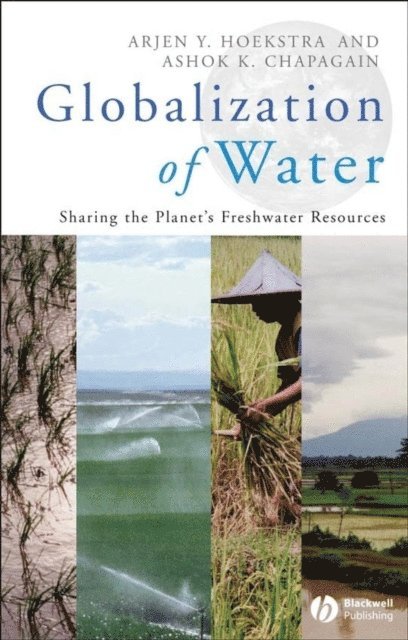
    Globalization of Water

    Sharing the Planet's Freshwater Resources

    AvArjen Y. Hoekstra,Ashok K. Chapagain

    Inbunden, Engelska, 2007

    856 kr

    Beställningsvara. Skickas inom 5-8 vardagar. Fri frakt över 249 kr.

    Beskrivning

    Globalization of Water is a first-of-its-kind review of the critical relationship between globalization and sustainable water management. It explores the impact of international trade on local water depletion and pollution and identifies “water dependent” nations. Examines the critical link between water management and international trade, considering how local water depletion and pollution are often closely tied to the structure of the global economyOffers a consumer-based indicator of each nation’s water use: the water footprintQuestions whether trade can enhance global water use efficiency, or whether it simply shifts the environmental burden to a distant locationHighlights the hidden link between national consumption and the use of water resources across the globe, identifying the threats facing ‘water dependent’ countries worldwideProvides a state-of-the-art review and in-depth data source for a new field of knowledge

    Produktinformation

    • Utgivningsdatum:2007-12-27
    • Mått:160 x 236 x 22 mm
    • Vikt:490 g
    • Format:Inbunden
    • Språk:Engelska
    • Antal sidor:232
    • Förlag:John Wiley and Sons Ltd
    • ISBN:9781405163354

    Utforska kategorier

    • Referensverk och tvärvetenskap inom Samhälle och politik
    • Miljövetenskap och miljöpolitik inom Naturvetenskap och teknik
    • Miljöteknik inom Naturvetenskap och teknik

    Mer om författaren

    Arjen Y. Hoekstra has academic and professional experience in the field of integrated water resources management in various countries and is currently Professor of Multidisciplinary Water Management at the University of Twente, the Netherlands.Ashok K. Chapagain has been an irrigation engineer in Nepal, received his PhD degree at the UNESCO-IHE Institute for Water Education in Delft, the Netherlands, was employed as researcher at the University of Twente, and currently works for the World Wide Fund for Nature in the UK.

    Recensioner i media

    "The main strengths of the book are its clear explanations of the core concepts and the methods used to estimate the movements of virtual water, along with the wealth of empirical evidence on specific countries, regions and commodities. . . While the authors do not explicitly answer all of the questions outlined at the beginning of the book, this is still a well-written and timely contribution that adds some much-needed evidence to the literature on virtual water." (Area, 2011) "This book is a technical research report, , and gives another important strand of firm evidence to support the case for switching to vegan lifestyles". (Vegan, 1 December 2010)“Heightened concern about global climate change makes this book timely and of interest to many readers.” (Choice Reviews, May 2009)"[This book] is an authorative and stimulating book to read. Its main contribution is the excellent use of case studies to illustrate the well-articulated theoretical background of virtual water and its global implications....   A though-provoking book." (South African Geographical Journal, 2008)“The authors propose to reverse the logic of production volumes to consumption volumes. This approach entirely changes all conclusions concerning water stress in the world, dependencies on other countries, and responsibility for water scarcity. This detailed study gives new insights into these mechanisms, leading to a more realistic picture of a country’s water needs. The book contains extensive and detailed tables, with all the data required for an in depth evaluation. The book concludes with some important remarks on fairness, sustainability, responsibility, and price-setting.” (Water Environment and Technology Magazine, December 2008)

    Innehållsförteckning

    • List of Maps. Preface.1. Introduction.2. How much Water is used for Producing our Goods and Services?.3. Virtual-Water Flows between Nations as a Result of Trade in Agricultural and Industrial Products.4. Water Saving through International Trade in Agricultural Products.5. The Water Footprints of Nations.6. The Water Footprints of Morocco and the Netherlands.7. Virtual- versus Real-Water Transfers within China.8. The Water Footprint of Coffee and Tea Consumption.9. The Water Footprint of Cotton Consumption.10. Water as a Geopolitical Resource.11. Efficient, Sustainable, and Equitable Water Use in a Globalized world.Appendix I. Analytical Framework for the Assessment of Virtual-Water content, Virtual-Water Flows, Water Savings, Water Footprints, and Water Dependencies.Appendix II. Virtual-Water Flows per Country Related to International Trade in Crop, Livestock, and Industrial Products.Appendix III. National Water Savings and Losses due to Trade in Agricultural Products.Appendix IV. Water Footprints of Nations.Appendix V. Water Footprint versus Water Scarcity, Self-Sufficiency, and Water Import Dependency per Country.Glossary.References.Index