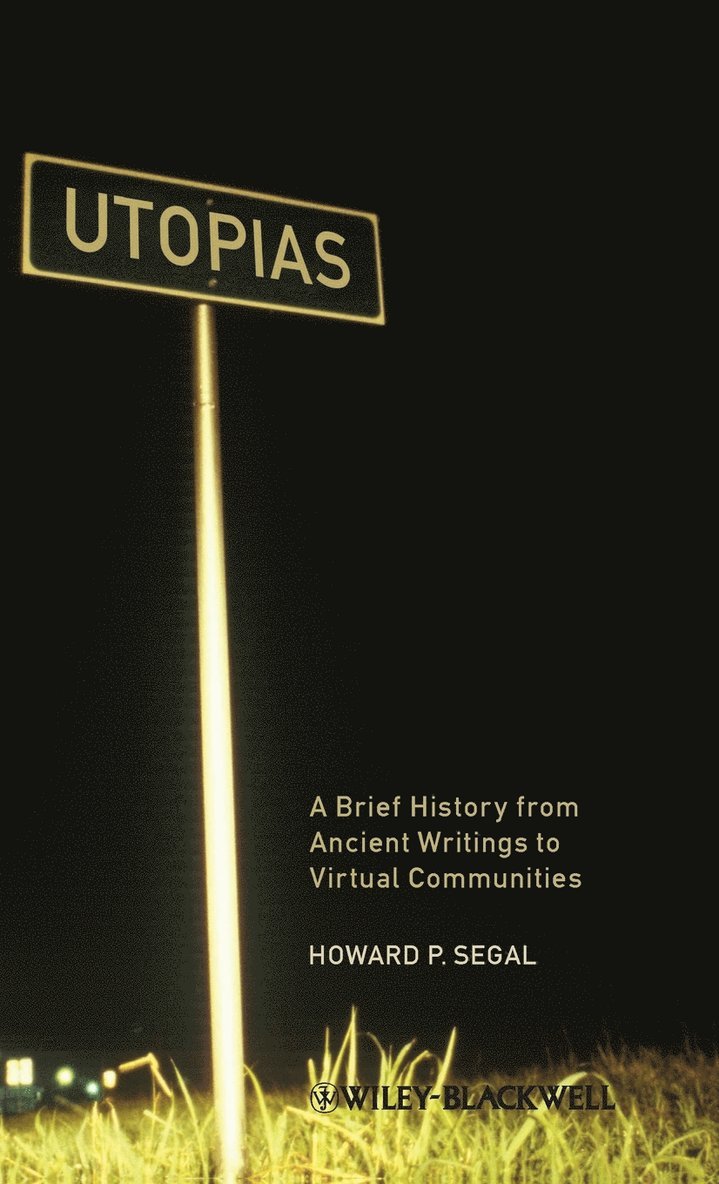
Utopias
A Brief History from Ancient Writings to Virtual Communities
Del 45 i serien Wiley Blackwell Brief Histories of Religion
1 077 kr
Beställningsvara. Skickas inom 5-8 vardagar. Fri frakt över 249 kr.
Du är på sajten för privatpersoner.
Del 45 i serien Wiley Blackwell Brief Histories of Religion
1 077 kr
Beställningsvara. Skickas inom 5-8 vardagar. Fri frakt över 249 kr.
Howard P. Segal is Bird Professor of History at the University of Maine, where he has taught since 1986. He received his M.A. and Ph.D. from Princeton University. His previous books include Technological Utopianism in American Culture (1985), Future Imperfect: The Mixed Blessings of Technology in America (1994), Technology in America: A Brief History (1989, 1999, with Alan Marcus), and Recasting the Machine Age: Henry Ford's Village Industries (2005). He also reviews for, among other publications, Nature and the Times Higher Education.
"Segal does not shy away from bold definitions and delineations to separate utopias from millenarianism and science fiction, from abstract utopias and daydreams. ...Utopias is an accessible and thought-provoking introduction to utopias and utopianism and will appeal to scholars, students, and the general reader alike." (Utopian Studies, 1 October 2015)"In the capable hands of Howard P. Segal, professor of history at the University of Maine, technology rightfully has an important role in the imagination of alternative societies. His concise, well-written book covers utopias ancient and modern, Western and non-Western, and it is not limited to fiction conventionally labeled utopian but includes world’s fairs, social science, digital media, prophecies, millennial movements, and science fiction." (Technology and Culture, 1 October 2015)“To conclude: Segal’s book on utopias is a well-made treatise on an important aspect of European and American history. He convincingly shows that utopias had a political, as well as an economic, relevance. The view on the interaction between different cultural systems, such as art, politics, religion, technology, and economics, is a great strength of the book. It shows how complex processes around utopian visions have been, and how relevant they are for the implementation and change of different cultural spheres.” (Religion, 30 May 2015)“This text provides a unique approach for teaching history and the history of science. Highly recommended. General readers; lower-division undergraduates and above. (Choice, 1 February 2013)“Segal brings considerable scholarship and experience to bear, particularly on the historical intersections between technology and utopia ... [He] covers several continents and many centuries, addressing key texts and thinkers ... [and] supplies impressive coverage and thoughtful interpretations.” (Times Higher Education, 12 July 2012)
Du är på sajten för privatpersoner.
Del 45 i serien Wiley Blackwell Brief Histories of Religion
1 077 kr
Beställningsvara. Skickas inom 5-8 vardagar. Fri frakt över 249 kr.
Howard P. Segal is Bird Professor of History at the University of Maine, where he has taught since 1986. He received his M.A. and Ph.D. from Princeton University. His previous books include Technological Utopianism in American Culture (1985), Future Imperfect: The Mixed Blessings of Technology in America (1994), Technology in America: A Brief History (1989, 1999, with Alan Marcus), and Recasting the Machine Age: Henry Ford's Village Industries (2005). He also reviews for, among other publications, Nature and the Times Higher Education.
"Segal does not shy away from bold definitions and delineations to separate utopias from millenarianism and science fiction, from abstract utopias and daydreams. ...Utopias is an accessible and thought-provoking introduction to utopias and utopianism and will appeal to scholars, students, and the general reader alike." (Utopian Studies, 1 October 2015)"In the capable hands of Howard P. Segal, professor of history at the University of Maine, technology rightfully has an important role in the imagination of alternative societies. His concise, well-written book covers utopias ancient and modern, Western and non-Western, and it is not limited to fiction conventionally labeled utopian but includes world’s fairs, social science, digital media, prophecies, millennial movements, and science fiction." (Technology and Culture, 1 October 2015)“To conclude: Segal’s book on utopias is a well-made treatise on an important aspect of European and American history. He convincingly shows that utopias had a political, as well as an economic, relevance. The view on the interaction between different cultural systems, such as art, politics, religion, technology, and economics, is a great strength of the book. It shows how complex processes around utopian visions have been, and how relevant they are for the implementation and change of different cultural spheres.” (Religion, 30 May 2015)“This text provides a unique approach for teaching history and the history of science. Highly recommended. General readers; lower-division undergraduates and above. (Choice, 1 February 2013)“Segal brings considerable scholarship and experience to bear, particularly on the historical intersections between technology and utopia ... [He] covers several continents and many centuries, addressing key texts and thinkers ... [and] supplies impressive coverage and thoughtful interpretations.” (Times Higher Education, 12 July 2012)
Du är på sajten för privatpersoner.
Del 45 i serien Wiley Blackwell Brief Histories of Religion
1 077 kr
Beställningsvara. Skickas inom 5-8 vardagar. Fri frakt över 249 kr.
Howard P. Segal is Bird Professor of History at the University of Maine, where he has taught since 1986. He received his M.A. and Ph.D. from Princeton University. His previous books include Technological Utopianism in American Culture (1985), Future Imperfect: The Mixed Blessings of Technology in America (1994), Technology in America: A Brief History (1989, 1999, with Alan Marcus), and Recasting the Machine Age: Henry Ford's Village Industries (2005). He also reviews for, among other publications, Nature and the Times Higher Education.
"Segal does not shy away from bold definitions and delineations to separate utopias from millenarianism and science fiction, from abstract utopias and daydreams. ...Utopias is an accessible and thought-provoking introduction to utopias and utopianism and will appeal to scholars, students, and the general reader alike." (Utopian Studies, 1 October 2015)"In the capable hands of Howard P. Segal, professor of history at the University of Maine, technology rightfully has an important role in the imagination of alternative societies. His concise, well-written book covers utopias ancient and modern, Western and non-Western, and it is not limited to fiction conventionally labeled utopian but includes world’s fairs, social science, digital media, prophecies, millennial movements, and science fiction." (Technology and Culture, 1 October 2015)“To conclude: Segal’s book on utopias is a well-made treatise on an important aspect of European and American history. He convincingly shows that utopias had a political, as well as an economic, relevance. The view on the interaction between different cultural systems, such as art, politics, religion, technology, and economics, is a great strength of the book. It shows how complex processes around utopian visions have been, and how relevant they are for the implementation and change of different cultural spheres.” (Religion, 30 May 2015)“This text provides a unique approach for teaching history and the history of science. Highly recommended. General readers; lower-division undergraduates and above. (Choice, 1 February 2013)“Segal brings considerable scholarship and experience to bear, particularly on the historical intersections between technology and utopia ... [He] covers several continents and many centuries, addressing key texts and thinkers ... [and] supplies impressive coverage and thoughtful interpretations.” (Times Higher Education, 12 July 2012)