• Fri frakt över 249 kr
  • •
  • Snabba leveranser
  • •
  • Billiga böcker
Kundservice

Du är på sajten för privatpersoner.

Företag, bibliotek eller offentlig verksamhet?

Du handlar på classic.bokus.com, där alla dina funktioner finns intakta.
Till classic.bokus.com
Bokus logotyp. Gå till startsidan.
  • Erbjudanden
  • Nyheter
  • Student
  • Topplistor
  • Barn & ungdom
  • Bokus Play
  • E-böcker
  • Pocketböcker
  • Spel & pussel

10% rabatt på allt med kod NYSTART10 →

Sidfot

Mina sidor

    Hjälp

    • Kundservice
    • Vanliga frågor och svar
    • Frakt och leverans
    • Retur vid ångerrätt
    • Reklamera vara
    • Betalning
    • Köpvillkor
    • Allmänna villkor
    • Information om webbplatsens tillgänglighet

    Om Bokus

    • Om oss
    • Pressrum
    • För studenter
    • För företag
    • För bibliotek och offentlig verksamhet
    • För leverantörer
    • Hållbarhet

    Populärt

    • Aktuella erbjudanden
    • Presentkort
    • Studentlitteratur
    • Nya böcker
    • Topplistor
    • Signerade böcker
    • Engelska böcker

    Inspiration

    • Boktips
    • BookTok
    • Populära bokserier
    • Barnbokskaraktärer
    • Populära författare
    Logotyp för Bokus
    Följ oss på Facebook (extern länk)Följ oss på Instagram (extern länk)Följ oss på YouTube (extern länk)Följ oss på TikTok (extern länk)
    bokus @ CookiesAnpassa cookiesIntegritetspolicyKöpvillkor
    Till Citymail hemsida (extern länk)Till Budbee hemsida (extern länk)Till Postnord hemsida (extern länk)Till Schenker hemsida (extern länk)Till Early Bird hemsida (extern länk)Till Walleys hemsida (extern länk)
    1. Naturvetenskap och teknik
    2. Matematik och naturvetenskap
    3. Biologi
    4. Biovetenskap

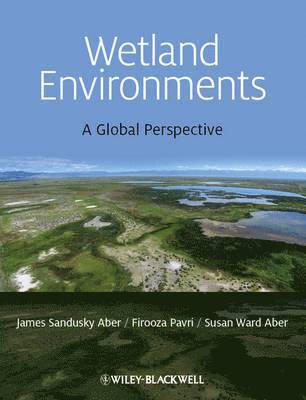
    Wetland Environments

    A Global Perspective

    AvJames S. Aber,Firooza Pavri

    Inbunden, Engelska, 2012

    1 594 kr

    Beställningsvara. Skickas inom 5-8 vardagar. Fri frakt över 249 kr.

    Fler format och utgåvor

    Häftad

    961 kr

    Beskrivning

    Wetlands - swamp, marsh, bayou, tundra and bog - are places that are rarely visited and often misunderstood but they have, in fact, conspicuous roles in the physical, biological and cultural geography of the world. They are intrinsically beautiful environments where one may see the natural and essential values in the interaction of water, soil, vegetation, wildlife, and humans. Wetlands occur at the confluence of unique terrestrial, hydrological and climatic conditions that give rise to some of the most biodiverse regions of the world. They also play vital roles in the cycling and storage of key nutrients, materials and energy through the Earth?s system.A complete study of wetland environments requires the assessment of their physical and biological attributes, properties and functions of these ecosystems, and the economic, political and social aspects that mediate their use globally. A systems approach is taken throughout this book which emphasizes the interactions between these elements of wetland ecosystems. Moreover, selected case studies from across the world are used to illustrate wetland characteristics and circumstances.This book is intended to foster a greater awareness and appreciation of wetlands, promote a culture of conservation and wise management, and spread the knowledge that wetlands are important, indeed crucial, elements of the global environment. Our attempts to understand, manage and enhance wetlands in the twenty-first century are part of the larger effort to maintain a sustainable Earth.Readership: Introductory or intermediate level undergraduates taking courses on wetland environmentsAdditional resources for this book can be found at: www.wiley.com/go/aber/wetland

    Produktinformation

    • Utgivningsdatum:2012-09-21
    • Mått:196 x 254 x 26 mm
    • Vikt:1 229 g
    • Format:Inbunden
    • Språk:Engelska
    • Antal sidor:440
    • Förlag:John Wiley and Sons Ltd
    • ISBN:9781405198417

    Utforska kategorier

    • Biovetenskap inom Naturvetenskap och teknik
    • Marinbiologi inom Naturvetenskap och teknik
    • Geografi inom Naturvetenskap och teknik

    Mer om författaren

    James S. Aber, Ph.D. in Geology from the University of Kansas. Wide-ranging international experience in northern and central Europe, North and South America involving glaciation, wetlands, tectonics, and remote sensing.Firooza Pavri, Ph.D. in Geography from Ohio State University. Research experience in South Asia and North America with an interest in society-environment interactions, landscape change, environmental policy, and remote sensing.Susan W. Aber, Ph.D. in Library and Information Management from Emporia State University, Kansas. International experience across Europe, southeastern Asia and North America. Special interest in gemstones, particularly amber and pearls.

    Recensioner i media

    “Overall, this is an excellent course resource for advanced undergraduates and beginning graduate students, as well as professionals who wish to deepen their understanding of these complex ecosystems.  Summing Up: Highly recommended. Upper-division undergraduates and above.”  (Choice, 1 August 2013)

    Innehållsförteckning

    • Preface: Why wetlands? xi Acknowledgements xivPart I1 Wetland overview 11.1 Introduction 11.2 How much and where 41.3 Wetland trends 81.4 Wetland preservation and protection 101.5 Wetland science 111.6 Book approach and outline 131.7 Summary 132 Wetland criteria 152.1 Definitions 152.2 Water 162.3 Soil 182.4 Vegetation 202.5 Wetland classification 222.6 Peatland 242.7 Anthropogenic dimensions of wetlands 272.8 Summary 283 Methods in wetland research 303.1 Introduction 303.2 Remote sensing 313.2.1 Image resolution and interpretability 323.2.2 Wetland image interpretation 353.2.3 Macro-level systems 373.2.4 Meso-level systems 413.2.5 Micro-level systems 423.3 Maps and geographic information systems 463.4 Physical ground-based methods 483.4.1 Surface methods 483.4.2 Subsurface methods 513.5 Flora, fauna and ecological monitoring and survey methods 533.6 Social science methods and techniques 563.7 Summary 57Part II4 Wetland hydrology 584.1 Introduction 584.2 Surface and ground water 614.3 Floods and flooding 644.4 Hydrologic functions of streams and wetlands 654.5 Hydrochemistry 684.6 Summary 705 Wetland soil 725.1 Introduction 725.2 Brief history and soil classification 735.3 Hydric soil criteria 785.4 Mineral and organic hydric soils 795.5 Submerged wetland substrates 815.6 Summary 826 Wetland vegetation 866.1 Plant adaptations 866.1.1 Structural adaptations 866.1.2 Biochemical adaptations 886.2 Ecological categories 896.2.1 Shoreline plants 906.2.2 Emergent plants 926.2.3 Floating plants 946.2.4 Submerged plants 966.2.5 Plant zonation 976.3 Indicator categories 996.4 Plant hardiness zones 1016.5 Invasive plant species 1026.6 Summary 1057 Wetland wildlife 1077.1 Introduction 1077.2 Wetland invertebrates 1087.2.1 Insects 1087.2.2 Mosquitos 1107.2.3 Corals 1117.3 Wetland vertebrates 1137.3.1 Amphibians 1137.3.2 Reptiles 1157.3.3 Birds 1177.3.4 Mammals 1257.4 Invasive animal species 1307.5 Summary 132Part III8 Wetland change 1358.1 Introduction 1358.2 Hydroseral succession 1368.3 Sea-level change and crustal movements 1398.3.1 Glacial eustasy 1398.3.2 Glacial isostasy 1418.3.3 Complicated responses 1418.3.4 Modern sea-level rise 1438.4 Climate change 1478.4.1 Climate basics 1478.4.2 Climate and wetlands 1508.5 Fire 1528.6 Summary 1549 Wetlands through time 1569.1 Introduction 1569.2 Coal 1579.2.1 Paleozoic coal 1579.2.2 Cretaceous–Tertiary coal and lignite 1589.3 Amber 1609.4 Pleistocene and Holocene wetlands 1639.4.1 Nordic region 1649.4.2 North America 1679.4.3 Tropics and Antarctica 1719.4.4 Holocene climate and early man 1719.5 Summary 17310 Environmental cycles and feedback 17510.1 Biogeochemical cycles 17510.1.1 Wetland elements 17510.1.2 Nitrogen 17510.1.3 Phosphorus, potassium and sulfur 17710.2 Carbon cycle 17910.2.1 Carbon reservoirs 17910.2.2 Carbon balance 17910.2.3 Carbon gases and climatic feedback 18010.3 Fossil fuels 18110.3.1 Fossil-fuel consumption 18110.3.2 Coal mining and acid rain 18310.3.3 Estonian oil shale 18410.4 Human experiment 18510.5 Summary 187Part IV11 Wetland services, resources and valuation 19011.1 Human use of wetland ecosystems 19011.2 Ecosystem services 19111.2.1 Habitats 19111.2.2 Wetlands and biogeochemical cycles 19411.2.3 Storm surge and coastal flood protection 19511.3 Hydrological services 19611.3.1 Flood abatement 19611.3.2 Water quality 19611.3.3 Water storage and diversion 19711.4 Economic services 19911.4.1 Extractive industries 19911.4.2 Pearl production 20411.4.3 Services industries 20711.5 Wetland valuations 21111.5.1 Why value wetlands? 21211.5.2 Property regimes and externalities in wetland use and valuations 21211.5.3 How to value wetlands? 21511.6 Summary 21612 Conservation and management: Wetland planning and practices 21812.1 The conservation movement 21812.2 Wetland resource management 22012.3 Wetland management plans 22112.4 Wetland management practices 22312.4.1 Terrestrial and hydrologic-based strategies 22312.4.2 Biological and chemical strategies 22612.4.3 Socio-economic strategies 22712.5 Summary 22913 Wetland restoration, enhancement and creation 23113.1 Introduction 23113.2 Terminology 23213.3 Wetland restoration, enhancement and creation design principles 23513.4 Restoration and enhancement considerations 23813.5 Approaches to wetland restoration and enhancement 24013.5.1 Active approaches 24013.5.2 Passive and hybrid approaches 24213.6 Artifi cial treatment wetlands 24413.7 Contaminated mine-water treatment 24613.8 Summary 24914 Wetlands governance and public policy 25114.1 Wetlands governance and policy 25114.2 International wetland policy 25114.3 Wetland policy in the developed world 25214.3.1 United States 25314.3.2 Canada 25514.3.3 Western Europe 25514.3.4 Central Europe 25714.3.5 Commonwealth of Independent States 26014.3.6 Australia, New Zealand and Antarctica 26214.4 National wetland policy in the developing world 26414.5 Shared wetlands 26414.6 Summary 266Part V15 Low-latitude wetland case studies 26815.1 Introduction 26815.2 Sundarbans of South Asia 26915.3 Okavango Delta of southern Africa 27415.4 Pantanal of South America 27615.5 Gulf of Mexico, United States 27915.5.1 Florida Everglades 28115.5.2 Mississippi River delta 28515.5.3 Padre Island and Laguna Madre 29115.6 Summary 29716 Middle-latitude wetland case studies 29916.1 Introduction 29916.2 Great Plains of North America 29916.2.1 Upper Arkansas River valley, Colorado and Kansas 30016.2.2 Biocontrol of saltcedar along the upper Arkansas River valley 30516.2.3 Cheyenne Bottoms, Kansas 30916.2.4 Nebraska Sand Hills 31416.2.5 Missouri Coteau, southern Saskatchewan 31816.3 Coastal wetlands of Maine and Massachusetts, United States 32316.3.1 Wells Reserve, southeastern Maine 32516.3.2 Plum Island Ecosystem, northeastern Massachusetts 32616.4 Estonia, eastern Baltic region 32816.5 Summary 33317 High-latitude and high-altitude wetland case studies 33617.1 Introduction 33617.2 Andes Mountains, Venezuela 33617.3 Southern Colorado, United States 34017.3.1 Culebra Range 34117.3.2 San Luis Valley 34517.4 The Arctic 35017.4.1 Arctic Coastal Plain, Alaska 35117.4.2 Yukon Delta, Alaska 35317.4.3 Lena River delta, Russia 35417.5 Summary 35718 Sustainability for wetlands 35818.1 Introduction 35818.2 Key risks to wetlands 35918.3 Key opportunities in wetland conservation 36218.4 Future directions 363Glossary of wetland types and terms 364References 372Index 401Color Plates are between pages 210 and 211COMPANION WEBSITEThis book has a companion website: www.wiley.com/go/aber/wetland with Figures and Tables from the book