• Fri frakt över 249 kr
  • •
  • Snabba leveranser
  • •
  • Billiga böcker
Kundservice

Du är på sajten för privatpersoner.

Företag, bibliotek eller offentlig verksamhet?

Du handlar på classic.bokus.com, där alla dina funktioner finns intakta.
Till classic.bokus.com
Bokus logotyp. Gå till startsidan.
  • Erbjudanden
  • Nyheter
  • Student
  • Topplistor
  • Barn & ungdom
  • Bokus Play
  • E-böcker
  • Pocketböcker
  • Spel & pussel

10% studentrabatt med kod TERM26

Sidfot

Mina sidor

    Hjälp

    • Kundservice
    • Vanliga frågor och svar
    • Frakt och leverans
    • Retur vid ångerrätt
    • Reklamera vara
    • Betalning
    • Köpvillkor
    • Allmänna villkor
    • Information om webbplatsens tillgänglighet

    Om Bokus

    • Om oss
    • Pressrum
    • För studenter
    • För företag
    • För bibliotek och offentlig verksamhet
    • För leverantörer
    • Hållbarhet

    Populärt

    • Aktuella erbjudanden
    • Presentkort
    • Studentlitteratur
    • Nya böcker
    • Topplistor
    • Signerade böcker
    • Engelska böcker

    Inspiration

    • Boktips
    • BookTok
    • Populära bokserier
    • Barnbokskaraktärer
    • Populära författare
    Logotyp för Bokus
    Följ oss på Facebook (extern länk)Följ oss på Instagram (extern länk)Följ oss på YouTube (extern länk)Följ oss på TikTok (extern länk)
    bokus @ CookiesAnpassa cookiesIntegritetspolicyKöpvillkor
    Till Citymail hemsida (extern länk)Till Budbee hemsida (extern länk)Till Postnord hemsida (extern länk)Till Schenker hemsida (extern länk)Till Early Bird hemsida (extern länk)Till Walleys hemsida (extern länk)
    1. Kultur
    2. Designböcker
    3. Modedesign och textilformgivning

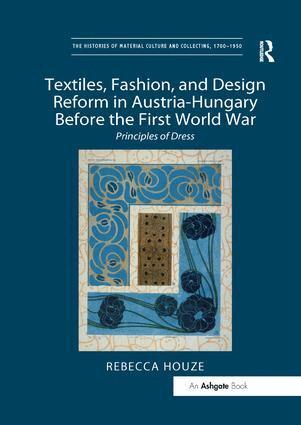
    Textiles, Fashion, and Design Reform in Austria-Hungary Before the First World War

    Principles of Dress

    AvRebecca Houze

    Inbunden, Engelska, 2015

    Del i serien Histories of Material Culture and Collecting, 1700-1950

    2 506 kr

    Beställningsvara. Skickas inom 10-15 vardagar. Fri frakt över 249 kr.

    Fler format och utgåvor

    Häftad

    763 kr

    Beskrivning

    Filling a critical gap in Vienna 1900 studies, this book offers a new reading of fin-de-siècle culture in the Austro-Hungarian Monarchy by looking at the unusual and widespread preoccupation with embroidery, fabrics, clothing, and fashion - both literally and metaphorically. The author resurrects lesser known critics, practitioners, and curators from obscurity, while also discussing the textile interests of better known figures, notably Gottfried Semper and Alois Riegl. Spanning the 50-year life of the Dual Monarchy, this study uncovers new territory in the history of art history, insists on the crucial place of women within modernism, and broadens the cultural history of Habsburg Central Europe by revealing the complex relationships among art history, women, and Austria-Hungary. Rebecca Houze surveys a wide range of materials, from craft and folk art to industrial design, and includes overlooked sources-from fashion magazines to World's Fair maps, from exhibition catalogues to museum lectures, from feminist journals to ethnographic collections. Restoring women to their place at the intersection of intellectual and artistic debates of the time, this book weaves together discourses of the academic, scientific, and commercial design communities with middle-class life as expressed through popular culture.

    Produktinformation

    • Utgivningsdatum:2015-01-28
    • Mått:156 x 234 x 35 mm
    • Vikt:1 315 g
    • Format:Inbunden
    • Språk:Engelska
    • Serie:Histories of Material Culture and Collecting, 1700-1950
    • Antal sidor:470
    • Förlag:Taylor & Francis Ltd
    • ISBN:9781409436683

    Utforska kategorier

    • Modedesign och textilformgivning inom Kultur
    • Referensverk och tvärvetenskap inom Samhälle och politik
    • Europas historia inom Historia och arkeologi

    Mer om författaren

    Rebecca Houze is Associate Professor of Art History at Northern Illinois University, USA.

    Recensioner i media

    'This is a beautifully written, wide-ranging study of the central role that textiles, fashion and costume played in the cultural history of the Habsburg Empire of the late-nineteenth and early twentieth centuries.' Julie M. Johnson, University of Texas, San Antonio, USA 'In this inspiring new study, Rebecca Houze builds on her series of excellent articles ... which deal with Austrian and Hungarian applied arts at the turn of the century ... the achievement of this book is to provide a fascinating new approach to the area through the vehicles of textiles, fashion and dress reform.' Reviews in History"Drawing on a wide variety of contemporary sources and extensive illustrations, and underpinned by sustained, carefully articulated arguments, this book makes a convincing case that notwithstanding the problematics of dress and design reform in Austria and Hungary during the Dual Monarchy, 'clothing motivated programs of change… Throughout the book, the range of sources and illustrations, careful argument, confident style, and the synthesis of fashion, costume, and textiles located within the wider context of design reform ensures that this book is an excellent contribution to scholarship in the field.'" Journal of Design History"A landmark contribution to [Ashgate’s] new series on material culture and collecting, Houze’s meticulously researched study is essential to those interested in textiles, late nineteenth-cenntury design reform, and the second-class status of decorative and fashionable within modernist value systems…. [The book] brims with detailed analysis of institutional developments and late nineteenth-century ethnographic exhibitions previously familiary only to specialists, amply supporting the author’s thesis that a performative culture of dress fueled questions of national identity and design reform in Dual Monarchy." West 86th

    Innehållsförteckning

    • Contents: Introduction. Part I: Preliminary remarks on the principles of dress; Collecting textiles at the new museums in Vienna and Budapest; Establishing a program for needlework reform; Exhibiting cloth and culture. Part II: Embroidery and anxiety; Fashion and its discontents; Imperial masquerade. Conclusion; Bibliography; Index.