• Fri frakt över 249 kr
  • •
  • Snabba leveranser
  • •
  • Billiga böcker
Kundservice

Du är på sajten för privatpersoner.

Företag, bibliotek eller offentlig verksamhet?

Du handlar på classic.bokus.com, där alla dina funktioner finns intakta.
Till classic.bokus.com
Bokus logotyp. Gå till startsidan.
  • Erbjudanden
  • Nyheter
  • Student
  • Topplistor
  • Barn & ungdom
  • Bokus Play
  • E-böcker
  • Pocketböcker
  • Spel & pussel

10% rabatt på allt med kod NYSTART10 →

Sidfot

Mina sidor

    Hjälp

    • Kundservice
    • Vanliga frågor och svar
    • Frakt och leverans
    • Retur vid ångerrätt
    • Reklamera vara
    • Betalning
    • Köpvillkor
    • Allmänna villkor
    • Information om webbplatsens tillgänglighet

    Om Bokus

    • Om oss
    • Pressrum
    • För studenter
    • För företag
    • För bibliotek och offentlig verksamhet
    • För leverantörer
    • Hållbarhet

    Populärt

    • Aktuella erbjudanden
    • Presentkort
    • Studentlitteratur
    • Nya böcker
    • Topplistor
    • Signerade böcker
    • Engelska böcker

    Inspiration

    • Boktips
    • BookTok
    • Populära bokserier
    • Barnbokskaraktärer
    • Populära författare
    Logotyp för Bokus
    Följ oss på Facebook (extern länk)Följ oss på Instagram (extern länk)Följ oss på YouTube (extern länk)Följ oss på TikTok (extern länk)
    bokus @ CookiesAnpassa cookiesIntegritetspolicyKöpvillkor
    Till Citymail hemsida (extern länk)Till Budbee hemsida (extern länk)Till Postnord hemsida (extern länk)Till Schenker hemsida (extern länk)Till Early Bird hemsida (extern länk)Till Walleys hemsida (extern länk)
    1. Historia och arkeologi
    2. Historia
    3. Europas historia

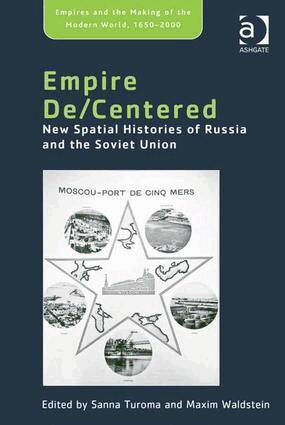
    Empire De/Centered

    New Spatial Histories of Russia and the Soviet Union

    AvMaxim Waldstein,Sanna Turoma

    Inbunden, Engelska, 2013

    Del i serien Empire and the Making of the Modern World, 1650-2000

    2 495 kr

    Beställningsvara. Skickas inom 10-15 vardagar. Fri frakt över 249 kr.

    Beskrivning

    In 1991 the Soviet empire collapsed, at a stroke throwing the certainties of the Cold War world into flux. Yet despite the dramatic end of this 'last empire', the idea of empire is still alive and well, its language and concepts feeding into public debate and academic research. Bringing together a multidisciplinary and international group of authors to study Soviet society and culture through the categories empire and space, this collection demonstrates the enduring legacy of empire with regard to Russia, whose history has been marked by a particularly close and ambiguous relationship between nation and empire building, and between national and imperial identities. Parallel with this discussion of empire, the volume also highlights the centrality of geographical space and spatial imaginings in Russian and Soviet intellectual traditions and social practices; underlining how Russia's vast geographical dimensions have profoundly informed Russia's state and nation building, both in practice and concept. Combining concepts of space and empire, the collection offers a reconsideration of Soviet imperial legacy by studying its cultural and societal underpinnings from previously unexplored perspectives. In so doing it provides a reconceptualization of the theoretical and methodological foundations of contemporary imperial and spatial studies, through the example of the experience provided by Soviet society and culture.

    Produktinformation

    • Utgivningsdatum:2013-08-30
    • Mått:156 x 234 x 27 mm
    • Vikt:816 g
    • Format:Inbunden
    • Språk:Engelska
    • Serie:Empire and the Making of the Modern World, 1650-2000
    • Antal sidor:362
    • Förlag:Taylor & Francis Ltd
    • ISBN:9781409447863

    Utforska kategorier

    • Europas historia inom Historia och arkeologi

    Mer om författaren

    Dr Sanna Turoma, Research Fellow at the Aleksanteri Institute, University of Helsinki, Finland. Dr Maxim Waldstein, Amsterdam University College, The Netherlands.

    Recensioner i media

    'This is a useful collection of informative and insightful essays that adds to a growing literature on questions of space and empire. The topic is well conceived, and the editors effectively convey its significance in a clear and often provocative manner in their introduction. Specialists will find much of value here, though, given the specificity of the essays, scholars outside Russian and Soviet studies will be rather less likely to explore its contents.' Europe-Asia Studies '... Empire De/Centered is a highly informative volume, which makes a substantial contribution to our understanding of how the Russian and Soviet self has been discursively constructed, challenging a common misperception that in the Moscow-dominated political space, imagined communities could only be defined as either an empire or a nation.' Slavic Review ’A highly engaging collection, Empire De/Centered covers a wide variety of subjects in disciplines ranging from political economy to visual arts. The themes of geographical space, imperial narrative, and national identity hold these diverse essays firmly together. ... this volume will be a valuable and enjoyable read for Slavists as well as for scholars of empire in general.’ Journal of Historical Geography ’The editors of and contributors to this volume are to be congratulated on producing an excellent book...the contributors provide many insights into Russian history and successfully demonstrate how, with its particular spatial configuration, the Russian imperial experience challenges received wisdom concerning modern empires with their metropolises (the ’mother country’) and overseas colonies, and also concerning the concepts of ’nation’ and ’empire’ themselves.’ SEER

    Innehållsförteckning

    • Contents: Introduction: empire and space: Russian and the Soviet Union in focus, Sanna Turoma and Maxim Waldstein; Part I Eurasianism and Intellectual Construction of Space: The empire of language: space and structuralism in Russia’s Eurasianism, Sergey Glebov; Between Russia, Ukraine and Eurasia: Georgii Vernadskii’s search for identity, Igor Torbakov; Space as a destiny: legitimizing the Russian empire through geography and cosmos, Marlène Laruelle. Part II Spatial Science and Geographical Knowledge: The mapping of illiberal modernity: spatial science, ideology and the state in early 20th-century Russia, Nick Baron; Regionalization, imperial legacy and the Soviet geographical tradition, Marina Loskutova. Part III Political and Cultural Economy of the (Post-)Soviet Space: The controlled space of socialist internationalism and its transgression: COMECON energy projects between 1970 and 1990, Ulrich Best; The rearrangement of the post-Soviet space and the representation of Russia as a Eurasian bridge, Katri Pynnöniemi; Debating Soviet imperialism in contemporary Poland: on the polish uses of postcolonial theory and their contexts, Tomasz Zarycki. Part IV Representing Empire: Media, Art, Literature: Playing games with Empire: Finnish political imaginaries on the early Soviet state, Anni Kangas; Imperiia re/constructed: narratives of space and nation in 1960s Soviet Russian culture, Sanna Turoma; Picturing infinity: space race and the cosmic landscape, Iina Kohonen; Eccentric orbit: mapping Russian culture in the near abroad, Kevin M.F. Platt; Bibliography; Index.