Sanna Turoma - Böcker
Visar alla böcker från författaren Sanna Turoma. Handla med fri frakt och snabb leverans.
9 produkter
9 produkter
Russia as Civilization
Ideological Discourses in Politics, Media and Academia
Inbunden, Engelska, 2020
2 088 kr
Skickas inom 10-15 vardagar
Analyzing the use of civilization in Russian-language political and media discourses, intellectual and academic production, and artistic practices, this book discusses the rise of civilizational rhetoric in Russia and global politics.Why does the concept of civilization play such a prevalent role in current Russian geopolitical and creative imaginations? The contributors answer this question by exploring the extent to which discourse on civilization penetrates Russian identity formations in imperial and national configurations, and at state and civil levels of society. Although the chapters offer different interpretations and approaches, the book shows that Russian civilizationism is a form of ideological production responding to the challenges of globalization. The concept of "civilization," while increasingly popular as a conceptual tool in identity formation, is also widely contested in Russia today. This examination of contemporary Russian identities and self-understanding will be of particular interest to students and scholars of Russian area studies and Slavic studies, intellectual and cultural history, nationalism and imperial histories, international relations, discourse analysis, cultural studies, media studies, religion studies, and gender studies.
617 kr
Skickas inom 10-15 vardagar
Analyzing the use of civilization in Russian-language political and media discourses, intellectual and academic production, and artistic practices, this book discusses the rise of civilizational rhetoric in Russia and global politics.Why does the concept of civilization play such a prevalent role in current Russian geopolitical and creative imaginations? The contributors answer this question by exploring the extent to which discourse on civilization penetrates Russian identity formations in imperial and national configurations, and at state and civil levels of society. Although the chapters offer different interpretations and approaches, the book shows that Russian civilizationism is a form of ideological production responding to the challenges of globalization. The concept of "civilization," while increasingly popular as a conceptual tool in identity formation, is also widely contested in Russia today. This examination of contemporary Russian identities and self-understanding will be of particular interest to students and scholars of Russian area studies and Slavic studies, intellectual and cultural history, nationalism and imperial histories, international relations, discourse analysis, cultural studies, media studies, religion studies, and gender studies.
570 kr
Skickas
Alongside the Arab Spring, the 'Occupy' anti-capitalist movements in the West, and the events on the Maidan in Kiev, Russia has had its own protest movements, notably the political protests of 2011–12. As elsewhere in the world, these protests had unlikely origins, in Russia’s case spearheaded by the 'creative class'. This book examines the protest movements in Russia. It discusses the artistic traditions from which the movements arose; explores the media, including the internet, film, novels, and fashion, through which the protesters have expressed themselves; and considers the outcome of the movements, including the new forms of nationalism, intellectualism, and feminism put forward. Overall, the book shows how the Russian protest movements have suggested new directions for Russian – and global – politics.
789 kr
Skickas inom 10-15 vardagar
In 1991 the Soviet empire collapsed, at a stroke throwing the certainties of the Cold War world into flux. Yet despite the dramatic end of this 'last empire', the idea of empire is still alive and well, its language and concepts feeding into public debate and academic research. Bringing together a multidisciplinary and international group of authors to study Soviet society and culture through the categories empire and space, this collection demonstrates the enduring legacy of empire with regard to Russia, whose history has been marked by a particularly close and ambiguous relationship between nation and empire building, and between national and imperial identities. Parallel with this discussion of empire, the volume also highlights the centrality of geographical space and spatial imaginings in Russian and Soviet intellectual traditions and social practices; underlining how Russia's vast geographical dimensions have profoundly informed Russia's state and nation building, both in practice and concept. Combining concepts of space and empire, the collection offers a reconsideration of Soviet imperial legacy by studying its cultural and societal underpinnings from previously unexplored perspectives. In so doing it provides a reconceptualization of the theoretical and methodological foundations of contemporary imperial and spatial studies, through the example of the experience provided by Soviet society and culture.
2 289 kr
Skickas inom 10-15 vardagar
Alongside the Arab Spring, the 'Occupy' anti-capitalist movements in the West, and the events on the Maidan in Kiev, Russia has had its own protest movements, notably the political protests of 2011–12. As elsewhere in the world, these protests had unlikely origins, in Russia’s case spearheaded by the 'creative class'. This book examines the protest movements in Russia. It discusses the artistic traditions from which the movements arose; explores the media, including the internet, film, novels, and fashion, through which the protesters have expressed themselves; and considers the outcome of the movements, including the new forms of nationalism, intellectualism, and feminism put forward. Overall, the book shows how the Russian protest movements have suggested new directions for Russian – and global – politics.
2 219 kr
Skickas inom 10-15 vardagar
In 1991 the Soviet empire collapsed, at a stroke throwing the certainties of the Cold War world into flux. Yet despite the dramatic end of this 'last empire', the idea of empire is still alive and well, its language and concepts feeding into public debate and academic research. Bringing together a multidisciplinary and international group of authors to study Soviet society and culture through the categories empire and space, this collection demonstrates the enduring legacy of empire with regard to Russia, whose history has been marked by a particularly close and ambiguous relationship between nation and empire building, and between national and imperial identities. Parallel with this discussion of empire, the volume also highlights the centrality of geographical space and spatial imaginings in Russian and Soviet intellectual traditions and social practices; underlining how Russia's vast geographical dimensions have profoundly informed Russia's state and nation building, both in practice and concept. Combining concepts of space and empire, the collection offers a reconsideration of Soviet imperial legacy by studying its cultural and societal underpinnings from previously unexplored perspectives. In so doing it provides a reconceptualization of the theoretical and methodological foundations of contemporary imperial and spatial studies, through the example of the experience provided by Soviet society and culture.
1 201 kr
Skickas inom 10-15 vardagar
Inspired by popular, feminist, subaltern, and ecocritical geopolitics, Geopolitics and Culture: Narrating Eastern European and Eurasian Worlds presents new research of culture in the Eastern European context. This volume highlights the symbolic production of power, which, although located outside political institutions, engenders geopolitical boundaries and defines cultural margins. Analyzing multilingual materials such as blockbuster films, digital visuals, blogs and discussion forums, print fiction and TV series, museum exhibitions, and everyday cultural practice, this book argues for the importance of studying the links between geopolitical narratives, global and regional hierarchies, and popular cultural production. The contributors advance a decolonizing methodology, which challenges the cultural and geopolitical hierarchies inside Eastern Europe and Eurasia while also casting a critical eye on the geopolitical hierarchies of global Anglophone media cultures.
Del 213 - Soviet and Post-Soviet Politics and Society
Religion, Expression, and Patriotism in Russia
Essays on Post-Soviet Society and the State
Häftad, Engelska, 2019
395 kr
Skickas inom 3-6 vardagar
Del 2011 - RJ:s årsbok
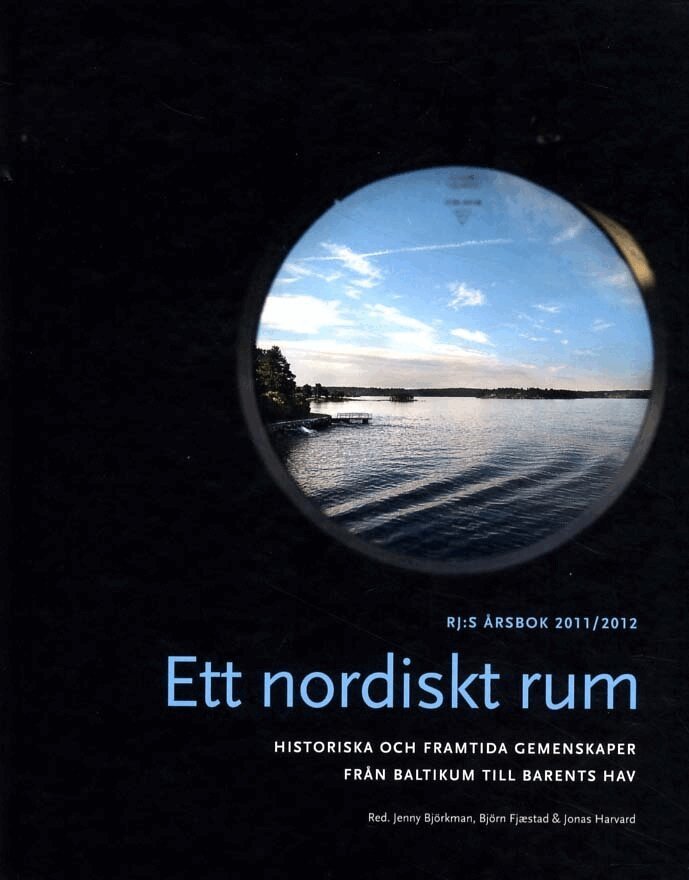
Ett nordiskt rum : historiska och framtida gemenskaper från Baltikum till Barents hav
Inbunden, Svenska, 2011
145 kr
Skickas
Norden fem självständiga länder i Europas nordvästra hörn. Det är det hårda Norden. Men det finns också ett mjukt Norden, som är en ideologisk och medial konstruktion, inte sällan med kommersiella förtecken. Det handlar om jämlikhet, tillit, kort distans till makten, inklusivitet, flexibilitet, kärlek till naturen, luthersk arbetsetik samt sparsmakad och ljus estetik. Vi häruppe är inte så lite övertygade om de egna lösningarnas universella förträfflighet. Men varför är de tre baltiska länderna inte med i gemenskapen? Har det med den svenska stormaktstiden att göra, med arvet efter Sovjettiden eller med något annat? I regionernas Europa kan det också finnas plats för ett fördjupat nordiskt samarbete kanske rentav en politisk union? Det finns argument både för och emot. En ännu svårare fråga är vad som är nordiskt. Handlar det om historia, nutidskultur eller samhällsekonomi? Vad har vi gemensamt som skiljer oss från omvärlden? Kanske mer än vi tror. Eller möjligen tvärtom. Riksbankens Jubileumsfonds årsbok 2011/2012, Ett nordiskt rum, vrider och vänder på Norden. Årsboken utsträcker det nordiska i sydöstlig riktning, men undersöker också den exotiska periferin norr om norr. Med stora övergripande penseldrag, både historiskt och i nutid, och med nedslag i belysande detaljer målas ett nordiskt rum upp som är på en gång välbekant och helt nytt. Författare: Andres Andresen Peter Aronsson Nicholas Aylott Stuart Burch Inger Damsholt Björn Fjæstad Lizette Gradén Norbert Götz Jonas Harvard Karl Magnus Johansson Lisbeth Lewander Pärtel Piirimäe Valters Scerbinskis Kadri Simm Sverker Sörlin Sanna Turoma Gunnar Wetterberg Susanne Österlund-Pötzsch