Sigrid Kaasik-Krogerus - Böcker
Visar alla böcker från författaren Sigrid Kaasik-Krogerus. Handla med fri frakt och snabb leverans.
9 produkter
9 produkter
Creating and Governing Cultural Heritage in the European Union
The European Heritage Label
Inbunden, Engelska, 2020
2 088 kr
Skickas inom 10-15 vardagar
Creating and Governing Cultural Heritage in the European Union: The European Heritage Label provides an interdisciplinary examination of the ways in which European cultural heritage is created, communicated, and governed via the new European Heritage Label scheme.Drawing on ethnographic field research conducted across ten countries at sites that have been awarded with the European Heritage Label, the authors of the book approach heritage as an entangled social, spatial, temporal, discursive, narrative, performative, and embodied process. Recognising that heritage is inherently political and used by diverse actors as a tool for re-imagining communities, identities, and borders, and for generating notions of inclusion and exclusion in Europe, the book also considers the idea of Europe itself as a narrative. Chapters tackle issues such as multilevel governance of heritage; geopolitics of border-crossings and border-making; participation and non-participation; and embodiment and affective experience of heritage.Creating and Governing Cultural Heritage in the European Union advances heritage studies with an interdisciplinary approach that utilises and combines theories and conceptualizations from critical geopolitics, political studies, EU and European studies, cultural policy research, and cultural studies. As such, the volume will be of interest to scholars and students engaged in the study of heritage, politics, belonging, the EU, ideas, and narratives of Europe.
651 kr
Skickas inom 5-8 vardagar
705 kr
Skickas inom 5-8 vardagar
Politics of Memory and Oblivion in the European Context
Critical Perspectives
Inbunden, Engelska, 2021
2 088 kr
Skickas inom 10-15 vardagar
This book provides novel and critical insights into the complex relationship between politics of memory and oblivion in European countries in the 20th and early 21st centuries as well as the cultural, political and institutional backgrounds against which they function. It explores the uses of the past in terms of a conscious choice to either reactivate or overlook memories as selective reference points for the promotion and legitimation of contemporary political goals. The chapters of this volume bring together theoretical discussions on the interrelationship between remembrance and purposeful oblivion as active processes that serve particular interests and ideologies in the present. By addressing the diverse meanings given to practices of memory, the contributions offer new perspectives on how institutions shape cultural memory, power relations and identity projects. Politics of Memory and Oblivion in the European Context: Critical Perspectives will be of interest to scholars and graduate students from the fields of memory studies, heritage studies, cultural studies, history, and political science who engage with the legacies of violent and traumatic pasts, post-colonial contexts, societal transition and reconciliation.The chapters in this book were originally published as a special issue of the journal, European Politics and Society.
617 kr
Skickas inom 10-15 vardagar
This book provides novel and critical insights into the complex relationship between politics of memory and oblivion in European countries in the 20th and early 21st centuries as well as the cultural, political and institutional backgrounds against which they function. It explores the uses of the past in terms of a conscious choice to either reactivate or overlook memories as selective reference points for the promotion and legitimation of contemporary political goals. The chapters of this volume bring together theoretical discussions on the interrelationship between remembrance and purposeful oblivion as active processes that serve particular interests and ideologies in the present. By addressing the diverse meanings given to practices of memory, the contributions offer new perspectives on how institutions shape cultural memory, power relations and identity projects. Politics of Memory and Oblivion in the European Context: Critical Perspectives will be of interest to scholars and graduate students from the fields of memory studies, heritage studies, cultural studies, history, and political science who engage with the legacies of violent and traumatic pasts, post-colonial contexts, societal transition and reconciliation.The chapters in this book were originally published as a special issue of the journal, European Politics and Society.
Creating and Governing Cultural Heritage in the European Union
The European Heritage Label
Häftad, Engelska, 2021
649 kr
Skickas inom 10-15 vardagar
Creating and Governing Cultural Heritage in the European Union: The European Heritage Label provides an interdisciplinary examination of the ways in which European cultural heritage is created, communicated, and governed via the new European Heritage Label scheme.Drawing on ethnographic field research conducted across ten countries at sites that have been awarded with the European Heritage Label, the authors of the book approach heritage as an entangled social, spatial, temporal, discursive, narrative, performative, and embodied process. Recognising that heritage is inherently political and used by diverse actors as a tool for re-imagining communities, identities, and borders, and for generating notions of inclusion and exclusion in Europe, the book also considers the idea of Europe itself as a narrative. Chapters tackle issues such as multilevel governance of heritage; geopolitics of border-crossings and border-making; participation and non-participation; and embodiment and affective experience of heritage.Creating and Governing Cultural Heritage in the European Union advances heritage studies with an interdisciplinary approach that utilises and combines theories and conceptualizations from critical geopolitics, political studies, EU and European studies, cultural policy research, and cultural studies. As such, the volume will be of interest to scholars and students engaged in the study of heritage, politics, belonging, the EU, ideas, and narratives of Europe.
1 201 kr
Skickas inom 10-15 vardagar
Inspired by popular, feminist, subaltern, and ecocritical geopolitics, Geopolitics and Culture: Narrating Eastern European and Eurasian Worlds presents new research of culture in the Eastern European context. This volume highlights the symbolic production of power, which, although located outside political institutions, engenders geopolitical boundaries and defines cultural margins. Analyzing multilingual materials such as blockbuster films, digital visuals, blogs and discussion forums, print fiction and TV series, museum exhibitions, and everyday cultural practice, this book argues for the importance of studying the links between geopolitical narratives, global and regional hierarchies, and popular cultural production. The contributors advance a decolonizing methodology, which challenges the cultural and geopolitical hierarchies inside Eastern Europe and Eurasia while also casting a critical eye on the geopolitical hierarchies of global Anglophone media cultures.
312 kr
Skickas inom 10-15 vardagar
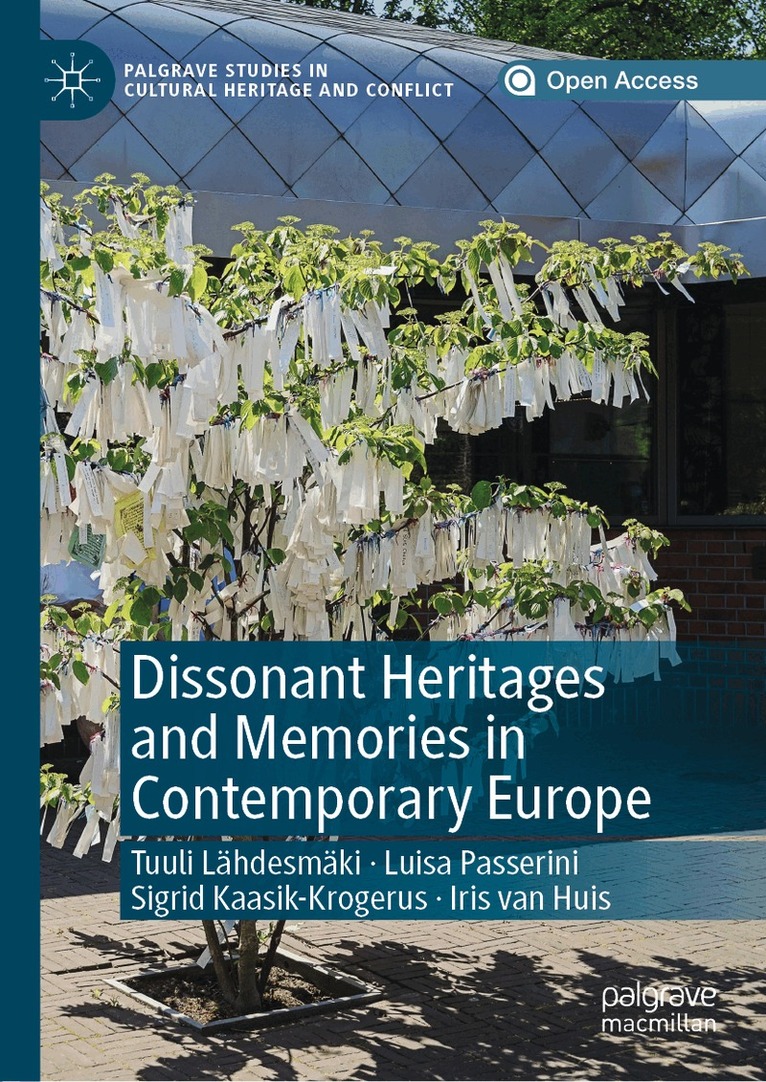
At the same time, the European Union increasingly invests in projects related to European heritage, museums, and cultural memory networks, while having to take dissonant heritages into account.
Del 38 - European Studies
Europe from Below
Notions of Europe and the European among Participants in EU Cultural Initiatives
Inbunden, Engelska, 2021
1 763 kr
Skickas inom 5-8 vardagar
In this book, Tuuli Lähdesmäki, Katja Mäkinen, Viktorija L. A. Čeginskas, and Sigrid Kaasik-Krogerus scrutinize how people who participate in cultural initiatives funded and governed by the European Union understand the idea of Europe. The book focuses on three cultural initiatives: the European Capital of Culture, the European Heritage Label, and a European Citizen Campus project funded through the Creative Europe programme. These initiatives are examined through field studies conducted in 12 countries between 2010 and 2018. The authors describe their approach as ‘ethnography of Europeanization’ and conceptualize the attempts at Europeanization in the European Union’s cultural policy as politics of belonging.