• Fri frakt över 249 kr
  • •
  • Snabba leveranser
  • •
  • Billiga böcker
Kundservice

Du är på sajten för privatpersoner.

Företag, bibliotek eller offentlig verksamhet?

Du handlar på classic.bokus.com, där alla dina funktioner finns intakta.
Till classic.bokus.com
Bokus logotyp. Gå till startsidan.
  • Erbjudanden
  • Nyheter
  • Student
  • Topplistor
  • Barn & ungdom
  • Bokus Play
  • E-böcker
  • Pocketböcker
  • Spel & pussel

10% rabatt på allt med kod NYSTART10 →

Sidfot

Mina sidor

    Hjälp

    • Kundservice
    • Vanliga frågor och svar
    • Frakt och leverans
    • Retur vid ångerrätt
    • Reklamera vara
    • Betalning
    • Köpvillkor
    • Allmänna villkor
    • Information om webbplatsens tillgänglighet

    Om Bokus

    • Om oss
    • Pressrum
    • För studenter
    • För företag
    • För bibliotek och offentlig verksamhet
    • För leverantörer
    • Hållbarhet

    Populärt

    • Aktuella erbjudanden
    • Presentkort
    • Studentlitteratur
    • Nya böcker
    • Topplistor
    • Signerade böcker
    • Engelska böcker

    Inspiration

    • Boktips
    • BookTok
    • Populära bokserier
    • Barnbokskaraktärer
    • Populära författare
    Logotyp för Bokus
    Följ oss på Facebook (extern länk)Följ oss på Instagram (extern länk)Följ oss på YouTube (extern länk)Följ oss på TikTok (extern länk)
    bokus @ CookiesAnpassa cookiesIntegritetspolicyKöpvillkor
    Till Citymail hemsida (extern länk)Till Budbee hemsida (extern länk)Till Postnord hemsida (extern länk)Till Schenker hemsida (extern länk)Till Early Bird hemsida (extern länk)Till Walleys hemsida (extern länk)
    1. Psykologi och pedagogik
    2. Pedagogik
    3. Pedagogisk metodik

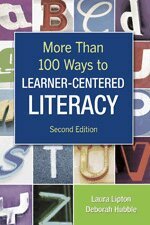
    More Than 100 Ways to Learner-Centered Literacy

    AvLaura Lipton,Deborah S. Hubble

    Inbunden, Engelska, 2008

    1 106 kr

    Beställningsvara. Skickas inom 3-6 vardagar. Fri frakt över 249 kr.

    Fler format och utgåvor

    Häftad

    566 kr

    Beskrivning

    "New and veteran teachers who embrace learner-centered literacy will find this material useful, practical, and inexpensive."
    —Gayle Simoneaux, Teacher
    Mimosa Park Elementary School, Luling, LA

    "The book features an easy-to-understand format with lots of ways to incorporate literacy development into the classroom."
    —Debbie Smith, Teacher
    Lady's Island Elementary School, Beaufort, SC

    Use research-based, student-centered strategies to nurture thoughtful, lifelong readers! 

    This updated edition of More Than 50 Ways to Learner-Centered Literacy provides a user-friendly collection of methods and strategies for delivering effective literacy instruction. The authors include more than 100 practical techniques that are grounded in a constructivist, learner-centered approach and demonstrate how to develop: 

    • A rich environment that fosters vocabulary and reading skills
    • Student interaction through strategies like Buddy Studies, Partner Biographies, and Story-Map Trios
    • Fluency and comprehension by using predictable text, innovations on text, and more
    • Student assessments through observations, anecdotal records, and open-ended questions

    Aligned with National Reading Panel recommendations, this resource includes inventive ideas from master teachers to promote continuous improvement in literacy teaching and learning.

    Produktinformation

    • Utgivningsdatum:2008-11-05
    • Mått:152 x 228 x 16 mm
    • Vikt:420 g
    • Format:Inbunden
    • Språk:Engelska
    • Antal sidor:200
    • Upplaga:2
    • Förlag:SAGE Publications
    • ISBN:9781412957847

    Utforska kategorier

    • Pedagogisk metodik inom Psykologi och pedagogik

    Mer om författaren

    Laura Lipton is codirector of MiraVia, LLC, a publishing and development firm in Sherman, CT. Lipton is an international consultant whose writing, research, and seminars focus on effective and innovative instructional practices and building professional and organizational capacities for enhanced learning. She engages with schools and school districts, designing and conducting workshops on organizational development, learning-focused instruction, literacy development, and strategies to support beginning teachers. Lipton applies her extensive experience with adult learners to workshops and seminars conducted throughout the United States, Canada, Europe, Australia, and New Zealand on such topics as learning-focused relationships, data-driven dialogue, teacher leadership, action research, and learning-focused mentoring. She is the author and coauthor of numerous publications related to organizational and professional development, learning-focused schools, and literacy development. Deborah Hubble is an elementary school literacy coach in the Katy Independent School District, Houston. She also serves as a writer of monthly research abstracts for Effective Schools, a nationally acclaimed school reform organization. Her school-related passions include creating authentic literacy experiences for children, providing professional development in reading and writing workshop approaches, and supporting and educating stakeholders through organizational change and school reform. With experience as a special education teacher, district language arts coordinator, and elementary school librarian, Hubble has pursued an interest in learner-centered literacy for twenty years.

    Recensioner i media

    “Both new and veteran teachers who truly embrace learner-centered literacy in their classroom will find the material useful, practical, and inexpensive.”

    Innehållsförteckning

    • Publisher′s AcknowledgmentsAbout the AuthorsIntroductionSection 1. Designing a Literate EnvironmentLearning Language by Using It#1 Labels, Labels, Everywhere#2 Where in the Room Is It?#3 Wordstrings#4 String ‘Em Up#5 Hang-Ups#6 Shoe Bag Classification#7 Word Ribbons#8 Class Mailbox#9 Message Center#10 Personal Word BanksBuilding on Students’ Experiences#11 Classroom Libraries#12 Mainly Menus#13 Taking Off With Advertising Flyers#14 Weekly Words#15 The Living Bulletin BoardEstablishing Literacy Work Stations#16 Work Station Rules#17 The Key to Knowledge#18 Housekeeping#19 Introducing the Writing Work StationSection 2. Orchestrating Student InteractionBuddy Studies: Learning in Pairs#20 Turn to Your Neighbor and . . .#21 Level of Learning Reading Partners#22 Learning Partners#23 Paired Verbal Fluency#24 Learning Partner Biographies#25 Summary Pairs#26 The King and Queen of QuestionsStructuring Small Groups#27 Story Map Trios#28 Get the Point#29 Peer Revision: Learning Together#30 Peer Editing: Sharing Glows and GrowsReading Conference: Flexible Student Grouping#31 Establishing the Climate#32 Student Preparation#33 Temperature Checking#34 Developing the Format#35 Flexible Groupings#36 One-on-OneSection 3. Developing Fluent ComprehensionDeveloping Skills by Increasing Fluency#37 Choosing and Using Predictable Text#38 Innovations on Text#39 Toot! Toot!#40 Radio Reading#41 Say It Like the Character#42 Reader’s Theater#43 Partners Predict#44 Opin#45 Word Splash#46 Say SomethingExtending the Reading Experience#47 Figures of Speech#48 Create a Comic#49 Finding Common GroundIntegrating Instruction#50 Student-Selected Theme Topics#51 Civic Projects#52 Imagine If You Were ...Section 4. Nurturing Lifelong LearnersRoutines for Reading to, With, and by Children#53 Read-Alouds#54 Familiarity Breeds Confidence#55 We Are Readers: A Class Record#56 Sustained Silent Reading#57 Guided ReadingWriting Centers: Reading/Writing Connection#58 Readers/Writers Workshop#59 Purposeful Tasks#60 Published and Unpublished Work#61 Paths to PublicationBuilding a Community of Learners#62 Literature Clubs#63 Join the Chorus#64 Mine, Yours, and Ours#65 Writing AutobiographiesSection 5. Assessing Student GrowthKid-Watching in the Classroom#66 Anecdotal Records#67 A Nifty Notebook#68 Sticky Helpers#69 Individual Student Checklists#70 Class Checklists#71 Historical Checklists#72 Interviews#73 Open-Ended QuestionsStudent Portfolios#74 Crate ‘Em Up!#75 Bulky Bundles#76 Portfolio Contents#78 Portfolio-Prompted Planning#79 Entry Slips#80 Autobiographies of Work#81 Biographies of WorkExhibitions and Performance Tasks#81 Building in Authenticity#82 Anchors and Archetypes#83 Developing a Rubric#84 Exciting ExhibitionsSection 6. Leading Learning-Focused Conversations: Strategies for Professional DevelopmentCrafting the Container: Starting, Structuring, and Sustaining Thinking#85 Simple Stem Completions#86 T-chart Opposites#87 3-2-1#88 Mindful Memorandum#89 Brainstorm and Pass#90 Problem-Solving Partnerships#91 Going GraphicLearning-Focused Consultation#92 An Idea Menu#93 Make Your Thinking Transparent#94 Patterned Response: What, Why, How#95 The Big Idea#96 Categorically Speaking#97 Sharing Causal TheoriesInviting Thinking: A Sampler of Questions for Literacy Coaching#98 Questions for Planning#99 Questions for Reflecting#100 Questions to Stimulate Discussion#101 Metaphor and InventionResourcesIndex