• Fri frakt över 249 kr
  • •
  • Snabba leveranser
  • •
  • Billiga böcker
Kundservice

Du är på sajten för privatpersoner.

Företag, bibliotek eller offentlig verksamhet?

Du handlar på classic.bokus.com, där alla dina funktioner finns intakta.
Till classic.bokus.com
Bokus logotyp. Gå till startsidan.
  • Erbjudanden
  • Nyheter
  • Student
  • Topplistor
  • Barn & ungdom
  • Bokus Play
  • E-böcker
  • Pocketböcker
  • Spel & pussel

10% rabatt på allt med kod NYSTART10 →

Sidfot

Mina sidor

    Hjälp

    • Kundservice
    • Vanliga frågor och svar
    • Frakt och leverans
    • Retur vid ångerrätt
    • Reklamera vara
    • Betalning
    • Köpvillkor
    • Allmänna villkor
    • Information om webbplatsens tillgänglighet

    Om Bokus

    • Om oss
    • Pressrum
    • För studenter
    • För företag
    • För bibliotek och offentlig verksamhet
    • För leverantörer
    • Hållbarhet

    Populärt

    • Aktuella erbjudanden
    • Presentkort
    • Studentlitteratur
    • Nya böcker
    • Topplistor
    • Signerade böcker
    • Engelska böcker

    Inspiration

    • Boktips
    • BookTok
    • Populära bokserier
    • Barnbokskaraktärer
    • Populära författare
    Logotyp för Bokus
    Följ oss på Facebook (extern länk)Följ oss på Instagram (extern länk)Följ oss på YouTube (extern länk)Följ oss på TikTok (extern länk)
    bokus @ CookiesAnpassa cookiesIntegritetspolicyKöpvillkor
    Till Citymail hemsida (extern länk)Till Budbee hemsida (extern länk)Till Postnord hemsida (extern länk)Till Schenker hemsida (extern länk)Till Early Bird hemsida (extern länk)Till Walleys hemsida (extern länk)
    1. Samhälle och politik
    2. Sociologi och antropologi
    3. Sociologi

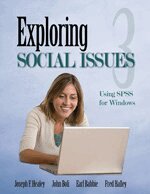
    Exploring Social Issues

    Using SPSS for Windows

    AvJoseph F. Healey,John Boli

    Häftad, Engelska, 2009

    2 315 kr

    Beställningsvara. Skickas inom 3-6 vardagar. Fri frakt över 249 kr.

    Beskrivning

    A hands-on introduction to the craft of social research for Introductory Sociology courses, Exploring Social Issues: Using SPSS for Windows, Third Edition puts students in the role of active researchers as they test their own ideas about topics such as divorce, abortion, crime, inequality, prejudice, and television violence using SPSS, the pre-eminent software program in the social sciences.

    This Third Edition uses updated General Social Survey (GSS) data sets and offers a robust SPSS primer in an appendix. The book is available in two formats: as a stand-alone text, or bundled with SPSS (Student Version).

    Key Features
    • Stresses active and collaborative learning as students engage in a series of investigative explorations of social issues
    • Shows students how analyzing data from the General Social Survey, a major national research program, can help them better understand compelling social issues
    • Teaches students how to use SPSS as they analyze GSS data on a random sample of the population
    • Guides students step-by-step through exercises that have been designed for those with no background in SPSS
    • Includes research reports that follow a standardized fill-in-the-blank format for analyzing and presenting results, but with space left for students to summarize their results in their own words

    Exploring Social Issues: Using SPSS for Windows, Third Edition can be effectively used in  Introductory Sociology or other undergraduate sociology courses and may be used in conjunction with most of the standard textbooks in the field. The text is ideal for courses where the professor also wants to introduce students to doing social research and using SPSS.

    Data sets available online! Click on 'Sample Materials and Chapters' on the left hand menu bar. These data sets provide historical depth, and allow students to analyze trends over time by comparing 2006 results and patterns with data from the 1972 General Social Survey.

    Produktinformation

    • Utgivningsdatum:2009-04-30
    • Mått:215 x 279 x 20 mm
    • Vikt:950 g
    • Format:Häftad
    • Språk:Engelska
    • Antal sidor:376
    • Upplaga:3
    • Förlag:SAGE Publications
    • ISBN:9781412964210

    Utforska kategorier

    • Sociologi inom Samhälle och politik

    Mer om författaren

    Joseph F. Healey is Professor Emeritus of Sociology at Christopher Newport University in Virginia. He received his PhD in sociology and anthropology from the University of Virginia. An innovative and experienced teacher of numerous race and ethnicity courses, he has written articles on minority groups, the sociology of sport, social movements, and violence, and he is also the author of Statistics: A Tool for Social Research (10th ed., 2014). John Boli, Emory University, is the author or co-author of six books and many articles and chapters on education, globalization, and political sociology, including The Globalization Reader (Blackwell,1999), Constructing World Culture (Stanford University Press,1999), Cream of the Crop (Basic Books, 1994) and Institutional Structure: Constituting State, Society, and the Individual (Sage, 1987). Earl Babbie was born in Detroit, Michigan, in 1938, but his family chose to return to Vermont 3 months later, and he grew up there and in New Hampshire. In 1956, he set off for Harvard Yard, where he spent the next 4 years learning more than he initially planned. After 3 years with the US Marine Corps, mostly in Asia, he began graduate studies at the University of California—Berkeley. He received his PhD from Berkeley in 1969. He taught sociology at the University of Hawaii from 1968 through 1979, took time off from teaching and research to write full-time for 8 years, and then joined the faculty at Chapman University in Southern California in 1987. Although he is the author of several research articles and monographs, he is best known for the many textbooks he has written, which have been widely adopted in colleges throughout the United States and the world. He also has been active in the American Sociological Association for 25 years and currently serves on the ASA’s executive committee. He is also past president of the Pacific Sociological Association and California Sociological Association.Fred Halley, Associate Professor Emeritus, SUNY-Brockport, received his bachelor’s degree in sociology and philosophy from Ashland College and his master’s and doctorate degrees from Case Western Reserve University and the University of Missouri, respectively. Since 1970, he has worked to bring both instructional and research computer applications into the undergraduate sociology curriculum. Halley has been recognized for his leadership in the instructional computing sections of the Eastern and Midwest Sociological Societies and the American Sociological Association. At Brockport, he served as a collegewide social science computing consultant and directed Brockport’s Institute for Social Science Research and the College’s Data Analysis Laboratory. Off campus, Halley directed and consulted on diverse community research projects that were used to establish urban magnet schools, evaluate a Head Start family service center, locate an expressway, and design a public transportation system for a rural county. Now residing in Rochester, New York, he plays an active role in a faith-based mentoring program for ex-offenders, and he volunteers for Micrecycle, an organization that refurbishes computers used by those on the other side of the computer divide in schools, daycares, youth centers, and other community organizations.

    Recensioner i media

    The SPSS software was too expensive to install in our college, otherwise the book is excellent

    Innehållsförteckning

    • 1. Getting Started: Social Research, Data Sets, and Frequency Distributions2. Theory and Research: The Scientific Method3. Describing the Sample, Types of Variables, and Data Sets4. Culture: What Do Americans Value?5. A Controversy in Values: Attitudes About Abortion6. Socialization: What Kinds of Children Do Americans Want?7. Crime: Fear, Law Enforcement, and Punishment8. Inequality and Social Class in the United States9. Inequality and Gender10. Inequality and Race11. The Family Institution: Forms and Functions12. The Political Institution in the United States: Support for Civil Liberties, Presidential Choice, and the Gender GapAppendix A: Variable Names, Item Wordings, and Codes for All Data SetsAppendix B: SPSS Commands Used in This BookAnswers to Selected ExercisesGlossary of Key Concepts