• Fri frakt över 249 kr
  • •
  • Snabba leveranser
  • •
  • Billiga böcker
Kundservice

Du är på sajten för privatpersoner.

Företag, bibliotek eller offentlig verksamhet?

Du handlar på classic.bokus.com, där alla dina funktioner finns intakta.
Till classic.bokus.com
Bokus logotyp. Gå till startsidan.
  • Erbjudanden
  • Nyheter
  • Student
  • Topplistor
  • Barn & ungdom
  • Bokus Play
  • E-böcker
  • Pocketböcker
  • Spel & pussel

10% rabatt på allt med kod: NYSTART10 →

Sidfot

Mina sidor

    Hjälp

    • Kundservice
    • Vanliga frågor och svar
    • Frakt och leverans
    • Retur vid ångerrätt
    • Reklamera vara
    • Betalning
    • Köpvillkor
    • Allmänna villkor
    • Information om webbplatsens tillgänglighet

    Om Bokus

    • Om oss
    • Pressrum
    • För studenter
    • För företag
    • För bibliotek och offentlig verksamhet
    • För leverantörer
    • Hållbarhet

    Populärt

    • Aktuella erbjudanden
    • Presentkort
    • Studentlitteratur
    • Nya böcker
    • Topplistor
    • Signerade böcker
    • Engelska böcker

    Inspiration

    • Boktips
    • BookTok
    • Populära bokserier
    • Barnbokskaraktärer
    • Populära författare
    Logotyp för Bokus
    Följ oss på Facebook (extern länk)Följ oss på Instagram (extern länk)Följ oss på YouTube (extern länk)Följ oss på TikTok (extern länk)
    bokus @ CookiesAnpassa cookiesIntegritetspolicyKöpvillkor
    Till Citymail hemsida (extern länk)Till Budbee hemsida (extern länk)Till Postnord hemsida (extern länk)Till Schenker hemsida (extern länk)Till Early Bird hemsida (extern länk)Till Walleys hemsida (extern länk)
    1. Psykologi och pedagogik
    2. Pedagogik
    3. Utbildningsstrategier och utbildningspolitik

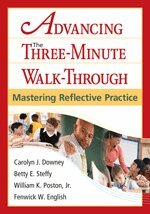
    Advancing the Three-Minute Walk-Through

    Mastering Reflective Practice

    AvCarolyn J. Downey,Betty E. Steffy

    Häftad, Engelska, 2009

    630 kr

    Beställningsvara. Skickas inom 3-6 vardagar. Fri frakt över 249 kr.

    Beskrivning

    "This book provides the most informed and transformative blueprint known for building the capacity of teacher coaches and supervisors. Districts across Texas are using the Downey Walk-Through to break through the barrier of the isolated classroom and provide a platform for improved dialogue about teaching and learning."—Susan P. Holley, Associate Executive DirectorTexas Association of School AdministratorsMaster the Downey Walk-Through for reflective dialogue with this must-have sequel!In 2004, The Three-Minute Classroom Walk-Through introduced educators to the Downey Walk-Through, a practical approach to coaching and supervision that is now widely accepted and used. Offering an expanded examination of the Downey Walk-Through, this sequel to the bestseller focuses on the second part of the walk-through—the reflective follow-up conversation—and clarifies many of the common misconceptions and misapplications of the approach.The authors illustrate how leaders can use observations from the walk-through to engage in professional conversations and encourage teachers to reflect on and improve their practice. Offering extended examples, activities, and guidelines for changing schools one teacher at a time, this resource shows school leaders how to:Provide effective follow-up discourse without criticizing or demoralizing teachersBuild collegial and respectful relationships with faculty members Help teachers see their power to become continuously improving professionalsFoster a collaborative process between principals, teachers, and other instructional leadersNow educators can enrich their professional interchange as they work together to evaluate, redefine, and strengthen best practices for the classroom!

    Produktinformation

    • Utgivningsdatum:2009-12-01
    • Mått:177 x 254 x 15 mm
    • Vikt:460 g
    • Format:Häftad
    • Språk:Engelska
    • Antal sidor:240
    • Förlag:SAGE Publications Inc
    • ISBN:9781412964579

    Utforska kategorier

    • Utbildningsstrategier och utbildningspolitik inom Psykologi och pedagogik

    Mer om författaren

    Carolyn J. Downey is professor emeritus of educational leadership in the College of Education at San Diego State University. She formerly was the superintendent for the Kyrene School District, Phoenix-Tempe, Arizona. Downey has written several books and numerous articles. She is the author of the training program "The Three-Minute Walk-Through and Reflective Feedback for Higher Student Achievement." Her most recent book with Betty E. Steffy, William K. Poston Jr., and Fenwick W. English is 50 Ways to Close the Achievement Gap. She was the major architect of the CMSI Individual School Audit using the 50 Characteristics for Higher Student Achievement. She is the author of several of the Principal-Teacher Series for Higher Student Achievement training materials. She received her MS from the University of Southern California and her PhD from Arizona State University. Betty E. Steffy is a retired professor of educational leadership and policy studies at Iowa State University. She formerly was a dean of a School of Education at a regional campus of Purdue University and served as deputy superintendent of instruction in the Kentucky Department of Education. She served as a superintendent of schools in New Jersey and as a director of curriculum for a regional educational agency in Pennsylvania. She created the professional development model entitled Life Cycle of the Career Teacher. She is the author/coauthor of ten books in education and numerous articles and symposium papers at UCEA and AERA. She earned her BA, MAT, and EdD from the University of Pittsburgh. Learn more about William Poston′s PD offeringsWilliam K. Poston Jr. is an Emeritus Professor of educational leadership and policy studies at Iowa State University in Ames, Iowa, where he served for 17 years. A former math and physics teacher, he accumulated 25 years of experience in educational administration including 15 years as a superintendent in Tucson and Phoenix, Arizona, and in Billings, Montana. His experience includes serving as executive director of the Iowa School Business Management Academy—the licensure program for school business managers in Iowa—for 15 years. He is the originator of curriculum-driven budgeting, and he has led over 75 curriculum audits. Poston has written 13 books and over 40 journal articles and continues to provide extensive service to schools in the areas of evaluation, curriculum management auditing, performance-based budgeting, and organizational quality improvement. Fenwick W. English (Ph.D.) is the R. Wendell Eaves Senior Distinguished Professor of Educational Leadership in the School of Education at the University of North Carolina at Chapel Hill, a position he has held since 2001. As a scholar/practitioner he has held positions as a school principal and superintendent of schools in California and New York and as a department chair, dean, and vice-chancellor of academic affairs at universities in Ohio and Indiana. He is the former President of the University Council of Educational Administration (UCEA) and of the National Council of Professors of Educational Administration (NCPEA). His research has been reported in national and international academic forums. He edited the 2006 SAGE Encyclopedia of Educational Leadership and Administration, the 2009 SAGE Library of Educational Thought and Practice: Educational Leadership and Administration; and the 2011 SAGE Handbook of Educational Leadership (2nd Ed.). In 2013, he received the Living Legend Award from NCPEA for his lifetime contribution to the field of educational leadership.

    Recensioner i media

    "For the past decade, Carolyn Downey has paved the way for quality instructional leadership by framing the strategy of walk-throughs and follow-up conversations. Now Downey has taken the discussion one step further, taking a closer look at those reflective questions and conversations. In my school district of 70,000 students, walk-throughs and reflective questions are making a difference. School administrators are visible not only from a student behavior perspective, but also from a program/curriculum perspective. Reflective questions between the administrator and teacher set the stage for professional conversations. This is an important strategy for building professional learning communities in schools—and the students are the winners!"

    Innehållsförteckning

    • About the AuthorsDedicationPrefaceConsidering the Ghosts in the Closet: Hegemony and Conflict Regarding Supervision and Evaluation in SchoolsExamining the Classroom Walk-Through With Reflective Inquiry as a Discursive PracticeUnderstanding the Three Stages of Transformation With the Downey ApproachExamining the Text Analysis of the Three Transformational Stages1. Building on the Philosophical Framework of the Three-Minute Walk-Through for Reflective InquiryDetermining Your Values and Beliefs Regarding Human Behavior and Motivation and How These Influence Your Supervision ApproachKnowing How Your Beliefs Regarding the Human Nature of People Impacts Your Motivational StrategiesUsing Various Types of Interactions Congruent With a Theory Y Philosophical ApproachBuilding Staff Capacity as a Way of Improving One′s PracticePosing Questions for Reflective Inquiry as the Way to Motivate Growth Rather Than Using FeedbackBeing Reflective on Chapter Content2. Considering the Various Approaches to Classroom ObservationsDistinguishing Between Informal Walk-Throughs, Short Classroom Observations in Which Formal Data is Collected, and Principal-Supervisor Group Learning WalksIdentifying the Components Within the Classroom Observations to Determine Which Type of Observation to Use - Purpose, Primary Learner, Who Conducts the Observation, Observation Lens, Data Collected - if SuchComparing the Various Approaches Using the ComponentsClarifying the Meaning of "Walk-Through"Being Reflective on Chapter Content3. Clarifying the Misapplications in Using the Downey Walk-Through Five-Step Classroom Observation StructureClarifying the Five-Step Observation Structure ApproachGathering Information on the Taught Objective: Content, Context, and Cognitive Type - Part I of Step TwoAnalyzing the Curriculum Content - The First "C" of Step TwoAnalyzing the Context of the Objective - The Second "C" of Step TwoAnalyzing Cognition Type - The Third "C" of Step TwoExamining Congruence of the Teacher′s Intended Objective With Actual Taught Objective - Part Two of Step TwoCalibrating the Taught Curriculum With the Expected Curriculum - Part Three of Step TwoGathering Data on Instructional Practices - More on Step ThreeDetermingin When to and When Not to Interact With Others During the ObservationBeing Reflective on Chapter Content4. Creating a Culture of Reflection Through the Use of Walk-Throughs and Reflective DialogueCreating a Culture of Reflective InquiryProviding Opportunities for Reflective DialogueUsing the Positive Presuppositional Phrases in the Downey Reflective QuestionExpanding Teachers Outside Their Comfort ZoneConducting a Reflective Dialogue to Lead to Collaborative LearningUsing the Reflective Conversation to Provide for Creativity and Challenging of the Status QuoBeing Reflective on Chapter Content5. Moving People Toward ReflectionProviding a Foundation for Meaningful Reflective PracticePromoting Reflective Thought and Transformative LearningMoving Toward Interactive ConversationsIncorporating the Life Cycle ModelUsing Direct Conversations: What the Principal Might SayUsing Indirect, Interdependent Invitation to ReflectionUsing Collaborative-Interdependent ConversationsBeing Reflective on Chapter Content6. Adapting the Walk-Through and Reflective Conversation for Other PositionsEngaging in Reflective Inquiry With School CounselorsEngaging in Reflective Inquiry With Speech Language PathologistsEngaging in Reflective Inquiry With School NursesEngaging in Reflective Inquiry With School Finance OfficersEngaging in Reflective Inquiry With Media CoordinatorsEngaging in Reflective Inquiry With Chief Nutrition DirectorsThinking About All Positions for Reflective InquiryBeing Reflective on Chapter Content7. Adapting the Walk-Through and Reflective Conversation Approach for Peer Coaching and MentoringValuing the Downey Model for Peer Coaching and ModelingListening to a Sample Dialogue Between Peers Using the Downey ApproachImplementing the Peer Walk-Through With Reflective Inquiry ApproachUsing a Peer Protocol for the Walk-Through and Reflective InquiryBeing Reflective on Chapter Content8. Authenticating the Three-Minute Walk-Through and Reflective Inquiry and Practice With Recent and Legitimate ResearchProviding Basic Foundational Research on Walk-Through PracticesConsidering the Limitations of Using External FeedbackValuing Supervisor Visibility and Instructional ImprovementUnderstanding the Power of Reflective Practice and Professional GrowthConsidering Reflective Practice and ExperienceBeing Reflective on Chapter Content9. Using the Walk-Through and Reflective Dialogue to Create Professional Learning CommunitiesUsing the Downey Model of Reflective Practice in Professional Learning CommunitiesUnderstanding the Leadership Responsibilities and Requirements in the Professional Learning CommunityBuilding Capacity for Professional Learning Communities to Develop Reflective Questions and Carry Out Reflective ConversationsConsidering the Implications for School LeadersConstructing a Learning Organization: A SummaryBeing Reflective on Chapter Content10. Institutionalizing the Three-Minute Walk-Through and Reflective InquiryUnderstanding the Prerequisites in Terms of CurriculumConsidering the Prerequisites in Terms of CultureConsiderations for Successful Full-Scale Implementation of the ModelBeing Reflective on Chapter ContentReferencesIndex