• Fri frakt över 249 kr
  • •
  • Snabba leveranser
  • •
  • Billiga böcker
Kundservice

Du är på sajten för privatpersoner.

Företag, bibliotek eller offentlig verksamhet?

Du handlar på classic.bokus.com, där alla dina funktioner finns intakta.
Till classic.bokus.com
Bokus logotyp. Gå till startsidan.
  • Erbjudanden
  • Nyheter
  • Student
  • Topplistor
  • Barn & ungdom
  • Bokus Play
  • E-böcker
  • Pocketböcker
  • Spel & pussel

10% rabatt på allt med kod NYSTART10 →

Sidfot

Mina sidor

    Hjälp

    • Kundservice
    • Vanliga frågor och svar
    • Frakt och leverans
    • Retur vid ångerrätt
    • Reklamera vara
    • Betalning
    • Köpvillkor
    • Allmänna villkor
    • Information om webbplatsens tillgänglighet

    Om Bokus

    • Om oss
    • Pressrum
    • För studenter
    • För företag
    • För bibliotek och offentlig verksamhet
    • För leverantörer
    • Hållbarhet

    Populärt

    • Aktuella erbjudanden
    • Presentkort
    • Studentlitteratur
    • Nya böcker
    • Topplistor
    • Signerade böcker
    • Engelska böcker

    Inspiration

    • Boktips
    • BookTok
    • Populära bokserier
    • Barnbokskaraktärer
    • Populära författare
    Logotyp för Bokus
    Följ oss på Facebook (extern länk)Följ oss på Instagram (extern länk)Följ oss på YouTube (extern länk)Följ oss på TikTok (extern länk)
    bokus @ CookiesAnpassa cookiesIntegritetspolicyKöpvillkor
    Till Citymail hemsida (extern länk)Till Budbee hemsida (extern länk)Till Postnord hemsida (extern länk)Till Schenker hemsida (extern länk)Till Early Bird hemsida (extern länk)Till Walleys hemsida (extern länk)
    1. Psykologi och pedagogik
    2. Pedagogik
    3. Pedagogisk metodik

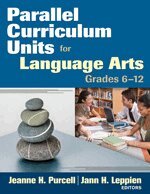
    Parallel Curriculum Units for Language Arts, Grades 6-12

    AvJeanne H. Purcell,Jann H. Leppien

    Häftad, Engelska, 2009

    643 kr

    Beställningsvara. Skickas inom 3-6 vardagar. Fri frakt över 249 kr.

    Fler format och utgåvor

    Inbunden

    1 311 kr

    Beskrivning

    "The Parallel Curriculum Model (PCM) holds the power to help students and teachers 'see the whole' of what they are learning. We invite practitioners to read more about this model and join us on a professional journey that we believe will yield that joy and wisdom that comes from seeing the whole. To address the varying needs of teachers across the K–12 grade span—as well as different content areas—we decided to create a series of curriculum units, based on PCM, that could be used by practitioners. It is our hope that the lessons not only underscore important and discipline-specific content, but also illuminate the four parallels in unique and enduring ways."
    —From the Introduction

    Design exemplary language arts lessons based on the Parallel Curriculum Model!

    Want to create rigorous learning opportunities for students in language arts based on a deeper understanding of pedagogy and curriculum design? As demonstrated in the best-selling book The Parallel Curriculum, the Parallel Curriculum Model (PCM) allows teachers to determine student performance levels and design intellectual challenges that help students develop expertise in specific subject areas.

    Parallel Curriculum Units for Language Arts, Grades 6–12 provides sample language arts units written by practicing teachers to demonstrate what high-quality curriculum looks like within a PCM framework. Covering a variety of topics—including narrative voice, literary criticism, and writing original pieces—these field-tested units each contain:

    • Teacher rationales explaining the unit design
    • Connections to concepts, skills, and national or state standards
    • Step-by-step directions for delivering the lessons and unit
    • Modification strategies, assessments, and reproducibles

    Use these examples to design your own units and deepen your understanding of how the PCM framework helps tailor curriculum to the abilities, interests, and learning preferences of each learner.

    Produktinformation

    • Utgivningsdatum:2009-09-16
    • Mått:215 x 279 x 14 mm
    • Vikt:600 g
    • Format:Häftad
    • Språk:Engelska
    • Antal sidor:232
    • Upplaga:1
    • Förlag:SAGE Publications
    • ISBN:9781412965385

    Utforska kategorier

    • Pedagogisk metodik inom Psykologi och pedagogik

    Mer om författaren

    Jeanne H. Purcell is the consultant to the Connecticut State Depart­ment of Education for gifted and talented education. She is also director of UConn Mentor Connection, a nationally recognized summer mentorship program for talented teenagers that is part of the NEAG Center for Talent Development at the University of Con­necticut. Prior to her work at the State Department of Connecticut, she was an administrator for Rocky Hill Public Schools (CT); a pro­gram specialist with the National Research Center on the Gifted and Talented, where she worked collaboratively with other researchers on national issues related to high-achieving young people; an instructor of Teaching the Talented, a graduate-level program in gifted education; and a staff developer to school districts across the country and Canada. She has been an En­glish teacher, community service coordinator, and teacher of the gifted, K-12, for 18 years in Connecticut school districts and has published many articles that have appeared in Educational Leadership, Gifted Child Quarterly, Roeper Review, Educa­tional and Psychological Measurement, National Association of Secondary School Principals’ Bulletin, Our Children: The National PTA Magazine, Parenting for High Potential, and Journal for the Education of the Gifted. She is active in the National Association for Gifted Children (NAGC) and serves on the Awards Committee and the Curriculum Committee of NAGC, for which she is the co-chair for the annual Curriculum Awards Competition. Jann Leppien served as a gifted and talented coordinator in Montana prior to attending the University of Connecticut, where she earned her doctorate in gifted education and worked as a research assistant at the National Research Center for the Gifted and Talented. She has been a teacher for 24 years, spending 14 of those years working as a classroom teacher, enrichment specialist, and coordinator of the Schoolwide Enrichment Model in Montana. She is past president of the Montana Association for Gifted and Tal­ented Education. Currently, she is an associate professor in the School of Education at the University of Great Falls in Montana. Leppien teaches graduate and under­graduate courses in gifted education, educational research, curriculum and assess­ment, creativity, and methods courses in math, science, and social studies. Her research interests include teacher collaboration, curriculum design, underachievement, and planning instruction for advanced learners. Leppien works as a consultant to teachers in the field of gifted education and as a national trainer for the Talents Unlimited Program. She is coauthor of The Multiple Menu Model: A Par­allel Guide for Developing Differentiated Curriculum. She is active in the National Association for Gifted Children (NAGC), serving as a board member and newsletter editor of the Curriculum Division, and a board member of the Association for the Education of Gifted Underachieving Students.

    Recensioner i media

    When I state adopted, here, obviously, by nature of the text, it is not for student distribution. Rather, I reviewed it gain a better perspective on ELA 6-12 practices - practices the book advertises as beneficial. Gaining the insight better enables us to place into context similar, extended curricula across our core composition courses and professional service/development courses. Therefore, by virtue of adoption, I myself will rely on it. However, I will also encourage the appropriate sources - colleagues, administrators, etc. - when appropriate to review the text. When - and my apologies, but I can′t predict a time frame at the moment - I see a group or opening for distribution across faculty and others for immediate and direct purposes, I will have the appropriate department at the university purchase the required number of texts at that time.

    Innehållsförteckning

    • About the EditorsAbout the ContributorsIntroduction to the Parallel Curriculum Model1. Understanding and Finding Your Author′s Voice: An Intermediate Language Arts Unit (Grades 6-7)Introduction to the Unit - Lee-Ann HayenContent Framework - Judy WalshAssessments - Judy WalshUnit Sequence, Description, and Teacher ReflectionsLesson 1.1: The Contributors to IdentityLesson 1.2: Shaping Your VoiceLesson 1.3: The Influences on MoodLesson 1.4: Analyzing an Author′s VoiceLesson 1.5: Finding the Right Voice and Mood for Your PurposeLesson 1.6: Your Turn2. The LIttle Napoleon in Us All: Literary Criticism and the Battle for Power (Grade 8)Introduction to the UnitContent FrameworkAssessmentsUnit Sequence, Description, and Teacher ReflectionsLesson 2.1: Preassessment/BrainstormingLesson 2.2: What Is Allegory?Lesson 2.3: Diary of an AuthorLesson 2.4: Write a Personal AllegoryLesson 2.5: Character Analysis, Part ILesson 2.6: Orwell′s ResponsibilityLesson 2.7: Literary CriticismLesson 2.8: WRite a Literary Critique of Animal FarmLesson 2.9: Character Analysis Map, Part IILesson 2.10: What Is a Classic?Lesson 2.11: Survivor: The IsmsLesson 2.12: Final Assessment3. Reacting to a Literary Model: Writing Original Pieces (Grades 9-10)Introduction to the UnitContent FrameworkAssessmentsUnit Sequence, Description, and Teacher ReflectionsLesson 3.1: PreassessmentLessons 3.2 and 3.3: Setting and MoodLessons 3.4 and 3.5: Creating Realistic CharactersLessons 3.6 and 3.7: Prejudice, Conflict, and ThemeLesson 3.8: Postassessment4. You Be the Critic: Understanding, Using, and Writing Literary Criticism (Grades 11-12)Introduction to the UnitContent FrameworkAssessmentsUnit Sequence, Description, and Teacher ReflectionsLesson 4.1: Introduction to Literary CriticismLesson 4.2: Analyzing a Fictional passage for ContentLessons 4.3, 4.4, and 4.5: Character Development and Point of ViewLessons 4.6 and 4.7: Understanding ToneLessons 4.8 and 4.9: What Is Style?Lesson 4.10: Recognizing StyleLesson 4.11: Rhetoric and Rhetorical DevicesLessons 4.12 and 4.13 The Persuasive Essay and the EditorialLessons 4.14 and 4.15: Writing a Literary AnalysisIndex