• Fri frakt över 249 kr
  • •
  • Snabba leveranser
  • •
  • Billiga böcker
Kundservice

Du är på sajten för privatpersoner.

Företag, bibliotek eller offentlig verksamhet?

Du handlar på classic.bokus.com, där alla dina funktioner finns intakta.
Till classic.bokus.com
Bokus logotyp. Gå till startsidan.
  • Erbjudanden
  • Nyheter
  • Student
  • Topplistor
  • Barn & ungdom
  • Bokus Play
  • E-böcker
  • Pocketböcker
  • Spel & pussel

10% rabatt på allt med kod: NYSTART10 →

Sidfot

Mina sidor

    Hjälp

    • Kundservice
    • Vanliga frågor och svar
    • Frakt och leverans
    • Retur vid ångerrätt
    • Reklamera vara
    • Betalning
    • Köpvillkor
    • Allmänna villkor
    • Information om webbplatsens tillgänglighet

    Om Bokus

    • Om oss
    • Pressrum
    • För studenter
    • För företag
    • För bibliotek och offentlig verksamhet
    • För leverantörer
    • Hållbarhet

    Populärt

    • Aktuella erbjudanden
    • Presentkort
    • Studentlitteratur
    • Nya böcker
    • Topplistor
    • Signerade böcker
    • Engelska böcker

    Inspiration

    • Boktips
    • BookTok
    • Populära bokserier
    • Barnbokskaraktärer
    • Populära författare
    Logotyp för Bokus
    Följ oss på Facebook (extern länk)Följ oss på Instagram (extern länk)Följ oss på YouTube (extern länk)Följ oss på TikTok (extern länk)
    bokus @ CookiesAnpassa cookiesIntegritetspolicyKöpvillkor
    Till Citymail hemsida (extern länk)Till Budbee hemsida (extern länk)Till Postnord hemsida (extern länk)Till Schenker hemsida (extern länk)Till Early Bird hemsida (extern länk)Till Walleys hemsida (extern länk)
    1. Psykologi och pedagogik
    2. Pedagogik
    3. Undervisning i specifika ämnen

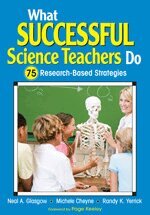
    What Successful Science Teachers Do

    75 Research-Based Strategies

    AvNeal A. Glasgow,Michele C. Cheyne

    Häftad, Engelska, 2010

    630 kr

    Beställningsvara. Skickas inom 3-6 vardagar. Fri frakt över 249 kr.

    Beskrivning

    "I found several strategies mentioned to be helpful to my own practice and tried them right away with immediate success."
    —Deanna Brunlinger, National Board Certified Science Teacher, Elkhorn Area School District, WI

    "The research is strong and well presented. The book addresses all aspects of science education and focuses on developing scientific thinkers."
    —Loukea Kovanis-Wilson, Chemistry Instructor, Clarkston High School, MI

    Supercharge your science lessons with proven strategies!

    The experience and science expertise of these award-winning authors makes this easy-to-use guide a teacher's treasure trove. This latest addition to the popular What Successful Teachers Do series describes 75 research-based strategies and outlines best practices for inquiry-oriented science. Each strategy includes a brief description of the supporting research, classroom applications, pitfalls to avoid, and references for additional learning. Teachers of students in Grades K–12 will find a host of novel ways to engage children's natural curiosity, concern, and creativity in science learning. Highlights include how to:

    • Promote collaborative learning
    • Use formative assessment to engage students in content and instruction
    • Develop culturally responsive practices that invite contributions from diverse students
    • Build students' scientific literacy and reasoning skills
    • Incorporate students' Internet skills into their studies

    When it comes to teaching science, you don't need to reinvent the wheel. Learn from the experts today and jump-start your science curriculum tomorrow!

    Produktinformation

    • Utgivningsdatum:2010-11-11
    • Mått:177 x 254 x 17 mm
    • Vikt:570 g
    • Format:Häftad
    • Språk:Engelska
    • Antal sidor:272
    • Upplaga:1
    • Förlag:SAGE Publications
    • ISBN:9781412972345

    Utforska kategorier

    • Undervisning i specifika ämnen inom Psykologi och pedagogik

    Mer om författaren

    Neal A. Glasgow′s experience includes serving as a secondary school science and art teacher both in California and New York, as a university biotechnology teaching laboratory director and laboratory technician, and as an educational consultant and frequent speaker on many educational topics. He is the author or coauthor of ten books on educational topics: What Successful Schools Do to Involve Families: Fifty Research-Based Strategies for Teachers and Administrators (2008), What Successful Literacy Teachers Do: 70 Research-Based Strategies for Teachers, Reading Coaches, and Instructional Planners (2007), What Successful Teachers Do in Diverse Classrooms: 71 Research-Based Strategies for New and Veteran Teachers (2006); What Successful Teachers Do in Inclusive Classrooms: 60 Research-Based Strategies That Help Special Learners (2005); What Successful Mentors Do: 81 Researched-Based Strategies for New Teacher Induction, Training, and Support (2004); What Successful Teachers Do: 91 Research-Based Strategies for New and Veteran Teachers (2003); Tips for Science Teachers: Research-Based Strategies to Help Students Learn (2001); New Curriculum for New Times: A Guide to Student-Centered, Problem-Based Learning (1997); Doing Science: Innovative Curriculum Beyond the Textbook for the Life Sciences (1997); and Taking the Classroom to the Community: A Guidebook (1996). Michele C. Cheyne is a clinical faculty member in science education at the University of Pittsburgh where she teaches a variety of courses in the secondary science teacher preparation program. She also supervises pre-service teachers during their clinical experiences. Cheyne has worked with Pittsburgh Public Schools on several projects and provides professional development for professional laboratory training programs. She has also worked with the Interstate New Teachers Assessment and Support Consortium in Washington, DC as a member of the committee that wrote the 2001 document Model Standards for Licensing General and Special Education Teachers of Students With Disabilities: A Resource for State Dialogue. A former high school biology and chemistry teacher in Milwaukee Public Schools, she also served as a department chair and taught science methods courses at the University of Wisconsin-Milwaukee. Randy K. Yerrick is professor of science education and associate dean of educational technology at the State University of New York at Buffalo. He began his career as a chemistry, physics, and math teacher in Michigan schools before becoming a full-time researcher in science education. Yerrick′s research focuses on implementing contemporary visions of science inquiry in lower track classrooms where students share a strong history of failure and antisocial school behaviors. He has conducted ethnographies and critical autoethnographies in a variety of diverse teaching contexts as he continues to examine unresolved school issues of equity and diversity promoted by the continuous practice of tracking in science. He has also received recognition as an Apple Distinguished Educator. Examples of his work can be found at http://edcommunity.apple.com/.

    Recensioner i media

    "This book encompasses an extensive collection of strategies supported by research and enhanced with practical classroom applications. I recommend it a must-have for novice teachers, mentoring struggling teachers, and refreshing, enhancing experienced teachers in their practice of the art and craft of teaching today’s and tomorrow’s learners."

    Innehållsförteckning

    • Foreword by Page KeeleyPrefaceAcknowledgmentsAbout the AuthorsIntroduction1. General Science InstructionEncourage Students to Become More Involved and Interested in ScienceGuide Students to Engage in Science-Appropriate DiscourseUtilize Graphic Organizers in Your ClassroomIncrease Depth of Coverage to Improve Student LearningFoster Self-Efficacy and Motivation in Your StudentsChallenge Your Students With Different Levels of QuestioningTry Using the 5E Instructional ModelSupport Your Students to Engage Effectively in Disciplinary ArgumentationUtilize Mind Mapping to Improve Student AchievementTest Students′ Ideas to Facilitate Reasoning SkillsCreate an Emotionally Positive Science Classroom EnvironmentEngage Students Who Have a History of Poor School AchievementInclude Students With Special Needs in Student-Centered Instruction2. Scientific Inquiry and Laboratory ExperienceEngage Your Students in Inquiry-Based ScienceTeach Model-Based Inquiry Over the Scientific MethodUse Problem-Based Learning to Introduce Students to Inquiry-Based ScienceImplement Inquiry-Based Instruction in Low-Track ClassesAttain Educational Goals Through Laboratory ExperiencesConvert Traditional Labs to Inquiry-Based ActivitiesAlign the Goals of Dissection to the Curriculum3. Collaborative Teaching and LearningFine-Tune Collaborative Student Relationships With the Socratic SeminarTeach Your Students Collaborative Strategies and SkillsUtilize Formal Cooperative Learning Methods in the ClassroomIntroduce Students to Constructive, Cooperative, and Academic ControversyCommunicate Beyond the Classroom by Using Electronic Pen Pals4. Utilizing Technology for the Classroom and Professional DevelopmentAdd Technological Tools to Your Students′ LearningPut Your Students′ Internet Skills to Use in the ClassroomUse Technology to Accommodate Students′ Different Learning StylesGive Students Opportunities to Use Media Production for ClassworkIncorporate Mobile Technology into Student AssignmentsModel Inquiry With Students Using Limited ResourcesUpdate Your Approach to Literacy-Related Content ActivitiesFoster Literacy Development Through Visual Texts and MediaUtilize Portable Media Players to Bring Exemplary Resources Into TeachingFind Opportunities to Record Yourself Teaching to Share With Peers5. Science AssessmentLook at Formative Assessment in a Coherent and Cohesive WayUse Standards-Based Inquiry to Prepare Students for Standards-Based TestsAlign Instruction and Assessment Tools to State Curriculum StandardsUtilize Formative Assessment to Better Engage Students in Content and InstructionAdd a Classroom Response System for Instant Formative AssessmentDesign Formative Assessment for Data to Inform InstructionEncourage Assigned Textbook Reading by Giving Open-Book TestsFocus on Students′ Writing Strengths6. Culturally Responsive Teaching and LearningAvoid Culturally Stereotyping Science StudentsMake Academic Success Your First Priority for All StudentsReach Out to Students From Unfamiliar Cultural and Linguistic BackgroundsStructure Homework for Success for Students From Nondominant BackgroundsDevelop Science Standards With a Multicultural PerspectiveBroaden Discourse Opportunities to Invite a Diverse Range of ContributionsProvide Diverse Learning Opportunities for Student DiscourseManage and Change Your Students′ MisconceptionsGuide Students to Choose Authentic Problems to SolveUtilize Meaningful Cues With Your English Language LearnersProvide ELLs With Opportunities for Extended Interactions in Group Work7. The Complex Nature of the Gender Gap in ScienceExamine the Evolving Nature of Gender Issues in Science ClassroomsChange the Opportunities and Experiences of Girls in the Science ClassroomRepresent Science in Ways That Encourage Girls to Stay InterestedImprove Attitudes Toward Science Through STS Approaches8. Science and LiteracyAddress the Three Key Elements of Reading Fluency in Science InstructionUse Scaffolding to Improve Science Reading ComprehensionConsider Reading as Inquiry With Primary LiteratureFocus on Developing Scientific Literacy and Student ReasoningUse Paraphrasing to Promote Reading Comprehension in Science TextbooksUtilize Think-Alouds to Reveal Students′ Thought Processes While ReadingSelect Commercial Reading Programs That Can Improve Scientific LiteracyUse a Variety of Print Materials to Inspire Student Reading and WritingExpand Vocabulary Instruction to Improve Comprehension and MotivationUse Students′ Native Languages in Science Literacy Instruction9. Families and Science InstructionAvoid the "Blame Game" MindsetInvolve Low-Income Parents in Their Children′s Academic LearningUnderstand How Homework Can Present Problems for Students and FamiliesChange Parents′ Attitudes Toward Science to Change Students′ AttitudesInvolve Community Members in Learning to Explore Home-Based DiscourseRecognize the Diverse Needs of Language-Minority Students and FamiliesConsider Parental Responses to a Child′s Learning DisabilityIndex