• Fri frakt över 249 kr
  • •
  • Snabba leveranser
  • •
  • Billiga böcker
Kundservice

Du är på sajten för privatpersoner.

Företag, bibliotek eller offentlig verksamhet?

Du handlar på classic.bokus.com, där alla dina funktioner finns intakta.
Till classic.bokus.com
Bokus logotyp. Gå till startsidan.
  • Erbjudanden
  • Nyheter
  • Student
  • Topplistor
  • Barn & ungdom
  • Bokus Play
  • E-böcker
  • Pocketböcker
  • Spel & pussel

10% rabatt på allt med kod: NYSTART10 →

Sidfot

Mina sidor

    Hjälp

    • Kundservice
    • Vanliga frågor och svar
    • Frakt och leverans
    • Retur vid ångerrätt
    • Reklamera vara
    • Betalning
    • Köpvillkor
    • Allmänna villkor
    • Information om webbplatsens tillgänglighet

    Om Bokus

    • Om oss
    • Pressrum
    • För studenter
    • För företag
    • För bibliotek och offentlig verksamhet
    • För leverantörer
    • Hållbarhet

    Populärt

    • Aktuella erbjudanden
    • Presentkort
    • Studentlitteratur
    • Nya böcker
    • Topplistor
    • Signerade böcker
    • Engelska böcker

    Inspiration

    • Boktips
    • BookTok
    • Populära bokserier
    • Barnbokskaraktärer
    • Populära författare
    Logotyp för Bokus
    Följ oss på Facebook (extern länk)Följ oss på Instagram (extern länk)Följ oss på YouTube (extern länk)Följ oss på TikTok (extern länk)
    bokus @ CookiesAnpassa cookiesIntegritetspolicyKöpvillkor
    Till Citymail hemsida (extern länk)Till Budbee hemsida (extern länk)Till Postnord hemsida (extern länk)Till Schenker hemsida (extern länk)Till Early Bird hemsida (extern länk)Till Walleys hemsida (extern länk)
    1. Psykologi och pedagogik
    2. Psykologi

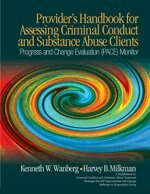
    Provider's Handbook for Assessing Criminal Conduct and Substance Abuse Clients

    Progress and Change Evaluation (PACE) Monitor; A Supplement to Criminal Conduct and Substance Abuse Treatment Strategies for Self Improvement and Change; Pathways to Responsible Living

    AvKenneth W. Wanberg,Harvey B. Milkman

    Häftad, Engelska, 2009

    2 385 kr

    Beställningsvara. Skickas inom 3-6 vardagar. Fri frakt över 249 kr.

    Fler format och utgåvor

    Inbunden

    3 283 kr

    Beskrivning

    Handbook of Assessing and Treating Substance Abuse and Criminal Conduct:The Progress and Change Evaluation (PACE) Monitor is an instructive guide that helps agencies and providers assess, monitor and evaluate the change and progress made by criminal justice clients at the beginning, during and after treatment. The guide contains dozens of instruments used to assess and evaluate clients, along with a description of each item and instructions on how to score and interpret it. It was created to be used in conjunction with the Criminal Conduct and Substance Abuse Treatment: Strategies for Self Improvement and Change curriculum, but the instruments are general enough that they can be used separately and with other curriculums as well. The tools provided in this book will be highly useful for anyone working with clients with co-occurring issues of substance abuse and criminal conduct.


    SAGE offers treatment and training programs for mental health providers that you can easily incorporate into your existing programs.

    Produktinformation

    • Utgivningsdatum:2009-12-22
    • Mått:215 x 279 x 12 mm
    • Vikt:400 g
    • Format:Häftad
    • Språk:Engelska
    • Antal sidor:208
    • Upplaga:1
    • Förlag:SAGE Publications
    • ISBN:9781412979702

    Utforska kategorier

    • Psykologi inom Psykologi och pedagogik
    • Missbruk inom Medicin
    • Brottslighet och kriminologi inom Samhälle och politik

    Mer om författaren

    Kenneth W. Wanberg, ThD, PhD, has worked as a clinician and researcher in the field of alcohol and drug abuse for more than four decades, specializing in the intersection of criminal conduct and substance abuse.  Harvey B. Milkman, PhD received his baccalaureate degree from City College of New York and his doctorate from Michigan State University. He is currently professor of psychology at Metropolitan State College of Denver. His doctoral research was conducted with William Frosch, MD, at Bellevue Psychiatric Hospital in New York City, on the User’s Drug of Choice. From 1980–1981, he completed a sabbatical exploration of addictive behavior in Africa, India, and Southeast Asia; in 1985 he was recipient of a Fulbright-Hays Lectureship award at the National University of Malaysia. He has represented the United States Information Agency as a consultant and featured speaker in Australia, Brazil, Iceland, The Netherlands, Peru, Turkey, and Yugoslavia. He is principle author with Stanley Sunderwirth of “The Chemistry of Craving,” and author of “Better than Dope,” featured articles in Psychology Today, October, 1983 and April, 2001 respectively. From September 1992–June 2002, he was author, principal investigator, and director of Project Self-Discovery: Artistic Alternatives for High-Risk Youth, a national demonstration model funded by The Center for Substance Abuse Prevention and the Edward Byrne Foundation.

    Innehållsförteckning

    • PrefaceIntroduction and Overview of the PACE MonitorWhat is the PACE Monitor?Who Would Use PACE?How is PACE to be Used?Overview of This HandbookThe Convergent Validation ModelOverview of Instruments and Scoring GuidelinesUnderstanding and Reading Instrument ScoresRestrictive UseResources for Specific InstrumentsAgency Limitations as to the use of PACEAutomated PACE: The A-PACE ManagerReviewPART I: METHODS, PROCEDURES, AND INSTRUMENTS USED IN THE PROGRESS AND CHANGE EVALUATION (PACE) MONITORCh 1. Differential Screening, Intake, and AdmissionOverviewRisk Level AssessmentAdult Self-Assessment Questionnaire (AdSAQ): Motivation and Readiness to ChangeAdult Substance Use Survey-Revised (ASUS-R): Evaluating AOD use and Other Assessment DomainsPersonal Data Questionnaire (PDQ)Treatment Assessment Questionnaire (TAQ): Motivation, Self-Control, and Response to TreatmentRating Current Status Scales (RCSS)ReviewCh 2. Differential and Comprehensive AssessmentOverviewAdult Self-Assessment Profile - ADSAPRating Adult Problems Scale (RAPS)Cognitive AssessmentThe Master Profile (MP) and Master Assessment Plan (MAP)ReviewCh 3. Measuring Progress and Change During TreatmentOverviewExpected ChangeProgram Attendance Record - PARClient Program Response (CPR)Re-Surveying of the TAQSSC Phase I Review Guide (Phase I-RG)Re-Surveying of Differential Screening and Comprehensive Assessment InstrumentsTracking the Pace Surveying and Re-Surveying ProcessSummarizing Re-Survey Instruments and SchedulesThe Maser Profile (MP) and Master Assessment Plan (MAP)ReviewCh 4. Treatment Closure and Immediate Treatment OutcomeOverviewDefining Different Treatment Closure ScenariosSummary of the PACE Program Closure Process and InstrumentsProgram Closure Inventory- Client (PCI-I) and Provider (PCI-P)Re-Survey of the TAQ and RCSSAdministration of Other Instruments at Program ClosureClosure InterviewReviewCh 5. Change Maintenance Monitoring and Follow-Up AssessmentOverviewDefining Different Post-Treatment Follow-up Assessment ScenariosFollow-up Assessment During IncarcerationCommunity Monitoring and Follow-up AssessmentCompleting the FAQ Part II - Evaluator RatingsJudicial Systems SurveyAdministration of Other Instruments at Follow-upReviewPART II: INSTRUMENTS AND SURVEYS USED IN THE PACE MONITORCh 6. Instruments and Surveys Used in Differential ScreeningAdult Substance Use Survey-Revised (ASUS-R)Adult Substance Use Survey-Revised (ASUS-R) Profile AAdult Substance Use Survey-Revised (ASUS-R) Profile BAdult Substance Use Survey-Revised (ASUS-R) Profile CAdult Self-Assessment Questionnaire (AdSAQ)Personal Data Questionnaire (PDQ)Treatment Assessment Questionnaire I (TAQ I)Treatment Assessment Questionnaire II (TAQ II)Treatment Assessment Questionnaire I and II - Answer SheetTreatment and Assessment Questionnaire I and II Profile - Basic ScalesTreatment Assessment Questionnaire I and II Profile - Supplemental ScalesRating Current Status Scales (RCSS)Rating Current Status Scales (RCSS) ProfileCh 7. Instruments and Surveys Used in Comprehensive AssessmentAdult Self-Assessment Profile (ADSAP)Adult Self-Assessment Profile Answer SheetRating Adult Problems Scales (RAPS)Adult Clinical Assessment (ADSAP and RAPS) Profiles SummaryGuidelines for Assessing Severity Levels and Treatment NeedsCognitive Assessment Guide (CAG)Ch 8. Instruments and Surveys Used in Evaluation Progress and ChangeGroup Attendance RosterIndividual Program Attending Record (PAR) Phase IIndividual Program Attending Record (PAR) Phase IIIndividual Program Attending Record (PAR) Phase I and Phase II ProfileIndividual Program Attending Record (PAR) Phase IIIIndividual Program Attending Record (PAR) Phase III ProfileClient Program Response - Client (CPR-C)Client Program Response - Provider (CPR-P)Client Program Response - Client (CPR-C) Phase I ProfileClient Program Response - Provider (CPR-P) Phase I ProfileClient Program Response - Client (CPR-C) Phase II ProfileClient Program Response - Provider (CPR-P) Phase II ProfileClient Program Response - Client (CPR-C) Phase III ProfileClient Program Response - Provider (CPR-P) Phase III ProfilePhase I Review Guide (Phase I-RG)Ch 9. Treatment Closure InstrumentsProgram Closure Inventory - Client (PCI-C)Program Closure Inventory - Provider (PCI-P)Program Closure Inventory - Client (PCI-C) and Provider (PCI-P) ProfilesCh 10. Treatment Closure InstrumentsFollow-up Assessment Questionnaire Part I (FAQ-I) Part IFollow-up Assessment Questionnaire Part II (FAQ-II)Follow-up Assessment Questionnaire Part I ProfileFollow-up Assessment Questionnaire Part II ProfileJudicial System Survey (JSS)Master Individual Client Survey RecordGroup Survey RecordReferencesAbout the Authors