• Fri frakt över 249 kr
  • •
  • Snabba leveranser
  • •
  • Billiga böcker
Kundservice

Du är på sajten för privatpersoner.

Företag, bibliotek eller offentlig verksamhet?

Du handlar på classic.bokus.com, där alla dina funktioner finns intakta.
Till classic.bokus.com
Bokus logotyp. Gå till startsidan.
  • Erbjudanden
  • Nyheter
  • Student
  • Topplistor
  • Barn & ungdom
  • Bokus Play
  • E-böcker
  • Pocketböcker
  • Spel & pussel

10% rabatt på allt med kod: NYSTART10 →

Sidfot

Mina sidor

    Hjälp

    • Kundservice
    • Vanliga frågor och svar
    • Frakt och leverans
    • Retur vid ångerrätt
    • Reklamera vara
    • Betalning
    • Köpvillkor
    • Allmänna villkor
    • Information om webbplatsens tillgänglighet

    Om Bokus

    • Om oss
    • Pressrum
    • För studenter
    • För företag
    • För bibliotek och offentlig verksamhet
    • För leverantörer
    • Hållbarhet

    Populärt

    • Aktuella erbjudanden
    • Presentkort
    • Studentlitteratur
    • Nya böcker
    • Topplistor
    • Signerade böcker
    • Engelska böcker

    Inspiration

    • Boktips
    • BookTok
    • Populära bokserier
    • Barnbokskaraktärer
    • Populära författare
    Logotyp för Bokus
    Följ oss på Facebook (extern länk)Följ oss på Instagram (extern länk)Följ oss på YouTube (extern länk)Följ oss på TikTok (extern länk)
    bokus @ CookiesAnpassa cookiesIntegritetspolicyKöpvillkor
    Till Citymail hemsida (extern länk)Till Budbee hemsida (extern länk)Till Postnord hemsida (extern länk)Till Schenker hemsida (extern länk)Till Early Bird hemsida (extern länk)Till Walleys hemsida (extern länk)
    1. Psykologi och pedagogik
    2. Pedagogik
    3. Skolväsen och utbildningssystem
    4. Examination och betygsättning

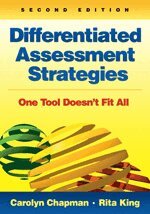
    Differentiated Assessment Strategies

    One Tool Doesn′t Fit All

    AvCarolyn M. Chapman,Rita S. King

    Häftad, Engelska, 2012

    481 kr

    Skickas . Fri frakt över 249 kr.

    Beskrivning

    Boost student achievement with easy-to-use formative assessment tools In this second edition of the bestseller, the authors provide research-based and practical formative assessment tools, strategies, and activities that simplify the process of identifying students′ strengths and needs. Updated features include a new chapter on exciting ways to engage learners in self-assessment; more tools for assessing before, during, and after learning; and approaches to help students take ownership of their own learning. Differentiated Assessment Strategies gives teachers: Formative assessment strategies for all grade levels and content areasTools for interpreting ongoing assessment data for immediate intervention and planningAssessment strategies that provide immediate feedback to teachers and learnersMethods for determining learner preferences, cognitive styles, and multiple intelligencesTips for establishing a positive environment for assessmentIncluded are surveys, checklists, questionnaires, assignments, graphic organizers, portfolio work samples, rubrics, and more. These user-friendly tools are valuable for assessing all students, informing instruction, and accommodating learners′ individual needs. The final chapter pulls it all together and shows how to integrate formative assessment to improve student achievement.

    Produktinformation

    • Utgivningsdatum:2012-01-10
    • Mått:177 x 254 x 14 mm
    • Vikt:420 g
    • Format:Häftad
    • Språk:Engelska
    • Antal sidor:216
    • Upplaga:2
    • Förlag:SAGE Publications Inc
    • ISBN:9781412996648

    Utforska kategorier

    • Examination och betygsättning inom Psykologi och pedagogik

    Mer om författaren

    Carolyn Chapman is an international educational consultant, author, and teacher who has taught in kindergarten to college classrooms. Her interactive, hands-on professional development training sessions challenge educators to use strategies that ensure success for learners of all ages. Chapman has written many books about differentiated instruction, multiple intelligences, multiple assessments, and the brain-compatible classroom. She is coauthor with Gayle Gregory of the landmark Corwin Press book Differentiated Instructional Strategies: One Size Doesn′t Fit All. Rita King has more than 20 years of teacher training experience and administrative experience as principal and director of Middle Tennessee State University′s teacher training program in the laboratory school. Most recently, she was an adjunct professor in the Department of Educational Leadership at the university. She now consults internationally in the areas of multiple intelligences, practical applications of brain-based research, differentiated learning, reading and writing strategies, mathematics instruction, creating effective learning environments, and strategies for test success. She is the coauthor of Differentiated Instructional Strategies for Reading in the Content Areas, Differentiated Instructional Strategies for Writing in the Content Areas, and Differentiated Assessment Strategies: One Tool Doesn′t Fit All.

    Recensioner i media

    "This is a book that should be in the hands of every educator. It is practical, easy to use and such a great collection of assessments that can be easily implemented in any subject area."

    Innehållsförteckning

    • PrefaceAcknowledgmentsAbout the Authors1. One Tool Doesn′t Fit All: IntroductionWhat Is Differentiated Assessment?Analyzing Your View of Differentiated AssessmentBuilding the Toolbox to "Zap the Gaps"Assessment in the Age of AccountabilityWhat Is the Teacher′s Role in Differentiated Assessment?Opening the Toolbox2. Bringing Research and Best Practices to Differentiated Formative AssessmentProcessing Information and MemoryWhy Students Forget and Why They RememberAssist the Brain in Memory ProcessingDevelop Intelligent Behaviors for AssessmentAuthentic AssessmentPerformance Feedback3. Creating a Climate for Formative AssessmentThe Affective Domain and AssessmentEmotionsEmotional IntelligenceSelf-EfficacyMotivation for AssessmentThe Physical EnvironmentSetting Climate Goals4. Knowing the LearnerInformation GatheringGardner′s Multiple Intelligence TheoryExploring Goleman and SternbergMore Ways to View LearnersThrough Animals′ EyesPerformance Level Titles for the Assessed LearnerSummary5. Exploring Self-AssessmentWhat Is Self-Assessment?What Is Self-Talk?Self-Talk for Task AssessmentTeaching Self-AssessmentWhy Is It Important to Teach Learners How to Self Assess?Self-Checking Techniques for AssessmentAssess On-Task BehaviorsSummary6. Formative Assessment Before the LearningPersonalize Instructional PlanningEngaging Students Before the LearningSummary7. Formative Assessment During the LearningFormative Assessment Tools to Use During the LearningSummary8. Formative Assessment After the LearningAssessment Tools: After the LearningBloom′s Taxonomy for Comprehension AssessmentSummary9. Differentiating Summative AssessmentsHow Can Standardized Assessments Be Differentiated?Create a Positive Testing EnvironmentGive Effective DirectionsTeach Test-Taking SkillsGradingSummary10. Assessment for Differentiated Instruction and Flexible GroupingUsing Technology for AssessmentAssessment CubingChoice BoardsAssessment AgendasStation, Centers, and Learning Zones for AssessmentAssessment for Flexible GroupingEvaluating Group WorkGroup Discussion: AssessmentTroubleshooting Tools for Group AssessmentSummary11. Differentiated Instructional Planning ModelsAdjustable Assignment ModelCurriculum Compacting ModelAcademic Contract ModelProject-Based ModelProblem-Based ModelSummary12. Planning for Differentiated AssessmentStep Up to Formative Assessment PlanningContent, Process, Product, and Learning Disposition AssessmentEssential Questions for PlanningAssess the Assessment ToolTeaching Assessment StrategiesEffective Differentiated Assessment PracticesGenerate Change for Differentiated Formative AssessmentSummaryBibliographyIndexSummary