• Fri frakt över 249 kr
  • •
  • Snabba leveranser
  • •
  • Billiga böcker
Kundservice

Du är på sajten för privatpersoner.

Företag, bibliotek eller offentlig verksamhet?

Du handlar på classic.bokus.com, där alla dina funktioner finns intakta.
Till classic.bokus.com
Bokus logotyp. Gå till startsidan.
  • Erbjudanden
  • Student
  • Topplistor
  • Barn & ungdom
  • Bokus Play
  • E-böcker
  • Ljudböcker
  • Pocketböcker
  • Spel & pussel

10% rabatt på allt med kod NYSTART10 →

Sidfot

Mina sidor

    Hjälp

    • Kundservice
    • Vanliga frågor och svar
    • Frakt och leverans
    • Retur vid ångerrätt
    • Reklamera vara
    • Betalning
    • Köpvillkor
    • Allmänna villkor
    • Information om webbplatsens tillgänglighet

    Om Bokus

    • Om oss
    • Pressrum
    • För studenter
    • För företag
    • För bibliotek och offentlig verksamhet
    • För leverantörer
    • Hållbarhet

    Populärt

    • Aktuella erbjudanden
    • Presentkort
    • Studentlitteratur
    • Nya böcker
    • Topplistor
    • Signerade böcker
    • Engelska böcker

    Inspiration

    • Boktips
    • BookTok
    • Populära bokserier
    • Barnbokskaraktärer
    • Populära författare
    Logotyp för Bokus
    Följ oss på Facebook (extern länk)Följ oss på Instagram (extern länk)Följ oss på YouTube (extern länk)Följ oss på TikTok (extern länk)
    bokus @ CookiesAnpassa cookiesIntegritetspolicyKöpvillkor
    Till Citymail hemsida (extern länk)Till Budbee hemsida (extern länk)Till Postnord hemsida (extern länk)Till Schenker hemsida (extern länk)Till Early Bird hemsida (extern länk)Till Walleys hemsida (extern länk)
    1. Data och IT
    2. Systemvetenskap och AI

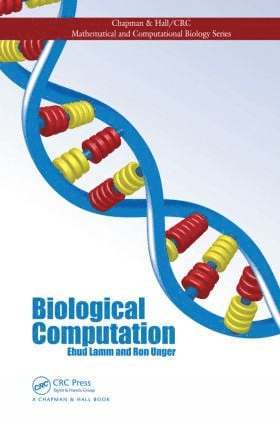
    Biological Computation

    AvEhud Lamm,Ron Unger

    Inbunden, Engelska, 2011

    Del i serien Chapman & Hall/CRC Computational Biology Series

    1 465 kr

    Beställningsvara. Skickas inom 10-15 vardagar. Fri frakt över 249 kr.

    Fler format och utgåvor

    E-bok

    1 709 kr

    E-bok

    1 709 kr

    Beskrivning

    The area of biologically inspired computing, or biological computation, involves the development of new, biologically based techniques for solving difficult computational problems. A unified overview of computer science ideas inspired by biology, Biological Computation presents the most fundamental and significant concepts in this area. In the book, students discover that bacteria communicate, that DNA can be used for performing computations, how evolution solves optimization problems, that the way ants organize their nests can be applied to solve clustering problems, and what the human immune system can teach us about protecting computer networks. The authors discuss more biological examples such as these, along with the computational techniques developed from these scenarios.The text focuses on cellular automata, evolutionary computation, neural networks, and molecular computation. Each chapter explores the biological background, describes the computational techniques, gives examples of applications, discusses possible variants of the techniques, and includes exercises and solutions. The authors use the examples and exercises to illustrate key ideas and techniques.Clearly conveying the essence of the major computational approaches in the field, this book brings students to the point where they can either produce a working implementation of the techniques or effectively use one of the many available implementations. Moreover, the techniques discussed reflect fundamental principles that can be applied beyond bio-inspired computing. Supplementary material is available on Dr. Unger's website.

    Produktinformation

    • Utgivningsdatum:2011-05-25
    • Mått:156 x 234 x 21 mm
    • Vikt:800 g
    • Format:Inbunden
    • Språk:Engelska
    • Serie:Chapman & Hall/CRC Computational Biology Series
    • Antal sidor:343
    • Förlag:Taylor & Francis Ltd
    • ISBN:9781420087956

    Utforska kategorier

    • Systemvetenskap och AI inom Data och IT
    • Biologi inom Naturvetenskap och teknik

    Mer om författaren

    Ehud Lamm is on the faculty of The Cohn Institute for the History and Philosophy of Science and Ideas at Tel-Aviv University. Along with his co-author, he previously developed a course on biological computation for the Open University of Israel. He earned his Ph.D. in philosophy of science from Tel-Aviv University.Ron Unger is a professor and head of the computational biology program at Bar-Ilan University. His current research is focused on protein folding models, genetic algorithms, analysis of biological sequences, and noncoding RNA molecules. He earned his Ph.D. from the Weizmann Institute of Science.

    Recensioner i media

    Biological computing, the three-billion-year-old goldmine of information processing concepts, is ready for our educational mainstream. This beautiful undergraduate text by Lamm and Unger may be the first step. This book expertly presents fundamental concepts of molecular biology in its first chapter, and then goes on to develop many computing classics from biology. … I enjoyed reading this text. The exercises flex the imagination, the definitions are clear and precise, and the explanations are unusually powerful. I have been searching for a text like this for years, and now I look forward to using it.—Computing Reviews, August 2011I read this book in one breath—it opens vistas on how the fields of computation and biology can inspire each other. I particularly enjoyed the analogies between immune systems and software that fights computer viruses.—Uri Alon, Weizmann Institute of Science, Rehovot, Israel, and author of An Introduction to Systems Biology: Design Principles of Biological CircuitsThe book by Lamm and Unger methodically covers exciting developments in biological computation, offering for the first time a broad perspective of this important cutting-edge field of research.—Ehud Shapiro, The Harry Weinrebe Professorial Chair of Computer Science and Biology, Weizmann Institute of Science, Rehovot, IsraelThis is a wonderful treatise on bio-inspired computation, written from a computer science perspective. The authors are extremely knowledgeable about their subject, and the material they cover is both broad and deep. The book should benefit anyone interested in the connection between computer science and biology, a connection that is poised to become dramatically central to the science of the 21st century.—David Harel, The William Sussman Professorial Chair, Department of Computer Science and Applied Mathematics, Weizmann Institute of Science, Rehovot, Israel

    Innehållsförteckning

    • Introduction and Biological Background. Cellular Automata. Evolutionary Computation. Artificial Neural Networks. Molecular Computation. The Never-Ending Story: Additional Topics at the Interface between Biology and Computation.