• Fri frakt över 249 kr
  • •
  • Snabba leveranser
  • •
  • Billiga böcker
Kundservice

Du är på sajten för privatpersoner.

Företag, bibliotek eller offentlig verksamhet?

Du handlar på classic.bokus.com, där alla dina funktioner finns intakta.
Till classic.bokus.com
Bokus logotyp. Gå till startsidan.
  • Erbjudanden
  • Nyheter
  • Student
  • Topplistor
  • Barn & ungdom
  • Bokus Play
  • E-böcker
  • Pocketböcker
  • Spel & pussel

10% rabatt på allt med kod NYSTART10 →

Sidfot

Mina sidor

    Hjälp

    • Kundservice
    • Vanliga frågor och svar
    • Frakt och leverans
    • Retur vid ångerrätt
    • Reklamera vara
    • Betalning
    • Köpvillkor
    • Allmänna villkor
    • Information om webbplatsens tillgänglighet

    Om Bokus

    • Om oss
    • Pressrum
    • För studenter
    • För företag
    • För bibliotek och offentlig verksamhet
    • För leverantörer
    • Hållbarhet

    Populärt

    • Aktuella erbjudanden
    • Presentkort
    • Studentlitteratur
    • Nya böcker
    • Topplistor
    • Signerade böcker
    • Engelska böcker

    Inspiration

    • Boktips
    • BookTok
    • Populära bokserier
    • Barnbokskaraktärer
    • Populära författare
    Logotyp för Bokus
    Följ oss på Facebook (extern länk)Följ oss på Instagram (extern länk)Följ oss på YouTube (extern länk)Följ oss på TikTok (extern länk)
    bokus @ CookiesAnpassa cookiesIntegritetspolicyKöpvillkor
    Till Citymail hemsida (extern länk)Till Budbee hemsida (extern länk)Till Postnord hemsida (extern länk)Till Schenker hemsida (extern länk)Till Early Bird hemsida (extern länk)Till Walleys hemsida (extern länk)
    1. Djur och Natur
    2. Naturböcker
    3. Växtböcker

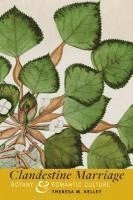
    Clandestine Marriage

    Botany and Romantic Culture

    AvTheresa M. Kelley

    Inbunden, Engelska, 2013

    652 kr

    Tillfälligt slut

    Beskrivning

    Romanticism was a cultural and intellectual movement characterized by discovery, revolution, and the poetic as well as by the philosophical relationship between people and nature. Botany sits at the intersection where romantic scientific and literary discourses meet. "Clandestine Marriage" explores the meaning and methods of how plants were represented and reproduced in scientific, literary, artistic, and material cultures of the period. Theresa M. Kelley synthesizes romantic debates about taxonomy and morphology, the contemporary interest in books and magazines devoted to plant study and images, and writings by such authors as Mary Wollstonecraft and Anna Letitia Barbauld. Period botanical paintings of flowers are reproduced in vibrant color, bringing her argument and the romantics' passion for plants to life. In addition to exploring botanic thought and practice in the context of British romanticism, Kelley also looks to the German philosophical traditions of Kant, Hegel, and Goethe and to Charles Darwin's reflections on orchids and plant pollination.Her interdisciplinary approach allows a deeper understanding of a time when exploration of the natural world was a culture-wide enchantment.

    Produktinformation

    • Utgivningsdatum:2013-01-10
    • Mått:156 x 235 x 31 mm
    • Vikt:726 g
    • Format:Inbunden
    • Språk:Engelska
    • Antal sidor:400
    • Förlag:Johns Hopkins University Press
    • ISBN:9781421405179

    Utforska kategorier

    • Växtböcker inom Djur och Natur
    • Botanik inom Naturvetenskap och teknik
    • Litteraturvetenskap inom Skönlitteratur

    Mer om författaren

    Theresa M. Kelley is the Marjorie and Lorin Tiefenthaler Professor of English at the University of Wisconsin, Madison. She is the author of Reinventing Allegory.

    Recensioner i media

    Any college-level science holding and many a history collection will appreciate the multi-facted coverage. Midwest Book Review Clandestine Marriage is a veritable encyclopedia of botany in the Romantic period, a book that not only discovers, enumerates, and illuminates key details and facts but also crafts a truly amazing argument: that the literary, aesthetic, philosophical, and scientific disruptions of the Romantic period were shaped and paralleled by the ways in which plants were seen to disrupt the kingdom of nature. Clandestine Marriage opens up new avenues for thinking, reading, and writing about a variety of Romantic texts, and it should be of interest to anyone studying Romanticism and the nineteenth century. -- Seth Reno NEW BOOKS ON LITERATURE 19 Clandestine Marriage makes an important contribution to our understanding of the essential role that plants played in the conceptual transformation of nature as a place where taxonomic hegemony reigned to one complicated by chance and contingency. More than this, Kelley's focus on plants as both insistently 'idea' and 'material' furthers the conversationabout why plants-as plants-mattered so much to so many for so long. -- Tina Gianquitto, Colorado School of Mines ISLE: Interdisciplinary Studies in Literature and Environment Kelley begins with Linnaeus, and develops the clandestine marriage theme, passes through Erasmus Darwin and the 'rustic' poet John Clare with a fascinating side trip into women botanists of the 19th century, journeys to India in the days of the Raj, then ends up with Percy Bysshe Shelley by way of Goethe and Hegel and the quite wonderful Orchidaceae of Mexico and Guatemala. At first sight a seemingly unconnected set of points, but Kelley weaves a compelling tale of interconnection, all underpinned by the way people saw and used plants in diverse and creative ways. -- Sandra Knapp Linnean Kelley's comprehensive survey of the riches of Romantic botany and botanizing is a book that helps to shape our understanding of the sources of our own current thinking and the distances that thinking has traveled from the pagan cosmology of Erasmus Darwin. -- Ashton Nichols European Romantic Review Kelley's expertly rendered Clandestine Marriage provides a powerful and nuanced examination of the material and figurative presence of plants in the romantic era. Kelley argues that the 'unruliness' of romantic plants, which 'resist or exceed conceptual location,' raised difficult questions about the individual and collective identities and challenged the 'epistemological mastery' of nature promised by Enlightenment-era classificatory systems. This unruly 'nature of romantic nature,' as Kelley demonstrates, can best be determined by examining the 'productive friction' generated by organizing categories-of matter, species, cultural material, and poetic figuration-coming under question and into conflict. -- Tina Gianquitto ISLE: Interdisciplinary Studies in Literature and Environment Clandestine Marriage is the first book-length study of botany in the Romantic era. It offers a fascinating view of botany as a transgessive discourse that crossed epistemic boundaries of all sorts. -- James C. McKusick Wordsworth Circle This is a very erudite and provocative thesis. The Year's Work in English Studies This book is meticulously researched and it exceptionally well illustrated, with three ample gatherings of botanical art that help to inform Kelley's discussion. Clandestine Marriage is an intellectually rigorous and well-conceived scholarly contribution both to the study of botanical history and to the study of Romantic-era literature. Readers interested in the confluence of these areas of study will find Kelley's book especially intriguing. -- Ben P. Robertson BARS Bulletin and Review [ Clandestine Marriage] is a fine work, a superb contribution to the study of the Romantic period and the relationship between botany and literature. In its deep commitment to historical understanding and to close reading, capturing the figural play occasioned by the material nature of plants and their culture, Kelley's Clandestine Marriage provides a unique account of complex stirrings that lie just below the surface of the Romantic love of plants. -- Alan Bewell Studies in Romanticism

    Innehållsförteckning

    • List of IllustrationsAcknowledgments1. Introduction2. Botanical Matters3. Botany's Publics and Privates4. Botanizing Women5. Clare's Commonable PlantsInterlude One: Mala's Garden6. Reading Matter and PaintInterlude Two: A Romantic Garden7. Restless Romantic Plants and Philosophers8. ConclusionNotesBibliographyIndex