• Fri frakt över 249 kr
  • •
  • Snabba leveranser
  • •
  • Billiga böcker
Kundservice

Du är på sajten för privatpersoner.

Företag, bibliotek eller offentlig verksamhet?

Du handlar på classic.bokus.com, där alla dina funktioner finns intakta.
Till classic.bokus.com
Bokus logotyp. Gå till startsidan.
  • Erbjudanden
  • Nyheter
  • Student
  • Topplistor
  • Barn & ungdom
  • Bokus Play
  • E-böcker
  • Pocketböcker
  • Spel & pussel

10% rabatt på allt med kod: NYSTART10 →

Sidfot

Mina sidor

    Hjälp

    • Kundservice
    • Vanliga frågor och svar
    • Frakt och leverans
    • Retur vid ångerrätt
    • Reklamera vara
    • Betalning
    • Köpvillkor
    • Allmänna villkor
    • Information om webbplatsens tillgänglighet

    Om Bokus

    • Om oss
    • Pressrum
    • För studenter
    • För företag
    • För bibliotek och offentlig verksamhet
    • För leverantörer
    • Hållbarhet

    Populärt

    • Aktuella erbjudanden
    • Presentkort
    • Studentlitteratur
    • Nya böcker
    • Topplistor
    • Signerade böcker
    • Engelska böcker

    Inspiration

    • Boktips
    • BookTok
    • Populära bokserier
    • Barnbokskaraktärer
    • Populära författare
    Logotyp för Bokus
    Följ oss på Facebook (extern länk)Följ oss på Instagram (extern länk)Följ oss på YouTube (extern länk)Följ oss på TikTok (extern länk)
    bokus @ CookiesAnpassa cookiesIntegritetspolicyKöpvillkor
    Till Citymail hemsida (extern länk)Till Budbee hemsida (extern länk)Till Postnord hemsida (extern länk)Till Schenker hemsida (extern länk)Till Early Bird hemsida (extern länk)Till Walleys hemsida (extern länk)
    1. Ekonomi och Ledarskap
    2. Nationalekonomi
    3. Mikroekonomi

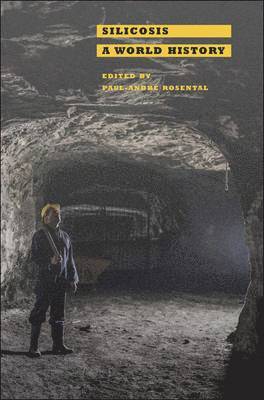
    Silicosis

    A World History

    AvPaul-André Rosental

    Inbunden, Engelska, 2017

    504 kr

    Tillfälligt slut

    Beskrivning

    Despite the common perception that "black lung" has been relegated to the dustbin of history, silicosis remains a crucial public health problem that threatens millions of people around the world. This painful and incurable chronic disease, still present in old industrial regions, is now expanding rapidly in emerging economies around the globe. Most industrial sectors-including the metallurgical, glassworking, foundry, stonecutting, building, and tunneling industries-expose their workers to lethal crystalline silica dust. Dental prosthodontists are also at risk, as are sandblasters, pencil factory workers in developing nations, and anyone who handles concentrated sand squirt to clean oil tanks, build ships, or fade blue jeans. In Silicosis, eleven experts argue that silicosis is more than one of the most pressing global health concerns today-it is an epidemic in the making. Essays explain how the understanding of the disease has been shaken by new medical findings and technologies, developments in industrializing countries, and the spread of the disease to a wide range of professions beyond coal mining.Examining the global reactions to silicosis, the authors trace the history of the disease and show how this occupational health hazard first came to be recognized as well as the steps that were necessary to deal with it at that time. Adopting a global perspective, Silicosis offers comparative insights into a variety of different medical and political strategies to combat silicosis. It also analyzes the importance of transnational processes-carried on by international organizations and NGOs and sparked by waves of migrant labor-which have been central to the history of silicosis since the early twentieth century. Ultimately, by bringing together historians and physicians from around the world, Silicosis pioneers a new collective method of writing the global history of disease. Aimed at legal and public health scholars, physicians, political economists, social scientists, historians, and all readers concerned by labor and civil society movements in the contemporary world, this book contains lessons that will be applicable not only to people working on combating silicosis but also to people examining other occupational diseases now and in the future.Contributors: Alberto Baldasseroni, Francesco Carnevale, Eric Geerkens, Martin Lengwiler, Gerald Markowitz, Jock McCulloch, Joseph Melling, Julia Moses, Paul-Andre Rosental, David Rosner, Bernard Thomann

    Produktinformation

    • Utgivningsdatum:2017-06-20
    • Mått:152 x 229 x 25 mm
    • Vikt:522 g
    • Format:Inbunden
    • Språk:Engelska
    • Antal sidor:296
    • Förlag:Johns Hopkins University Press
    • ISBN:9781421421551

    Utforska kategorier

    • Mikroekonomi inom Ekonomi och Ledarskap
    • Medicinhistoria inom Medicin
    • Samhällsmedicin och preventiv medicin inom Medicin

    Mer om författaren

    Paul-Andre Rosental is a professor of contemporary history at Sciences Po and a fellow scholar at the Institut National d'Etudes Demographiques. He is the author of Destins de l'eugenisme and a coauthor of La Sante au travail: 1880-2006.

    Recensioner i media

    Although the reader may think this could be a heavy read, the book is set out well and it was easy to read. The author enables the reader to understand. It is referenced well. Some books of this genre can be difficult to read, as politics, legal and medical terminology can feel beyond the reader- this was not the case.—Nursing Times

    Innehållsförteckning

    • Introduction: Why Silicosis? Paul-Andre RosentalChapter 1 Why Is Silicosis So Important? Gerald Markowitz and David RosnerChapter 2: The Genesis and Development of the Scientific Concept of Pulmonary Silicosis during the Nineteenth Century Alberto Baldasseroni and Francesco CarnevaleChapter 3: Johannesburg and Beyond: Silicosis as a Transnational and Imperial Disease (1900-1940) Jock McCulloch and Paul-Andre Rosental, with Joe MellingChapter 4: The Politics of Recognition and Its Limitations: Legislating on Silicosis in the First Half of the Twentieth Century-a National or Transnational Process? Martin Lengwiler, Julia Moses, Bernard Thomann with Joseph MellingChapter 5: Silicosis and "Silicosis": Minimizing Compensation Costs, or Why Do Occupational Diseases Cost So Little Paul-Andre Rosental and Bernard ThomannChapter 6: Silica or coal? Design and Implementation of Dust Prevention in the collieries in Western Economies (circa 1930-1980) Eric GeerkensConclusion: Silica, Silicosis and Occupational Health in the Globalized World of the Twenty-First Century Francesco Carnevale, Paul-Andre Rosental and Bernard ThomannBibliography