• Fri frakt över 249 kr
  • •
  • Snabba leveranser
  • •
  • Billiga böcker
Kundservice

Du är på sajten för privatpersoner.

Företag, bibliotek eller offentlig verksamhet?

Du handlar på classic.bokus.com, där alla dina funktioner finns intakta.
Till classic.bokus.com
Bokus logotyp. Gå till startsidan.
  • Erbjudanden
  • Nyheter
  • Student
  • Topplistor
  • Barn & ungdom
  • Bokus Play
  • E-böcker
  • Pocketböcker
  • Spel & pussel

10% rabatt på allt med kod: NYSTART10 →

Sidfot

Mina sidor

    Hjälp

    • Kundservice
    • Vanliga frågor och svar
    • Frakt och leverans
    • Retur vid ångerrätt
    • Reklamera vara
    • Betalning
    • Köpvillkor
    • Allmänna villkor
    • Information om webbplatsens tillgänglighet

    Om Bokus

    • Om oss
    • Pressrum
    • För studenter
    • För företag
    • För bibliotek och offentlig verksamhet
    • För leverantörer
    • Hållbarhet

    Populärt

    • Aktuella erbjudanden
    • Presentkort
    • Studentlitteratur
    • Nya böcker
    • Topplistor
    • Signerade böcker
    • Engelska böcker

    Inspiration

    • Boktips
    • BookTok
    • Populära bokserier
    • Barnbokskaraktärer
    • Populära författare
    Logotyp för Bokus
    Följ oss på Facebook (extern länk)Följ oss på Instagram (extern länk)Följ oss på YouTube (extern länk)Följ oss på TikTok (extern länk)
    bokus @ CookiesAnpassa cookiesIntegritetspolicyKöpvillkor
    Till Citymail hemsida (extern länk)Till Budbee hemsida (extern länk)Till Postnord hemsida (extern länk)Till Schenker hemsida (extern länk)Till Early Bird hemsida (extern länk)Till Walleys hemsida (extern länk)
    1. Samhälle och politik
    2. Samhälle och kultur
    3. Sociala och etiska frågor

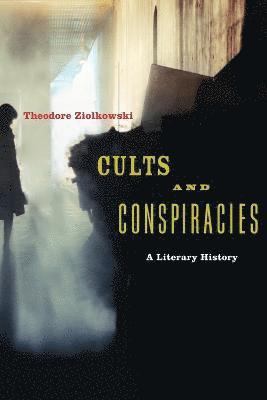
    Cults and Conspiracies

    A Literary History

    AvTheodore Ziolkowski

    Häftad, Engelska, 2017

    407 kr

    Beställningsvara. Skickas inom 5-8 vardagar. Fri frakt över 249 kr.

    Beskrivning

    Human beings have believed in conspiracies presumably as long as there have been groups of at least three people in which one was convinced that the other two were plotting against him or her. In that sense one might look back as far as Eve and the serpent to find the world's first conspiracy. Whereas recent generations have tended to find their conspiracies in politics and government, the past often sought its mysteries in religious cults or associations. In ancient Rome, for example, the senate tried to prohibit the cult of Isis lest its euphoric excesses undermine public morality and political stability. And during the Middle Ages, many rulers feared such powerful and mysterious religious orders as the Knights Templar. Fascination with the arcane is a driving force in this comprehensive survey of conspiracy fiction. Theodore Ziolkowski traces the evolution of cults, orders, lodges, secret societies, and conspiracies through various literary manifestations-drama, romance, epic, novel, opera-down to the thrillers of the twenty-first century.Arguing that the lure of the arcane throughout the ages has remained a constant factor of human fascination, Ziolkowski demonstrates that the content of conspiracy has shifted from religion by way of philosophy and social theory to politics. In the process, he reveals, the underlying mythic pattern was gradually co-opted for the subversive ends of conspiracy. Cults and Conspiracies considers Euripides's Bacchae, Andreae's Chymical Wedding, Mozart's The Magic Flute, and Eco's Foucault's Pendulum, among other seminal works. Mimicking the genre's quest-driven narrative arc, the reader searches for the significance of conspiracy fiction and is rewarded with the author's cogent reflections in the final chapter. After much investigation, Ziolkowski reinforces Umberto Eco's notion that the most powerful secret, the magnetic center of conspiracy fiction, is in fact "a secret without content."

    Produktinformation

    • Utgivningsdatum:2017-03-13
    • Mått:152 x 229 x 15 mm
    • Vikt:363 g
    • Format:Häftad
    • Språk:Engelska
    • Antal sidor:248
    • Förlag:Johns Hopkins University Press
    • ISBN:9781421422435

    Utforska kategorier

    • Sociala och etiska frågor inom Samhälle och politik
    • Forntidens historia inom Historia och arkeologi
    • Sociala grupper och identitet inom Samhälle och politik

    Mer om författaren

    Theodore Ziolkowski is professor emeritus of German and comparative literature at Princeton University. He is the author of Uses and Abuses of Moses: Literary Representations since the Enlightenment, German Romanticism and Its Institutions, and Alchemist in Literature: From Dante to the Present.

    Recensioner i media

    This is a literary and cultural history for the twenty-first century: fascinating in scope and focus, striking in its attention to detail, solid in its continuity, and indisputably erudite. Choice Ziolkowski is excellently placed to attempt the construction of a genre history... As such, his treatment of the literature and the array of texts included is predictably masterful, moving with ease from Greek and Roman mysteries in antiquity to the Medieval representations of the Knights Templar, through the Rosicrucian manifestoes and the German Enlightenment lodge novels, to the literary depictions of secret societies of Romantic Socialism. Nova Religio Conspiracies, whether attributed to mystery cults, Freemasons, Socialists, or Rosicrucians, pervade literature from Euripides to Umberto Eco, as Theodore Ziolkowski shows in [this book]. Ziolkowski has read everything, taking even a 3,000-page German novel in his stride, and summarizes and analyses his material fascinatingly for lesser mortals. Times Literary Supplement The wealth of examples, the lively and indeed intimate writing style, and the delicate refusal to go too far in the analysis of paranoid fantasies all contribute to a welcome dealing with mystery, secrecy, and the arcane. Modern Philology

    Innehållsförteckning

    • PrefaceIntroduction1. The Mystery Cults of Antiquity2. The Order of Knights Templar in the Middle Ages3. The Rosicrucians of the Post-Reformation4. The Lodges of the Enlightenment5. Secret Societies of Romantic Socialism6. Modern Variations7. Interlude8. The Playfulness of PostmodernismConclusionNotesIndex