• Fri frakt över 249 kr
  • •
  • Snabba leveranser
  • •
  • Billiga böcker
Kundservice

Du är på sajten för privatpersoner.

Företag, bibliotek eller offentlig verksamhet?

Du handlar på classic.bokus.com, där alla dina funktioner finns intakta.
Till classic.bokus.com
Bokus logotyp. Gå till startsidan.
  • Erbjudanden
  • Nyheter
  • Student
  • Topplistor
  • Barn & ungdom
  • Bokus Play
  • E-böcker
  • Pocketböcker
  • Spel & pussel

10% rabatt på allt med kod NYSTART10 →

Sidfot

Mina sidor

    Hjälp

    • Kundservice
    • Vanliga frågor och svar
    • Frakt och leverans
    • Retur vid ångerrätt
    • Reklamera vara
    • Betalning
    • Köpvillkor
    • Allmänna villkor
    • Information om webbplatsens tillgänglighet

    Om Bokus

    • Om oss
    • Pressrum
    • För studenter
    • För företag
    • För bibliotek och offentlig verksamhet
    • För leverantörer
    • Hållbarhet

    Populärt

    • Aktuella erbjudanden
    • Presentkort
    • Studentlitteratur
    • Nya böcker
    • Topplistor
    • Signerade böcker
    • Engelska böcker

    Inspiration

    • Boktips
    • BookTok
    • Populära bokserier
    • Barnbokskaraktärer
    • Populära författare
    Logotyp för Bokus
    Följ oss på Facebook (extern länk)Följ oss på Instagram (extern länk)Följ oss på YouTube (extern länk)Följ oss på TikTok (extern länk)
    bokus @ CookiesAnpassa cookiesIntegritetspolicyKöpvillkor
    Till Citymail hemsida (extern länk)Till Budbee hemsida (extern länk)Till Postnord hemsida (extern länk)Till Schenker hemsida (extern länk)Till Early Bird hemsida (extern länk)Till Walleys hemsida (extern länk)
    1. Hälsa och familj
    2. Hälsa
    3. Särskilda hälsotillstånd

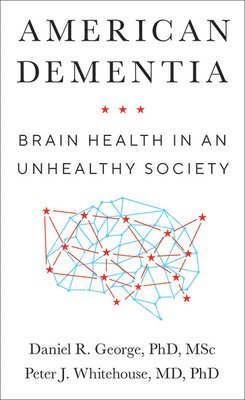
    American Dementia

    Brain Health in an Unhealthy Society

    AvDaniel R. George,Peter J. Whitehouse

    Inbunden, Engelska, 2021

    318 kr

    Beställningsvara. Skickas inom 5-8 vardagar. Fri frakt över 249 kr.

    Beskrivning

    Have the social safety nets, environmental protections, and policies to redress wealth and income inequality enacted after World War II contributed to declining rates of dementia today—and how do we improve brain health in the future?Winner of the American Book Fest Health: Aging/50+ by the American Book Fest, Living Now Book Award: Mature Living/Aging by the Living Now Book AwardsFor decades, researchers have chased a pharmaceutical cure for memory loss. But despite the fact that no disease-modifying biotech treatments have emerged, new research suggests that dementia rates have actually declined in the United States and Western Europe over the last decade. Why is this happening? And what does it mean for brain health in the future?In American Dementia, Daniel R. George, PhD, MSc, and Peter J. Whitehouse, MD, PhD, argue that the current decline of dementia may be strongly linked to mid–twentieth century policies that reduced inequality, provided widespread access to education and healthcare, and brought about cleaner air, soil, and water. They also• explain why Alzheimer's disease, an obscure clinical label until the 1970s, is the hallmark illness of our current hyper-capitalist era;• reveal how the soaring inequalities of the twenty-first century—which are sowing poverty, barriers to healthcare and education, loneliness, lack of sleep, stressful life events, environmental exposures, and climate change—are reversing the gains of the twentieth century and damaging our brains;• tackle the ageist tendencies in our culture, which disadvantage both vulnerable youth and elders;• make an evidence-based argument that policies like single-payer healthcare, a living wage, and universal access to free higher education and technical training programs will build collective resilience to dementia;• promote strategies that show how local communities can rise above the disconnection and loneliness that define our present moment and come together to care for our struggling neighbors.Ultimately, American Dementia asserts that actively remembering lessons from the twentieth century which help us become a healthier, wiser, and more compassionate society represents our most powerful intervention for preventing Alzheimer's and protecting human dignity. Exposing the inconvenient truths that confound market-based approaches to memory enhancement as well as broader social organization, the book imagines how we can act as citizens to protect our brains, build the cognitive resilience of younger generations, and rise to the moral challenge of caring for the cognitively frail.

    Produktinformation

    • Utgivningsdatum:2021-11-09
    • Mått:156 x 235 x 31 mm
    • Vikt:748 g
    • Format:Inbunden
    • Språk:Engelska
    • Antal sidor:424
    • Förlag:Johns Hopkins University Press
    • ISBN:9781421440477
    • Utmärkelser:Winner of American Book Fest Health: Aging/50+ 2022 (United States)

    Utforska kategorier

    • Särskilda hälsotillstånd inom Hälsa och familj
    • Rättsliga frågor i hälso- och sjukvården inom Medicin
    • Samhällsmedicin och preventiv medicin inom Medicin

    Mer om författaren

    Daniel R. George, PhD, MSc, is an associate professor in the Department of Humanities and the Department of Public Health Sciences at Penn State College of Medicine. Peter J. Whitehouse, MD, PhD, is a professor of neurology at Case Western Reserve University and the cofounder of the Intergenerational Schools. Together, they are the coauthors of The Myth of Alzheimer's: What You Aren't Being Told about Today's Most Dreaded Diagnosis.

    Recensioner i media

    George and Whitehouse had me turning each page with wonder over topics I know well, to which their insight brought newperspective . . . [American Dementia] will enlighten a lay public, and experts in Alzheimer's disease, new and old.—George Perry, PhD, Journal of Alzheimer's Disease

    Innehållsförteckning

    • PrefaceChapter 1. Occupy Alzheimer's! Setting the Scene for ResistanceChapter 2. Alzheimer's and the Neoliberal Turn: "Politics of Anguish," Visions of a CureChapter 3. Alzheimer's Today: Inconvenient Truths in the Marketplace of MemoryChapter 4. Treating Populations: Collectively Strengthening the Brain Health of the Many, Not the FewChapter 5. Flint Still Doesn't Have Clean Water: What the Lead-Poisoning Tragedy in Michigan Means for Alzheimer'sChapter 6. #PoorLivesMatter: Fighting Poverty to Resist Alzheimer'sChapter 7. Turning Up the Heat on Global Warming: The Neurologic Costs of Climate ChangeChapter 8. Occupy the Nursing Home! Breaking Down Walls and Breaking Out "Socialceuticals"Chapter 9. A Bridge beyond Loneliness: The Gathering Momentum of Age- and Dementia-Friendly CommunitiesChapter 10. The Intergenerational Schools: Desegregating and Revaluing the Cognitively FrailAcknowledgmentsAppendix: An Intergenerational Interview with the AuthorsNotesIndex