• Fri frakt över 249 kr
  • •
  • Snabba leveranser
  • •
  • Billiga böcker
Kundservice

Du är på sajten för privatpersoner.

Företag, bibliotek eller offentlig verksamhet?

Du handlar på classic.bokus.com, där alla dina funktioner finns intakta.
Till classic.bokus.com
Bokus logotyp. Gå till startsidan.
  • Erbjudanden
  • Nyheter
  • Student
  • Topplistor
  • Barn & ungdom
  • Bokus Play
  • E-böcker
  • Pocketböcker
  • Spel & pussel

10% rabatt på allt med kod: NYSTART10 →

Sidfot

Mina sidor

    Hjälp

    • Kundservice
    • Vanliga frågor och svar
    • Frakt och leverans
    • Retur vid ångerrätt
    • Reklamera vara
    • Betalning
    • Köpvillkor
    • Allmänna villkor
    • Information om webbplatsens tillgänglighet

    Om Bokus

    • Om oss
    • Pressrum
    • För studenter
    • För företag
    • För bibliotek och offentlig verksamhet
    • För leverantörer
    • Hållbarhet

    Populärt

    • Aktuella erbjudanden
    • Presentkort
    • Studentlitteratur
    • Nya böcker
    • Topplistor
    • Signerade böcker
    • Engelska böcker

    Inspiration

    • Boktips
    • BookTok
    • Populära bokserier
    • Barnbokskaraktärer
    • Populära författare
    Logotyp för Bokus
    Följ oss på Facebook (extern länk)Följ oss på Instagram (extern länk)Följ oss på YouTube (extern länk)Följ oss på TikTok (extern länk)
    bokus @ CookiesAnpassa cookiesIntegritetspolicyKöpvillkor
    Till Citymail hemsida (extern länk)Till Budbee hemsida (extern länk)Till Postnord hemsida (extern länk)Till Schenker hemsida (extern länk)Till Early Bird hemsida (extern länk)Till Walleys hemsida (extern länk)
    1. Psykologi och pedagogik
    2. Pedagogik
    3. Pedagogisk teori och filosofi

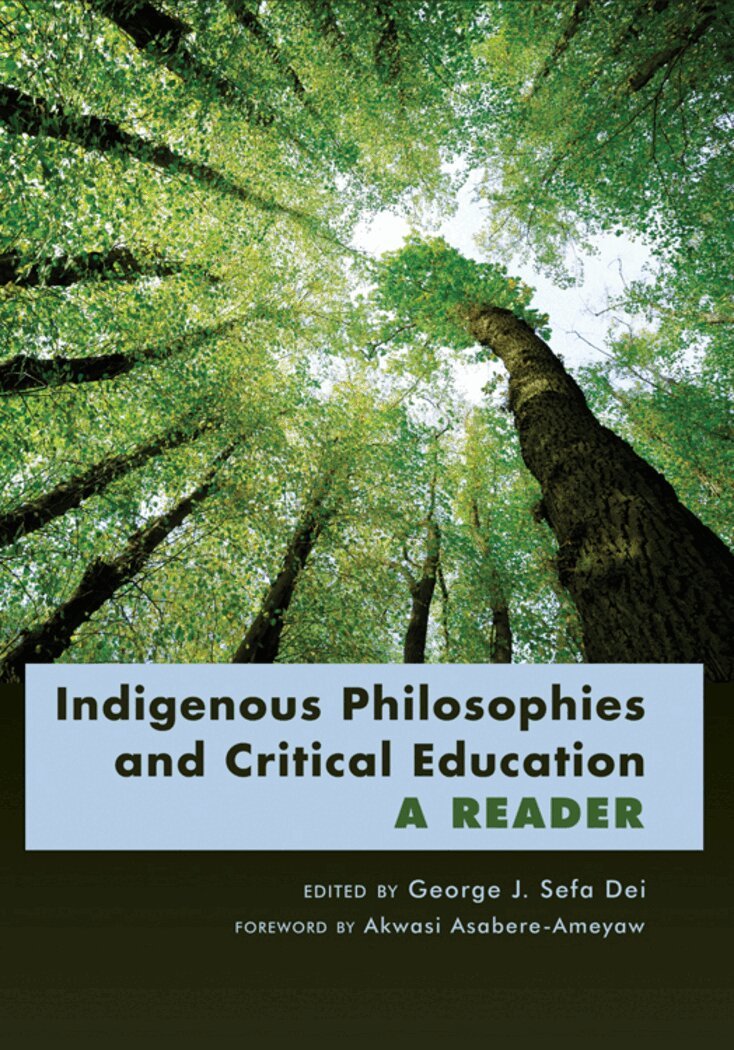
    Indigenous Philosophies and Critical Education

    A Reader- Foreword by Akwasi Asabere-Ameyaw

    AvGeorge Jerry Sefa Dei

    Häftad, Engelska, 2011

    Del 379 i serien Counterpoints

    517 kr

    Tillfälligt slut

    Beskrivning

    An important academic goal is to understand ongoing contestations in knowledge in the search to engage everyday social practice and experiences, as well as the social barriers and approaches to peaceful human coexistence. This reader pulls together ideas concerning Indigenous epistemologies (e.g., worldviews, paradigms, standpoints, and philosophies) as they manifest themselves in the mental lives of persons both from and outside the orbit of the usual Euro-American culture. The book engages Indigenous knowledges as far more than a «contest of the marginals», thereby challenging the way oppositional knowledges are positioned, particularly in the Western academy. Subsequently, this book is a call to recognize and acknowledge Indigenous knowledges as legitimate knowings in their own right, and not necessarily in competition with other sources or forms of knowledge. The project offers an opportunity for the critical thinker to continue on a de-colonial/anti-colonial intellectual journey in ways informed by Indigenous theorizing.

    Produktinformation

    • Utgivningsdatum:2011-01-31
    • Mått:160 x 230 x 30 mm
    • Vikt:950 g
    • Format:Häftad
    • Språk:Engelska
    • Serie:Counterpoints
    • Antal sidor:476
    • Förlag:Peter Lang Publishing Inc
    • ISBN:9781433108143

    Utforska kategorier

    • Pedagogisk teori och filosofi inom Psykologi och pedagogik
    • Sociologi och antropologi inom Samhälle och politik
    • Filosofi inom Filosofi och religion

    Mer om författaren

    George J. Sefa Dei is Professor of Sociology and Equity Studies, Ontario Institute for Studies in Education of the University of Toronto (OISE/UT). In 2000 he co-edited Indigenous Knowledges in Global Contexts: Multiple Readings of Our World with Budd Hall and Dorothy Goldin Rosenberg. His most recent books include Teaching Africa: Towards Transgressive Pedagogy; Fanon and Education: Pedagogical Challenges, co-edited with Marlon Simmons (Peter Lang Publishing, 2010); Fanon and the Counterinsurgency of Education; and Learning to Succeed: Improving Educational Achievement for All. In July 2007, he succeeded the occupant of the stool (Odikro) of Asokorekuma and was installed as a traditional chief in Ghana. His stool name is Nana Sefa Atweneboah I, the Adomakwaahene of the town of Asokore, near Koforidua in the New Juaben Traditional Area of Ghana.

    Innehållsförteckning

    • Contents: Akwasi Asabere-Ameyaw: Foreword – George J. Sefa Dei: Introduction – George J. Sefa Dei: Revisiting the Question of the ‘Indigenous’ – Temitope Adefarakan: (Re) Conceptualizing ‘Indigenous’ from Anti-Colonial and Black Feminist Theoretical Perspectives: Living and Imagining Indigeneity Differently – Farah Shroff: We Are All One: Holistic Thought-Forms within Indigenous Societies Indigeneity and Holism – Marcelle Cross-Townsend: Indigenous Education and Indigenous Studies in the Australian Academy: Assimilationism, Critical Pedagogy, Dominant Culture Learners and Indigenous Knowledges – Ali Abdi: African Philosophies of Education: Deconstructing the Colonial and Reconstructing the Indigenous – Jefferey D. Anderson: Space, Time and Unified Knowledge : Following the Path of Vine Deloria, Jr. – Michael Davis: «I Live Somewhere Else but I’ve Never Left Here»: Indigenous Knowledge, History, and Place – Martin Cannon: Ruminations on Red Revitalization: Exploring Complexities of Identity, Difference and Nationhood in Indigenous Education – Patience Elabor-Idemudia: Identity, Representation, and Knowledge Production – Dennis Mcpherson: Indigeneity in Education: A By-product of Assimilation? – Serena Heckler/Paul Sillitoe: Education for Endogenous Development: Contrasting Perspectives from Amazonia and Arabia – Maria Shaa Tláa Williams: Neo-Colonial Melancholia: Alaska Native People, Education and Oil – Michael Marker: Sacred Mountains and Ivory Towers: Indigenous Pedagogies of Place and Invasions from Modernity – Lloyd L. Lee: Indigenous Knowledge in Transition: The Fundamental Laws of the Diné in an Era of Change and Modernity – Gregory Smith: Bringing the Experience of Indigenous People into Alaska Rural Systematic Initiative/Alaska Native Knowledge Network – Judy Iseke/Brennus BMJK: Learning Life Lessons from Indigenous Storytelling with Tom Mccallum – Pauline Chinn/Isabella Aiona Abbott/Michelle Kapana-Baird/Mahina Hou Ross/Lila Lelepali/Ka’umealani Walker/Sabra Kauka/Napua Barrows/Moana Lee/Huihui Kanahele-Mossman: Ua Lele Ka Manu; The Bird Has Flown: A Search for Hawaiian Indigenous/Local Inquiry Methods – Njoki Wane: The Kenyan Herbalist Ruptures the Status Quo in Health and Healing – Ocean Ripeka Mercier: ‘Glocalising’ Indigenous Knowledges for the Classroom – Lyn Carter: The Challenges of Science Education and Indigenous Knowledge – Cynthia B. Dillard/Charlotte Bell: Endarkened Feminism and Sacred Praxis: Troubling (Auto) Ethnography through Critical Engagements with African Indigenous Knowledges – Kimine Mayuzumi: Re/Membering In - Between «Japan» and «The West»: A Decolonizing Journey through the Indigenous Knowledge Framework – Riyad Shahjahan/Kimberly Haverkos: Revealing the Secular Fence of Knowledge: Towards Reimagining Spiritual Ways of Knowing and Being in the Academy – Soenke Biermann: Knowledge, Power and Decolonization: Implication for Non-Indigenous Scholars, Researchers and Educators – Pat O’Riley/Peter Cole: Coyote and Raven Chat about Protecting Indigenous Intellectual Property – Eric Ritskes: Indigenous Spirituality and Decolonization: Methodology for the Classroom – Zahra Murad: Beyond Deconstruction: Evolving the Ties between Indigenous Knowledges and Post-Foundational Anti-Racism – Priscilla Settee: Indigenous Knowledge: Multiple Approaches.