• Fri frakt över 249 kr
  • •
  • Snabba leveranser
  • •
  • Billiga böcker
Kundservice

Du är på sajten för privatpersoner.

Företag, bibliotek eller offentlig verksamhet?

Du handlar på classic.bokus.com, där alla dina funktioner finns intakta.
Till classic.bokus.com
Bokus logotyp. Gå till startsidan.
  • Erbjudanden
  • Nyheter
  • Student
  • Topplistor
  • Barn & ungdom
  • Bokus Play
  • E-böcker
  • Pocketböcker
  • Spel & pussel

10% rabatt på allt med kod: NYSTART10 →

Sidfot

Mina sidor

    Hjälp

    • Kundservice
    • Vanliga frågor och svar
    • Frakt och leverans
    • Retur vid ångerrätt
    • Reklamera vara
    • Betalning
    • Köpvillkor
    • Allmänna villkor
    • Information om webbplatsens tillgänglighet

    Om Bokus

    • Om oss
    • Pressrum
    • För studenter
    • För företag
    • För bibliotek och offentlig verksamhet
    • För leverantörer
    • Hållbarhet

    Populärt

    • Aktuella erbjudanden
    • Presentkort
    • Studentlitteratur
    • Nya böcker
    • Topplistor
    • Signerade böcker
    • Engelska böcker

    Inspiration

    • Boktips
    • BookTok
    • Populära bokserier
    • Barnbokskaraktärer
    • Populära författare
    Logotyp för Bokus
    Följ oss på Facebook (extern länk)Följ oss på Instagram (extern länk)Följ oss på YouTube (extern länk)Följ oss på TikTok (extern länk)
    bokus @ CookiesAnpassa cookiesIntegritetspolicyKöpvillkor
    Till Citymail hemsida (extern länk)Till Budbee hemsida (extern länk)Till Postnord hemsida (extern länk)Till Schenker hemsida (extern länk)Till Early Bird hemsida (extern länk)Till Walleys hemsida (extern länk)
    1. Samhälle och politik
    2. Samhälle och kultur
    3. Kultur och medier
    4. Kulturvetenskap

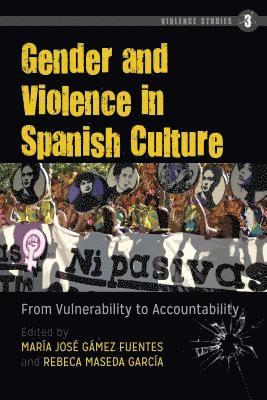
    Gender and Violence in Spanish Culture

    From Vulnerability to Accountability

    AvMaría José Gámez Fuentes,Rebeca Maseda García

    Inbunden, Engelska, 2018

    Del 3 i serien Violence Studies

    1 189 kr

    Beställningsvara. Skickas inom 5-8 vardagar. Fri frakt över 249 kr.

    Beskrivning

    For the true exercise of citizenship to occur, gender violence must be eradicated, as it is not an interpersonal problem, but an attack on the very concept of democracy. Despite increasing social awareness and legal measures taken to fight gender violence, it is still prevalent worldwide. Even in a country such as Spain, praised in the UN Handbook for Legislation on Violence Against Women (2010) for its advanced approach on gender violence, the legal framework has proved insufficient and deeper sociocultural changes are needed. This book presents, in this respect, groundbreaking investigations in the realm of politics, activism, and cultural production that offer both a complex picture of the agents involved in its transformation and a nuanced panorama of initiatives that subvert the normative framework of recognition of victims of gender violence. As a result, the book chapters articulate a construction of the victim as a subject that reflects and acts upon his/her experience and vulnerability, and also adopt perspectives that frame accountability within the representational tradition, the community, and the state.

    Produktinformation

    • Utgivningsdatum:2018-01-04
    • Mått:150 x 225 x 19 mm
    • Vikt:460 g
    • Format:Inbunden
    • Språk:Engelska
    • Serie:Violence Studies
    • Antal sidor:236
    • Förlag:Peter Lang Publishing Inc
    • ISBN:9781433139987

    Utforska kategorier

    • Kulturvetenskap inom Samhälle och politik

    Mer om författaren

    María José Gámez Fuentes is Associate Professor at the Universitat Jaume I (Castellón, Spain). She has published extensively on the representation on gender violence and its transformation, has been the principal investigator for several research projects, and has acted as a consultant for private and public organisations regarding gender equality. Rebeca Maseda García is Associate Professor of Spanish at the University of Alaska Anchorage. She is the author of Ensayo sobre la contracicción: Virginia Woolf en la pantalla, and she has published numerous articles on film and gender, representations of trauma, and historical memory.

    Recensioner i media

    “This multivocal collection offers a nuanced account of the social rituals of normalization that set the conditions of gender violence and make it possible, ‘ordinary,’ and ultimately silenced. In delving into the intricacies of normative gender violence, the book interrogates the discursive matrices of gender and violence, as well as of the entrenched construction of gender-and-violence, including female victimhood and the paternalistic snares of recognition. Locally grounded and self-consciously situated, it powerfully reconsiders the current critical field of gender violence/power and its epistemological premises by suggesting new feminist conceptions (at once theoretical and political) of transformative critique and responsibility.”—Athena Athanasiou, Professor of Social Anthropology and Gender Studies, Panteion University, Greece; Co-author with Judith Butler of Dispossession: The Performative in the Political

    Innehållsförteckning

    • List of Illustrations – Acknowledgements – María José Gámez Fuentes/Rebeca Maseda García: The Configuration of Gender Violence: A Matrix to Be Reloaded – Ana de Miguel Álvarez: To Conceptualize Is to Politicize: Why Spain Has Acted as a Pioneer Regarding Gender Violence – Juana Gallego Ayala: In the Wake of Ana Orantes: For an Ethical Representation of Violence Against Women – Emma Gómez Nicolau: Silenced Voices: Prostitutes, Lesbians, and "Bad Women" in Spanish Public Policies on Gender Violence – Sonia Núñez Puente: Tactical Media and Activism Against Gender-Based Violence: Fetishization and Counterhegemonic Frameworks of Recognition – Laura Castillo Mateu: Feminist Activism and the Role of Memory in Revisiting the Discourse on Gender Violence in Spain – Lídia Puigvert/Cristina Pulido: Dialogues Among Diverse Women: Transforming Established Hegemonic Narratives in Associative Initiatives – Sarah Leggott: Narrative Representations of Gendered Violence and Women’s Resistance in Francoist Spain: Dulce Chacón’s La voz dormida (2002) and Almudena Grandes’s Inés y la alegría (2010) – Marián López Fernández Cao/Juan Carlos Gauli: From The Rape of Europa to Art Against Gender Violence in Spanish Culture – Alfredo Martínez-Expósito: Homophobia, Ethical Witnessing, and the Matrix of Gendered Violence: Issues of Intersectionality in Luppi/Hornos’s Pasos – Vera Burgos-Hernández: Ella(s): Resisting Victimhood, Unveiling Institutional Violence in Docufiction – María Castejón Leorza/Rebeca Maseda García: Carmina o revienta and Carmina y amén: Female Transgressions of Victimhood in Spanish Popular Cinema – Rebeca Maseda García/María José Gámez Fuentes: No More Victims: Changing the Script – Contributors – Index.