• Fri frakt över 249 kr
  • •
  • Snabba leveranser
  • •
  • Billiga böcker
Kundservice

Du är på sajten för privatpersoner.

Företag, bibliotek eller offentlig verksamhet?

Du handlar på classic.bokus.com, där alla dina funktioner finns intakta.
Till classic.bokus.com
Bokus logotyp. Gå till startsidan.
  • Erbjudanden
  • Student
  • Topplistor
  • Barn & ungdom
  • Bokus Play
  • Bokus Play
  • E-böcker
  • Ljudböcker
  • Pocketböcker
  • Spel & pussel

10% rabatt på allt med kod NYSTART10 →

Sidfot

Mina sidor

    Hjälp

    • Kundservice
    • Vanliga frågor och svar
    • Frakt och leverans
    • Retur vid ångerrätt
    • Reklamera vara
    • Betalning
    • Köpvillkor
    • Allmänna villkor
    • Information om webbplatsens tillgänglighet

    Om Bokus

    • Om oss
    • Pressrum
    • För studenter
    • För företag
    • För bibliotek och offentlig verksamhet
    • För leverantörer
    • Hållbarhet

    Populärt

    • Aktuella erbjudanden
    • Presentkort
    • Studentlitteratur
    • Nya böcker
    • Topplistor
    • Signerade böcker
    • Engelska böcker

    Inspiration

    • Boktips
    • BookTok
    • Populära bokserier
    • Barnbokskaraktärer
    • Populära författare
    Logotyp för Bokus
    Följ oss på Facebook (extern länk)Följ oss på Instagram (extern länk)Följ oss på YouTube (extern länk)Följ oss på TikTok (extern länk)
    bokus @ CookiesAnpassa cookiesIntegritetspolicyKöpvillkor
    Till Citymail hemsida (extern länk)Till Budbee hemsida (extern länk)Till Postnord hemsida (extern länk)Till Schenker hemsida (extern länk)Till Early Bird hemsida (extern länk)Till Walleys hemsida (extern länk)
    1. Psykologi och pedagogik
    2. Psykologi

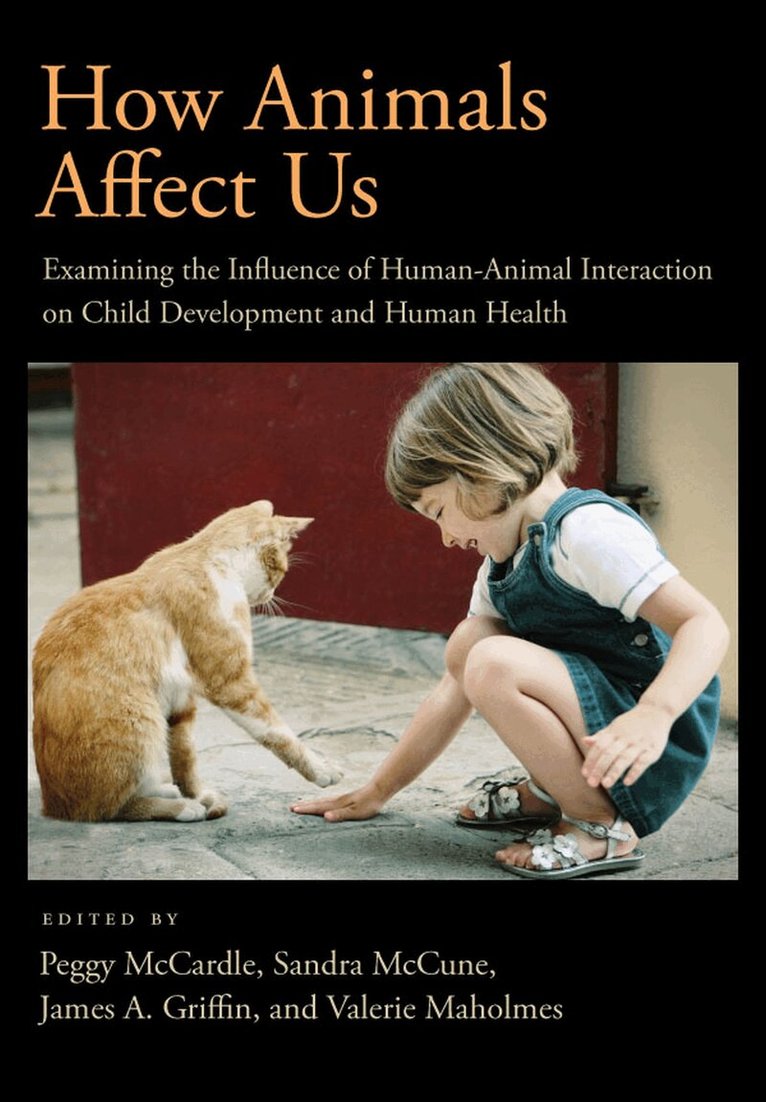
    How Animals Affect Us

    Examining the Influence of Human-Animal Interaction on Child Development and Human Health

    AvPeggy McCardle,James A. Griffin

    Inbunden, Engelska, 2010

    551 kr

    Beställningsvara. Skickas inom 5-8 vardagar. Fri frakt över 249 kr.

    Beskrivning

    From infancy through old age, many people's lives are enriched by the love of a pet. In addition, both volunteer and trained service animals are an increasingly common sight as they participate in hospital, school, and nursing home visitation and therapeutic programs. Yet, there has been little scientific research on the role that pets and therapeutic animals play in our health and development. While animal-assisted therapies appear promising, they often lack solid evidence of effectiveness. More research is therefore needed to understand the effects of human amp ndash animal interaction (HAI) and to optimize the value of this interaction. The findings in this volume deepen our understanding of human and animal behavior, including the impact that pets can have on children's development and the efficacy of animal-assisted therapies. This volume first addresses HAI research methodology, including recommended research designs, terminology, and topics for further exploration. It then summarizes the progress of HAI research in child development and human health, including how young children think about animals, links between children's early abuse of animals and later conduct disorders, the association between pet ownership and better health, and whether such health improvements result in health cost savings. The volume ends with a detailed agenda for future research. With its interdisciplinary approach, this book will appeal to a wide range of researchers and practitioners interested in what happens when people meet and engage with animals.

    Produktinformation

    • Utgivningsdatum:2010-10-15
    • Mått:178 x 254 x 18 mm
    • Vikt:614 g
    • Format:Inbunden
    • Språk:Engelska
    • Antal sidor:228
    • Förlag:American Psychological Association
    • ISBN:9781433808654

    Utforska kategorier

    • Psykologi inom Psykologi och pedagogik

    Mer om författaren

    Peggy McCardle, PhD, MPH, is chief of the Child Development and Behavior Branch at the Eunice Kennedy Shriver National Institute of Child Health and Human Development (NICHD) of the National Institutes of Health. At NICHD, in addition to her oversight of the branch, Dr. McCardle directs the research program on language, bilingualism and biliteracy and developed the branch programs in adolescent and adult literacy. As branch chief, Dr. McCardle oversaw the development of a new program of research on the influence of interactions with animals on child health and development, for both pets in the home and in psychological and medical therapeutic settings, and she is commited to promoting evidence-based practice in the field of human amp ndash animal interaction. She is lead editor of the volumes The Voice of Evidence in Reading Research (2 4) Childhood Bilingualism (2 ), and Infant Pathways to Language: Methods, Models, and Research Directions (2 8) lead author of Reading Research in Action: A Teacher's Guide for Student Success (2 8) and has served as guest editor of thematic journal issues on reading, bilingualism, and English-language learner research.  Sandra McCune, PhD, heads up the research program on human amp ndash animal interaction at the Waltham Centre for Pet Nutrition in the United Kingdom. Her background is in ethology, and she has studied a range of topics in cat and dog behavior for many years, including aspects of temperament, social behavior, feeding behavior, cognition, and age-related changes in behavior. The practical experience she gained while a veterinary nurse informed much of her doctoral study assessment of individual variation in the temperament of cats and its impact on their welfare when confined. She also has extensive experience studying what happens when cat and dog behavior interacts with human behavior in a variety of contexts.  James A. Griffin, PhD, is the deputy chief of the Child Development and Behavior Branch at the Eunice Kennedy Shriver National Institute of Child Health and Human Development (NICHD) of the National Institutes of Health and the director of the early learning and school readiness program. Before his work at NICHD, Dr. Griffin served as a senior research analyst in the Institute of Education Sciences at the U.S. Department of Education as the assistant director for the Social, Behavioral, and Education Sciences in the White House Office of Science and Technology Policy and as a research analyst at the Administration on Children, Youth and Families.  Valerie Maholmes, PhD, CAS, directs the research program in social and affective development/child maltreatment and violence in the Child Development and Behavior Branch at the Eunice Kennedy Shriver National Institute of Child Health and Human Development of the National Institutes of Health. Dr. Maholmes received a doctorate in educational psychology from Howard University in Washington, DC, and a -year degree with advanced study in school psychology, with a concentration in neuropsychological and psychosocial assessments from Fairfield University in Connecticut. Her research and clinical work have focused on the psychosocial, cultural, and environmental factors that influence children's learning and development, particularly low-income minority children. She held a faculty position at the Yale University Child Study Center in New Haven, CT, where she served in numerous capacities, including the director of research and policy for the school development program and the Irving B. Harris assistant professor of child psychiatry, an endowed professorial chair for social policy.

    Innehållsförteckning

    • ContributorsForeword Mark T. GreenbergAcknowledgmentsHuman amp ndash Animal Interaction Research: An Introduction to Issues and Topics James A. Griffin, Sandra McCune, Valerie Maholmes, and Karyl HurleyPart I: MethodologyChapter : Principles for Human amp ndash Animal Interaction Research Gail F. MelsonChapter 2: Establishing the Effectiveness of Animal-Assisted Therapies: Methodological Standards, Issues, and Strategies Alan E. KazdinChapter 3: Promises and Pitfalls of Hormone Research in Human amp ndash Animal Interaction Kerstin Uvn amp auml s-Moberg, Linda Handlin, and Maria PeterssonPart II: Human amp ndash Animal Interaction and Child DevelopmentChapter 4: How Very Young Children Think About Animals Judy S. DeLoache, Megan Bloom Pickard, and Vanessa LoBueChapter 5: The Other Side of the Bond: Domestic Dogs' Human-Like Behaviors Clive D. L. Wynne, Nicole R. Dorey, and Monique A. R. UdellChapter : Animal Abuse and Developmental Psychopathology Frank R. Ascione and Mika MaruyamaPart III: Human amp ndash Animal Interaction and Human HealthChapter 7: Childhood Obesity and Human amp ndash Animal Interaction Jo Salmon and Anna TimperioChapter 8: Health Correlates of Pet Ownership From National Surveys Bruce Headey and Markus GrabkaChapter 9: Physiological Correlates of Health Benefits From Pets Erika Friedmann, Sandra B. Barker, and Karen M. AllenChapter : Animal-Assisted Intervention in Health Care Contexts Rebecca A. JohnsonAfterword: An Agenda for Future Research Peggy McCardle, Sandra McCune, Layla Esposito, Valerie Maholmes, and Lisa FreundAppendix: A Resource for Studying Human amp ndash Animal Interaction Tim AdamsIndexAbout the Editors