• Fri frakt över 249 kr
  • •
  • Snabba leveranser
  • •
  • Billiga böcker
Kundservice

Du är på sajten för privatpersoner.

Företag, bibliotek eller offentlig verksamhet?

Du handlar på classic.bokus.com, där alla dina funktioner finns intakta.
Till classic.bokus.com
Bokus logotyp. Gå till startsidan.
  • Erbjudanden
  • Nyheter
  • Student
  • Topplistor
  • Barn & ungdom
  • Bokus Play
  • E-böcker
  • Pocketböcker
  • Spel & pussel

10% rabatt på allt med kod: NYSTART10 →

Sidfot

Mina sidor

    Hjälp

    • Kundservice
    • Vanliga frågor och svar
    • Frakt och leverans
    • Retur vid ångerrätt
    • Reklamera vara
    • Betalning
    • Köpvillkor
    • Allmänna villkor
    • Information om webbplatsens tillgänglighet

    Om Bokus

    • Om oss
    • Pressrum
    • För studenter
    • För företag
    • För bibliotek och offentlig verksamhet
    • För leverantörer
    • Hållbarhet

    Populärt

    • Aktuella erbjudanden
    • Presentkort
    • Studentlitteratur
    • Nya böcker
    • Topplistor
    • Signerade böcker
    • Engelska böcker

    Inspiration

    • Boktips
    • BookTok
    • Populära bokserier
    • Barnbokskaraktärer
    • Populära författare
    Logotyp för Bokus
    Följ oss på Facebook (extern länk)Följ oss på Instagram (extern länk)Följ oss på YouTube (extern länk)Följ oss på TikTok (extern länk)
    bokus @ CookiesAnpassa cookiesIntegritetspolicyKöpvillkor
    Till Citymail hemsida (extern länk)Till Budbee hemsida (extern länk)Till Postnord hemsida (extern länk)Till Schenker hemsida (extern länk)Till Early Bird hemsida (extern länk)Till Walleys hemsida (extern länk)
    1. Naturvetenskap och teknik
    2. Matematik och naturvetenskap
    3. Biologi
    4. Biovetenskap

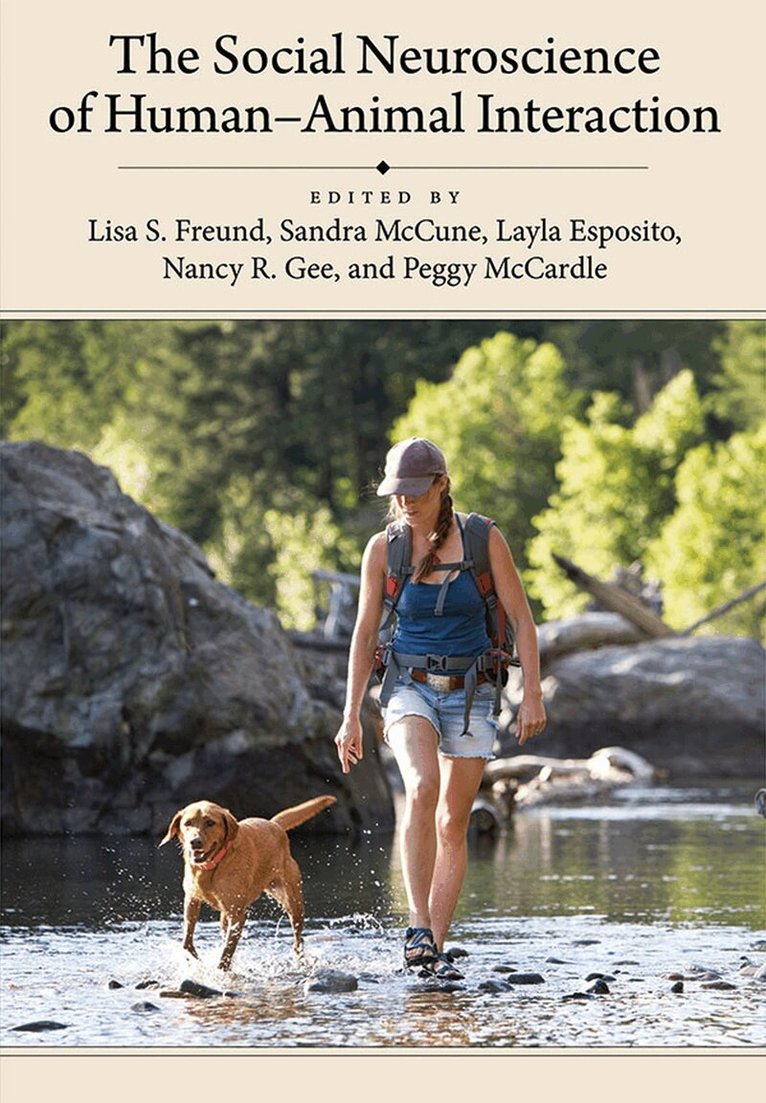
    Social Neuroscience of Human–Animal Interaction

    AvPeggy McCardle,Nancy Gee

    Inbunden, Engelska, 2016

    910 kr

    Beställningsvara. Skickas inom 5-8 vardagar. Fri frakt över 249 kr.

    Beskrivning

    In this wide-ranging and fascinating volume, an international and cross-disciplinary group of authors seek to understand human–animal interaction (HAI) by applying research in the neurobiology and genetics that underlie human social functioning. Chapters examine HAI from evolutionary and developmental perspectives, and weigh the implications of HAI research for animal welfare. Clinical applications include animal-assisted therapies for people with disabilities, acute or chronic health conditions, and social or emotional difficulties. Useful for researchers in social neuroscience and HAI as well as clinicians, teachers and animal-rights activists, and anyone interested in how and why animals affect us the way they do.

    Produktinformation

    • Utgivningsdatum:2016-02-15
    • Mått:178 x 254 x 20 mm
    • Vikt:672 g
    • Format:Inbunden
    • Språk:Engelska
    • Antal sidor:256
    • Förlag:American Psychological Association
    • ISBN:9781433821769

    Utforska kategorier

    • Biovetenskap inom Naturvetenskap och teknik

    Mer om författaren

    Lisa S. Freund, PhD, is the chief of the Child Development and Behavior Branch at the Eunice Kennedy Shriver National Institute of Child Health and Human Development (NICHD), U.S. National Institutes of Health. She is a developmental neuropsychologist who is known for her neuroimaging studies with children from different clinical populations and was an NICHD-supported scientist for several years.In the past, she had a private clinical practice that included equine animal-assisted therapy. She is currently responsible for a multifaceted research and training program at the NICHD to promote investigations, both basic and applied, to gain a deeper understanding of the developing brain and associated behaviors.She has been involved with the Mars amp ndash NICHD public-private partnership since it was established, including participation in the development of the partnership's sponsored workshops and the edited volume on human amp ndash animal interaction (HAI), Animals in Our Lives (McCardle, McCune, Griffin, Esposito, amp amp Freund, 2 ).Dr. Freunch continues to serve in a leadership role for the HAI research-funding program at the NICHD.Sandra McCune, PhD, is scientific leader for HAI at the WALTHAM Centre for Pet Nutrition (part of Mars, Inc.) in the United Kingdom. Her background is in ethology, and she has studied a range of topics in cat and dog behavior and welfare for many years, including aspects of temperament, social behavior, feeding behavior, cognition, and age-related changes in behavior. Her doctoral study focused on the assessment of individual variation in the temperament of cats and its impact on their welfare when confined. She has extensive experience studying HAI from both animal and human perspectives in a variety of contexts.Dr. McCune was instrumental in the establishment of the Mars amp ndash NICHD public-private partnership on child development and HAI, in planning the workshops sponsored by that partnership, and in editing two previous volumes on HAI under the partnership: How Animals Affect Us: Examining the Influence of Human amp ndash Animal Interaction on Child Development and Human Health (McCardle, McCune, Griffin, amp amp Maholmes, 2 ) and Animals in Our Lives: Human amp ndash Animal Interaction in Family, Community, and Therapeutic Settings (McCardle, McCune, Griffin, Esposito, amp amp Freund, 2 ). She continues to play a leadership role in the partnership.Layla Esposito, PhD, is a program official within the Child Development and Behavior Branch, NICHD, and oversees the portfolio of research on social and emotional development in children, child and family processes, and human amp ndash animal interaction. She is a child psychologist by training and has been involved in a wide variety of research projects related to child and adolescent development.Dr. Esposito, involved with the Mars amp ndash NICHD public-private partnership since its inception, has developed the research program on HAI that she now oversees and has contributed to the development of HAI-related workshops and publications, including the edited volumes How Animals Affect Us: Examining the Influence of Human amp ndash Animal Interaction on Child Development and Human Health and Animals in Our Lives: Human amp ndash Animal Interaction in Family, Community, and Therapeutic Settings. Nancy R. Gee, PhD, is research manager for the WALTHAM HAI research program. Based at the WALTHAM Centre for Pet Nutrition (part of Mars, Inc.) in the United Kingdom, she manages a global portfolio of external university collaborations. This role involves participation in the Mars amp ndash NICHD public-private partnership, development of other partnerships, and shepherding a new focus of research and practice for HAI at WALTHAM.Dr. Gee also holds the rank of professor of psychology at the State University of New York, Fredonia, where she has conducted research and published in the areas of cognition and HAI. A recipient of multiple grants and awards, she is a member of the editorial advisory boards for two journals, has served extensively as a reviewer of HAI research grant proposals, and has contributed chapters to this and other HAI volumes.Peggy McCardle, PhD, MPH, is an affiliated research scientist at the Haskins Laboratories, New Haven, Connecticut, and an independent consultant. She is involved in editing volumes related to literacy and learning, mentoring young scholars and researchers, and consulting and writing in a variety of areas including child language development and learning, bilingualism, education, and learning disabilities.As former chief of the Child Development and Behavior Branch, she was closely involved with the establishment of the Mars amp ndash NICHD public-private partnership on child development and HAI, the workshops held under that partnership, and the editing of the two previous volumes, How Animals Affect Us: Examining the Influence of Human amp ndash Animal Interaction on Child Development and Human Health and Animals in Our Lives: Human amp ndash Animal Interaction in Family, Community, and Therapeutic Settings.Dr. McCardle continues to consult in HAI as it relates to human development, learning, and education.

    Recensioner i media

    amp ldquo This is a nice supplement for a neuroscience elective course or informative reading for the animal lover. amp rdquo -PsycCRITIQUES amp reg

    Innehållsförteckning

    • ContributorsIntroduction Nancy R. Gee, Layla Esposito, Sandra McCune, Lisa S. Freund, and Peggy McCardleI. Cognition: Setting the Stage for Deeper Social NeuroscienceWhat Do Infants Know About Cats, Dogs, and People? Development of a amp quot Like-People amp quot Representation for Nonhuman Animals Paul C. QuinnVisual Attention and Facial Identification in Human and Nonhuman Animals Kun GuoHuman amp ndash Animal Interaction and the Development of Executive Functions Daphne S. Ling, Melissa Kelly, and Adele DiamondIntegrative Commentary I: Do Companion Animals Support Social, Emotional, and Cognitive Development of Children? Kurt KotrschalII. Neurobiology: Applying Neuroscience to Human amp ndash Animal InteractionNeural Mechanisms Underlying Human amp ndash Animal Interaction: An Evolutionary Perspective C. Sue Carter and Stephen W. PorgesAffiliation in Human amp ndash Animal Interaction Andrea Beetz and Karen BalesThe Social Regulation of Neural Threat Responding Casey Brown and James A. CoanUnderstanding Empathy and Psychopathy Through Cognitive and Social Neuroscience Leah M. Lozier, Kristin M. Brethel-Haurwitz, and Abigail A. MarshIntegrative Commentary II: Shared Neurobiological Mechanisms and Social Interactions in Human amp ndash Animal Interaction Lisa S. FreundIII. Science and Research ConsiderationsGenetic Components of Companion Animal Behavior Paul Jones and Sandra McCuneAdvancing the Social Neuroscience of Human amp ndash Animal Interaction: The Role of Salivary Bioscience Nancy A. Dreschel and Douglas A. GrangerFrom the Dog's Perspective: Welfare Implications of HAI Research and Practice Nancy R. Gee, Karyl J. Hurley, and John M. RawlingsIntegrative Commentary III: A Primer in Three Areas Key to Future Research Peggy McCardleIV. ConclusionFinal Commentary: Sociality, Therapy, and Mechanisms of Action Nathan A. FoxFuture Research: Needs and Promise Layla Esposito, Nancy R. Gee, Lisa S. Freund, Sandra McCune, and Peggy McCardleIndexAbout the Editors