• Fri frakt över 249 kr
  • •
  • Snabba leveranser
  • •
  • Billiga böcker
Kundservice

Du är på sajten för privatpersoner.

Företag, bibliotek eller offentlig verksamhet?

Du handlar på classic.bokus.com, där alla dina funktioner finns intakta.
Till classic.bokus.com
Bokus logotyp. Gå till startsidan.
  • Erbjudanden
  • Nyheter
  • Student
  • Topplistor
  • Barn & ungdom
  • Bokus Play
  • E-böcker
  • Pocketböcker
  • Spel & pussel

10% rabatt på allt med kod: NYSTART10 →

Sidfot

Mina sidor

    Hjälp

    • Kundservice
    • Vanliga frågor och svar
    • Frakt och leverans
    • Retur vid ångerrätt
    • Reklamera vara
    • Betalning
    • Köpvillkor
    • Allmänna villkor
    • Information om webbplatsens tillgänglighet

    Om Bokus

    • Om oss
    • Pressrum
    • För studenter
    • För företag
    • För bibliotek och offentlig verksamhet
    • För leverantörer
    • Hållbarhet

    Populärt

    • Aktuella erbjudanden
    • Presentkort
    • Studentlitteratur
    • Nya böcker
    • Topplistor
    • Signerade böcker
    • Engelska böcker

    Inspiration

    • Boktips
    • BookTok
    • Populära bokserier
    • Barnbokskaraktärer
    • Populära författare
    Logotyp för Bokus
    Följ oss på Facebook (extern länk)Följ oss på Instagram (extern länk)Följ oss på YouTube (extern länk)Följ oss på TikTok (extern länk)
    bokus @ CookiesAnpassa cookiesIntegritetspolicyKöpvillkor
    Till Citymail hemsida (extern länk)Till Budbee hemsida (extern länk)Till Postnord hemsida (extern länk)Till Schenker hemsida (extern länk)Till Early Bird hemsida (extern länk)Till Walleys hemsida (extern länk)
    1. Psykologi och pedagogik
    2. Psykologi
    3. Biologisk psykologi och neuropsykologi

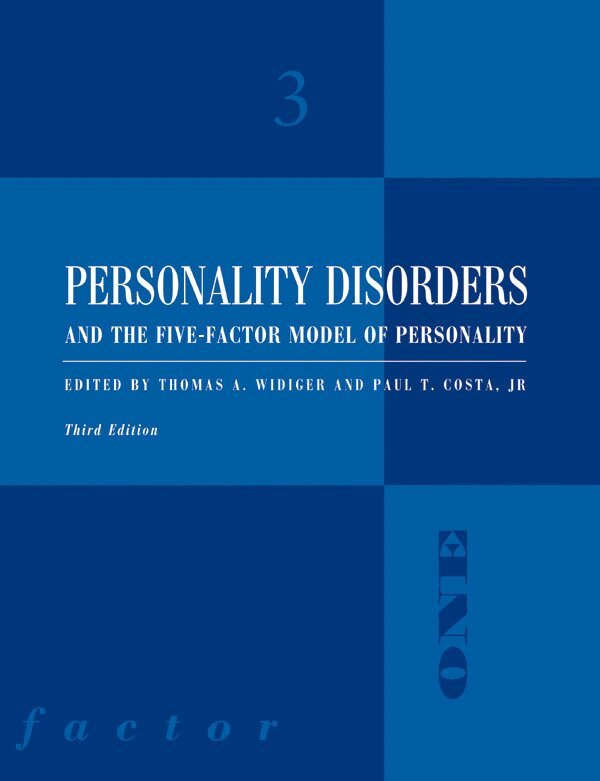
    Personality Disorders and the Five-Factor Model of Personality

    AvThomas Arthur Widiger,Paul T. Costa Jr.

    Inbunden, Engelska, 2012

    831 kr

    Beställningsvara. Skickas inom 5-8 vardagar. Fri frakt över 249 kr.

    Beskrivning

    This book summarizes the conceptual and empirical support for the Five-Factor Model (FFM), the most heavily researched and empirically supported dimensional model of general personality structure. In the upcoming fifth edition of the American Psychiatric Association amp rsquo s Diagnostic and Statistical Manual of Mental Disorders (DSM-5), the major innovation for the personality disorders will likely be a shift from the classic syndrome-based approach to a dimensional description approach. This book explains how personality disorders can be understood from the perspective of the Five-Factor Model (FFM), the most heavily researched and empirically supported dimensional model of general personality structure.Since the second edition of this authoritative text was published in 2 2, the research base supporting the FFM has more than quadrupled. As a result, the vast majority of this volume is new. The chapters summarize the conceptual and empirical support for the FFM, including the dimensional description of specific personality disorders and the application of the model for assessment and treatment. Case studies are also provided.

    Produktinformation

    • Utgivningsdatum:2012-09-15
    • Mått:218 x 284 x 28 mm
    • Vikt:1 362 g
    • Format:Inbunden
    • Språk:Engelska
    • Antal sidor:468
    • Upplaga:3
    • Förlag:American Psychological Association
    • ISBN:9781433811661

    Utforska kategorier

    • Biologisk psykologi och neuropsykologi inom Psykologi och pedagogik
    • Psykologi: jaget, identitet och personlighet inom Psykologi och pedagogik

    Mer om författaren

    Thomas A. Widiger, PhD, is the T. Marshall Hahn Professor of Psychology at the University of Kentucky, Lexington. He received his PhD from Miami University, Miami, Ohio, and completed his internship at Cornell University Medical Center, Westchester, New York. He is currently associate editor of the Journal of Personality Disorders, the Annual Review of Clinical Psychology, the Journal of Personality Assessment, and the Journal of Abnormal Psychology. He was the research coordinator for the fourth edition of the American Psychiatric Association's Diagnostic and Statistical Manual of Mental Disorders (DSM amp ndash IV), a member of the DSM amp ndash IV Personality Disorders Work Group, and a cochair of the 2 4 American Psychiatric Association DSM amp ndash 5 Research Planning Conference, amp quot Dimensional Models of Personality Disorder. amp quot His primary interest has been the integration of the American Psychiatric Association's personality disorder nomenclature with the dimensional classification of personality structure, particularly as the latter is conceptualized within the five-factor model. He also conducts research and writes papers concerning diagnosis, classification, the philosophy of science, personality disorders and personality disorder assessment, structured interviews and self-report inventories, gender bias, and clinical utility. He has authored of coauthored approximately 4 articles and chapters. In 2 9, he received the Distinguished Scientist Award from the Society for a Science of Clinical Psychology.  Paul T. Costa Jr., PhD, is adjunct professor of medical psychology at the Duke University School of Medicine, Durham, North Carolina, and holds a joint appointment as professor in the Departments of Psychiatry and Behavioral Sciences and in the Department of Mental Health at the Johns Hopkins University Bloomberg School of Public Health in Baltimore, Maryland. Until 2 9, he was chief of the Laboratory of Personality and Cognition, National Institute on Aging, Biomedical Research Center, in Baltimore, Maryland. Dr. Costa received his doctorate from the University of Chicago and taught at Harvard University and the University of Massachusetts at Boston before moving to Baltimore in 978. His enduring interests are in the structure and measurement of personality and in life-span development. His other research interests include health psychology, personality disorders, and the neurobiology and molecular genetics of personality. With his long-term collaborator, Robert McCrae, Dr. Costa developed the Neuroticism amp ndash Extroversion amp ndash Openness (NEO) personalty inventories, including the NEO PI amp ndash 3, the NEO PI amp ndash R, and the NEO amp ndash FFI, which are designed to operationalize the five-factor model (FFM). Not only has he been a leading contributor to the development of the FFM, but with Dr. McCrae he continues to develop the FFM. He has authored and coauthored approximately 4 papers and chapters. He is past president of several national and international personality organizations and the recipient of several awards, including the Distinguished Contribution Award from APA's Division 2 (Adult Development and Aging) and the Jack Block Award from the Society for Personality and Social Psychology.

    Recensioner i media

    amp quot For clinicians and personality researchers, this book provides great insight into cutting-edge models of personality and helps to effect a paradigm shift in our understanding of both normal personality and personality disorders. amp quot - Doody's Review Service

    Innehållsförteckning

    • ContributorsPersonality Disorders and the Five-Factor Model of Personality: Rationale for the Third Edition Thomas A. Widiger and Paul T. Costa Jr.I. Conceptual and Empirical BackgroundIntroduction to the Empirical and Theoretical Status of the Five-Factor Model of Personality Traits Robert R. McCrae and Paul T. Costa Jr.On the Valid Description of Personality Dysfunction Tamika C. B. Zapolski, Leila Guller, and Gregory T. SmithChildhood Antecedents of Personality Disorder: A Five-Factor Model Perspective Filip De Fruyt and Barbara De ClercqUniversality of the Five-Factor Model of Personality J amp uuml ri Allik, Anu Realo, and Robert R. McCraeFive-Factor Model Personality Disorder Research Thomas A. Widiger, Paul T. Costa Jr., Whitney L. Gore, and Cristina CregoII. Patient PopulationsPsychopathy From the Perspective of the Five-Factor Model of Personality Karen Derefinko and Donald R. LynamBorderline Personality Disorder: A Five-Factor Model Perspective Timothy J. Trull and Whitney C. BrownNarcissistic Personality Disorder and the Five-Factor Model: Delineating Narcissistic Personality Disorder, Grandiose Narcissism, and Vulnerable Narcissism W. Keith Campbell and Joshua D. MillerA Five-Factor Model Perspective of Schizotypal Personality Disorder Maryanne Edmundson and Thomas R. KwapilDependency and the Five-Factor Model Whitney L. Gore and Aaron L. PincusDepressive Personality Disorder and the Five-Factor Model R. Michael Bagby, Chris Watson, and Andrew G. RyderAlexithymia and the Five-Factor Model of Personality Graeme J. Taylor and R. Michael BagbyFive-Factor Model Personality Functioning in Adults With Intellectual Disabilities Sara E. BoydIII. AssessmentAssessing the Five-Factor Model of Personality Disorder Douglas B. SamuelInformant Reports and the Assessment of Personality Disorders Using the Five-Factor Model Thomas F. Oltmanns and Erika CarlsonPrototype Matching and the Five-Factor Model: Capturing the DSM amp ndash IV Personality Disorders Joshua D. MillerUsing the Five-Factor Model to Assess Disordered Personality Donald R. LynamIV. Clinical ApplicationDiagnosis of Personality Disorder Using the Five-Factor Model and the Proposed DSM amp ndash 5 Thomas A. Widiger, Paul T. Costa Jr., and Robert R. McCraeConceptual and Empirical Support for the Clinical Utility of Five-Factor Model Personality Disorder Diagnosis Stephanie N. Mullins-SweattFurther Use of the NEO PI amp ndash R Personality Dimensions in Differential Treatment Planning Cynthia Sanderson and John F. ClarkinTreatment of Personality Disorders From the Perspective of the Five-Factor Model Michael H. StoneCrossover Analysis: Using the Five-Factor Model and Revised NEO Personality Inventory to Assess Couples Ralph L. Piedmont and Thomas E. RodgersonDialectical Behavior Therapy From the Perspective of the Five-Factor Model of Personality Stephanie D. Stepp, Diana J. Whalen, and Tiffany D. SmithDisorders of Personality: Clinical Treatment From a Five-Factor Model Perspective Jennifer R. PresnallV. Conclusions and Future ResearchFinal Word and Future Research Thomas A. Widiger and Paul T. Costa Jr.Appendix: Description of the Revised NEO Personality Inventory (NEO PI amp ndash R) Facet ScalesIndexAbout the Editors