• Fri frakt över 249 kr
  • •
  • Snabba leveranser
  • •
  • Billiga böcker
Kundservice

Du är på sajten för privatpersoner.

Företag, bibliotek eller offentlig verksamhet?

Du handlar på classic.bokus.com, där alla dina funktioner finns intakta.
Till classic.bokus.com
Bokus logotyp. Gå till startsidan.
  • Erbjudanden
  • Nyheter
  • Student
  • Topplistor
  • Barn & ungdom
  • Bokus Play
  • E-böcker
  • Pocketböcker
  • Spel & pussel

10% rabatt på allt med kod: NYSTART10 →

Sidfot

Mina sidor

    Hjälp

    • Kundservice
    • Vanliga frågor och svar
    • Frakt och leverans
    • Retur vid ångerrätt
    • Reklamera vara
    • Betalning
    • Köpvillkor
    • Allmänna villkor
    • Information om webbplatsens tillgänglighet

    Om Bokus

    • Om oss
    • Pressrum
    • För studenter
    • För företag
    • För bibliotek och offentlig verksamhet
    • För leverantörer
    • Hållbarhet

    Populärt

    • Aktuella erbjudanden
    • Presentkort
    • Studentlitteratur
    • Nya böcker
    • Topplistor
    • Signerade böcker
    • Engelska böcker

    Inspiration

    • Boktips
    • BookTok
    • Populära bokserier
    • Barnbokskaraktärer
    • Populära författare
    Logotyp för Bokus
    Följ oss på Facebook (extern länk)Följ oss på Instagram (extern länk)Följ oss på YouTube (extern länk)Följ oss på TikTok (extern länk)
    bokus @ CookiesAnpassa cookiesIntegritetspolicyKöpvillkor
    Till Citymail hemsida (extern länk)Till Budbee hemsida (extern länk)Till Postnord hemsida (extern länk)Till Schenker hemsida (extern länk)Till Early Bird hemsida (extern länk)Till Walleys hemsida (extern länk)
    1. Psykologi och pedagogik
    2. Psykologi
    3. Socialpsykologi och gruppsykologi

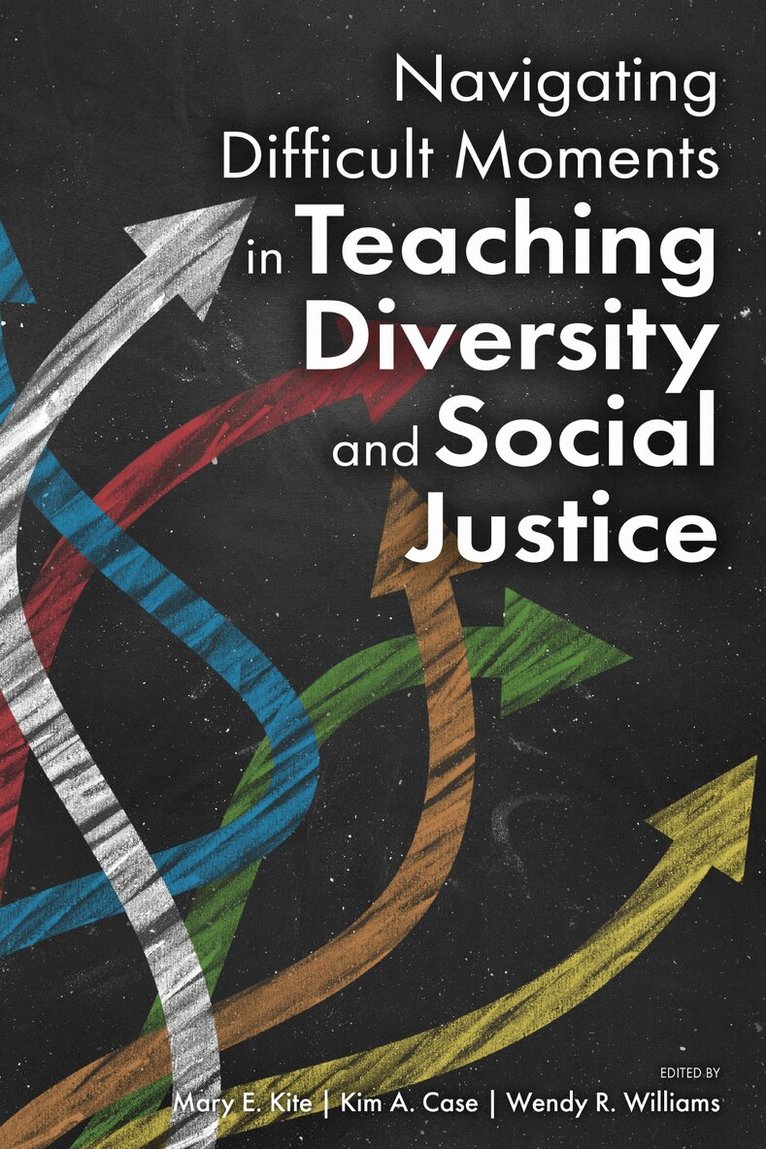
    Navigating Difficult Moments in Teaching Diversity and Social Justice

    AvMary E. Kite,Kim A. Case

    Häftad, Engelska, 2020

    539 kr

    Beställningsvara. Skickas inom 5-8 vardagar. Fri frakt över 249 kr.

    Beskrivning

    This essential resource helps educators tackle the most common and challenging dilemmas that arise in today amp rsquo s classroom-such as diversity, privilege, and intersectionality. This book examines common challenges that arise for educators teaching social justice and diversity-related courses and offers best practices for addressing them. Contributors cover issues such as the many roles instructors play, inside and outside of college and university classrooms, for example, in handling personal threats, responsibly incorporating current events related to social justice into classroom discussion, navigating one's own stigmatized or privileged identities, dealing with bias in teaching evaluations, and engaging in self-care.The authors' backgrounds offer unique perspectives from which to approach such complex subject matter several contributors are feminist or intersectional scholars with the experience and expertise to address the pedagogical dilemmas that often arise in teaching social justice. Many of the issues discussed arise from the authors' own experiences as teachers in the current social climate however, they also are verified by research on quality teaching in general and teaching about diversity specifically.

    Produktinformation

    • Utgivningsdatum:2020-11-10
    • Mått:152 x 229 x 18 mm
    • Vikt:416 g
    • Format:Häftad
    • Språk:Engelska
    • Antal sidor:274
    • Förlag:American Psychological Association
    • ISBN:9781433832932

    Utforska kategorier

    • Socialpsykologi och gruppsykologi inom Psykologi och pedagogik
    • Psykologi inom Psykologi och pedagogik
    • Utbildningsstrategier och utbildningspolitik inom Psykologi och pedagogik

    Mer om författaren

    Mary E. Kite, PhD, received her BA, MS, and PhD from Purdue University and is now Professor of Social Psychology at Ball State University. Strongly committed to psychology education at all levels, she has held a number of leadership roles for the Teaching of Psychology (STP, APA Division 2), including past president. Her leadership in the Midwestern Psychological Association also includes serving as past president. She holds Fellow status in APA Divisions 2, 8, 9, 35, amp 44, the Association for Psychological Science, and the Midwestern Psychological Association. She maintains an active research program in the area of stereotyping and prejudice, including co‑authoring The Psychology of Prejudice and Discrimination (3e) with Bernard Whitley, Jr. Whitley and Kite also co‑authored Principles of Research in Behavioral Science (4e). Recognitions include the Charles L. Brewer Award for Distinguished Teaching in Psychology from the American Psychological Foundation (2 4) and a Presidential Citation from the Society for the Teaching of Psychology (2 ).  Kim A. Case, PhD, is the Director of Faculty Success at Virginia Commonwealth University. As Director, she develops and implements faculty mentoring programs, supports faculty career development and scholarship productivity, and oversees the Center for Teaching and Learning Excellence. Her mixed‑methods research examines ally behavior, interventions to increase understanding of intersectionality and privilege, prejudice reduction, and creation of inclusive workplace and education settings. She is author of Deconstructing Privilege: Allies in the Classroom (2 3) and Intersectional Pedagogy: Complicating Identity and Social Justice (2 7), both published by Routledge. Her scholarship, blog, and teaching resources are available at www.drkimcase.com. The Society for the Psychological Study of Social Issues previously honored Dr. Case with the Outstanding Teaching and Mentoring Award and the Innovative Teaching Award. The Society for the Teaching of Psychology named her as the 2 8 Robert S. Daniel Excellence in Teaching Awardee for her nationally recognized pedagogical advancements.  Wendy R. Williams, PhD, is a Professor of Psychology and Women's Studies at Berea College. She received her PhD in Social Psychology from the University of California, Santa Cruz in 2 5. She was previously an Associate Professor and Director of Women's Studies at Marshall University. Her teaching and research interests focus on stigma and prejudice, specifically around issues of social class, including documenting the lived experiences of low‑income and working‑class Americans, as well as examining the personal and political consequences of how low‑income people are perceived. She regularly teaches courses both in the core of the psychology major (e.g., Introduction to Psychology, Statistics, Research Methods, Social Psychology) and in her areas of research interest (e.g., psychology of women amp gender, psychology of poverty amp social class), and she incorporates service‑learning and other experiential learning pedagogies into her teaching. She has published fourteen papers, including a book chapter on how experiential learning can raise awareness of social class privilege. In addition, she has won awards for her research, teaching, service, mentoring, and leadership.,

    Recensioner i media

    Any college-level instructor-from newly minted PhD to senior full professor-should read and learn from this book, which is designed to constructively help educators and students navigate the ever-changing social shoals of the contemporary classroom. The guidance here is authoritative, insightful, and candid, and it will help you understand your students and create a welcoming classroom where critical discussions can be freely held. - Dana S. Dunn, PhD, Past President, APA Division 22 (Rehabilitation Psychology); Professor of Psychology, Moravian College, Bethlehem, PA A brave and honest discussion of dilemmas that confront anyone who teaches about diversity and social justice. Practical advice, based on contributors amp rsquo experience and empirical research, makes this book an invaluable resource for instructors. Every academic administrator who wants to understand the challenges of diversity work in the classroom needs to read it. - Stephanie A. Shields, PhD, Professor of Psychology and Women's Studies, Pennsylvania State University, University Park, PA

    Innehållsförteckning

    • PrefaceFaye Crosby: Pedagogical Humility and Peer Mentoring for Social Justice EducationKim A. Case, Mary E. Kite, and Wendy R. Williams2: Ground Rules for Discussing Diversity: Complex ConsiderationsSusan B. Goldstein3: Social Justice Burnout: Engaging in Self-Care While Doing Diversity WorkAsia Eaton and Leah R. Warner4: Mistakes Were Made by Me: Recovering When an Instructor amp rsquo s Error Affects Classroom DynamicsMary E. Kite, Samuel M. Colbert, and Scott M. Barrera  5: When the Professor Experiences Stereotype Threat in the ClassroomDesdamona Rios, Kim A. Case, Salena M. Brody and David P. Rivera: Becoming a Target: Anonymous Threats While Teaching Diversity Courses or Working on Social Justice IssuesLisa S. Wagner and J. J. Garrett-Walker7: Inclusion amp ndash Exclusion: Balancing Viewpoint Diversity and Harmful Speech in the Multicultural ClassroomSalena M. Brody and Darren R. Bernal8: The Efficacy Paradox: Teaching About Structural Inequality While Keeping Students amp rsquo Hope AliveLisa M. Brown9: Emotionally Charged News in the ClassroomRyan M. Pickering  : Raising the Consciousness of Students Holding Ingroup StereotypesLisa M. Brown and Wendy R. Williams: White Privilege in the ClassroomLeah R. Warner, Lisa S. Wagner, and Patrick R. Grzanka2: Navigating Difficult Moments Outside the ClassroomWendy R. Williams and F. Tyler Sergent3: Contemporary Issues in Terminology: Using Gender-Inclusive Language to Create Affirming SpacesAmanda J. Wyrick4: Aging as an Element of Diversity: Best Practices for Challenging Classroom Conversations and Avoiding AgeismLisa S. Wagner, Tana M. Luger and Matthew Calamia5: Outsiders Teaching Insiders: How Instructors From Privileged Groups Can Effectively Teach About DiversitySusan B. Goldstein  : When Students Frame Prejudicial Speech as amp ldquo Freedom of Speech amp rdquo : Classroom and Institutional ImplicationsLeah R. Warner7: Student Evaluations of Teaching: Can Teaching Social Justice Negatively Affect One amp rsquo s Career?Guy A. Boysen8: Flotsam and Jetsam: Staying the Course While Navigating Difficult Moments in Teaching Diversity and Social JusticeWendy R. Williams, Mary E. Kite, and Kim A. Case