• Fri frakt över 249 kr
  • •
  • Snabba leveranser
  • •
  • Billiga böcker
Kundservice

Du är på sajten för privatpersoner.

Företag, bibliotek eller offentlig verksamhet?

Du handlar på classic.bokus.com, där alla dina funktioner finns intakta.
Till classic.bokus.com
Bokus logotyp. Gå till startsidan.
  • Erbjudanden
  • Nyheter
  • Student
  • Topplistor
  • Barn & ungdom
  • Bokus Play
  • E-böcker
  • Pocketböcker
  • Spel & pussel

10% rabatt på allt med kod: NYSTART10 →

Sidfot

Mina sidor

    Hjälp

    • Kundservice
    • Vanliga frågor och svar
    • Frakt och leverans
    • Retur vid ångerrätt
    • Reklamera vara
    • Betalning
    • Köpvillkor
    • Allmänna villkor
    • Information om webbplatsens tillgänglighet

    Om Bokus

    • Om oss
    • Pressrum
    • För studenter
    • För företag
    • För bibliotek och offentlig verksamhet
    • För leverantörer
    • Hållbarhet

    Populärt

    • Aktuella erbjudanden
    • Presentkort
    • Studentlitteratur
    • Nya böcker
    • Topplistor
    • Signerade böcker
    • Engelska böcker

    Inspiration

    • Boktips
    • BookTok
    • Populära bokserier
    • Barnbokskaraktärer
    • Populära författare
    Logotyp för Bokus
    Följ oss på Facebook (extern länk)Följ oss på Instagram (extern länk)Följ oss på YouTube (extern länk)Följ oss på TikTok (extern länk)
    bokus @ CookiesAnpassa cookiesIntegritetspolicyKöpvillkor
    Till Citymail hemsida (extern länk)Till Budbee hemsida (extern länk)Till Postnord hemsida (extern länk)Till Schenker hemsida (extern länk)Till Early Bird hemsida (extern länk)Till Walleys hemsida (extern länk)
    1. Skönlitteratur
    2. Litteraturvetenskap
    3. Litteraturvetenskap

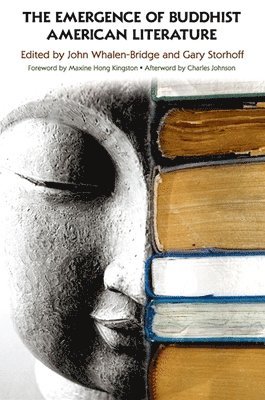
    Emergence of Buddhist American Literature

    AvJohn Whalen-Bridge,Gary Storhoff

    Inbunden, Engelska, 2009

    Del i serien SUNY series in Buddhism and American Culture

    1 241 kr

    Tillfälligt slut

    Beskrivning

    Looks at Buddhist influences in American literature and how literature has shaped the reception of Buddhism in North America.The encounter between Buddhism and American literature has been a powerful one for both parties. While Buddhism fueled the Beat movement's resounding critique of the United States as a spiritually dead society, Beat writers and others have shaped how Buddhism has been presented to and perceived by a North American audience. Contributors to this volume explore how Asian influences have been adapted to American desires in literary works and Buddhist poetics, or how Buddhist practices emerge in literary works. Starting with early aesthetic theories of Ernest Fenollosa, made famous but also distorted by Ezra Pound, the book moves on to the countercultural voices associated with the Beat movement and its friends and heirs such as Ginsberg, Kerouac, Snyder, Giorno, Waldman, and Whalen. The volume also considers the work of contemporary American writers of color influenced by Buddhism, such as Maxine Hong Kingston, Charles Johnson, and Lan Cao. An interview with Kingston is included.

    Produktinformation

    • Utgivningsdatum:2009-06-18
    • Mått:152 x 229 x 14 mm
    • Vikt:522 g
    • Format:Inbunden
    • Språk:Engelska
    • Serie:SUNY series in Buddhism and American Culture
    • Antal sidor:267
    • Förlag:State University of New York Press
    • ISBN:9781438426532

    Utforska kategorier

    • Litteraturvetenskap inom Skönlitteratur
    • Buddhism inom Filosofi och religion

    Mer om författaren

    John Whalen-Bridge is Associate Professor of English at the National University of Singapore. He is the coeditor (with Sor-hoon Tan) of Democracy as Culture: Deweyan Pragmatism in a Globalizing World, also published by SUNY Press, and the author of Political Fiction and the American Self. Gary Storhoff is Associate Professor of English at the University of Connecticut at Stamford and the author of Understanding Charles Johnson.

    Recensioner i media

    "This collection offers an excellent and newly renovated place from which to continue the study of Buddhism in American literature. It will become an essential critical volume." — Religion and the Arts"…signals a significant turn in critical understanding of Buddhism in U.S. literature—one whose methodology emphasizes the groundlessness shared by Buddhism and contemporary literature studies while also grounding itself, necessarily so, in the ways in which Buddhism is shaped by the particularities of history." — Beat Studies"…a thought-provoking analysis of the myriad ways American literature has contributed to our Buddhist practice and vice versa." — Tricycle"…a groundbreaking anthology of critical writings making vital new connections between buddhadharma and American literature…" — Buddhadharma: The Practitioner's Quarterly"This book in your hands is a trove of the best we can do to put the Dharma into words." — from the Foreword by Maxine Hong Kingston

    Innehållsförteckning

    • Foreword by Maxine Hong KingstonAcknowledgmentsIntroductionJohn Whalen-Bridge and Gary StorhoffPART I. Literature as Vehicle: Transmission and Transformation 1. The Emptiness of Patterned Flux: Ernest Fenollosa’s Buddhist Essay "The Chinese Written Character as a Medium for Poetry"Jonathan Stalling2. Gary Snyder’s Selective Way to Cold Mountain: Domesticating Han ShanYuemin He3. John Giorno: Buddhism, Poetry, and TransgressionMarcus Boon4. Buddhadharma and Poetry without CredentialsMichael HellerPART II. Zen, Vajrayana, and the Avant-Garde: A Pluralistic Poetics 5. Finger Pointing at the Moon: Zen and the Poetry of Philip WhalenJane Falk6. Keeping the Vision Alive: The Buddhist Stillpoint in the Work of Jack Kerouac and Allen GinsbergErik Mortenson7. Illumination through the Cracks: The Melting Down of Conventional Socio-Religious Thought and Practice in the Work of Gary SnyderTom Lavazzi8. The American Poetic Diamond Vehicle: Allen Ginsberg and Anne Waldman Re-Work Vajrayana BuddhismJane AugustinePART III. Widening the Circle: Buddhism and American Writers of Color 9. Buddhism, the Chinese Religion, and the Ceremony of Writing: An Interview with Maxine Hong KingstonJohn Whalen-Bridge10. A Bridge between Two Worlds: Crossing to America in Monkey BridgeHanh Nguyen and R. C. Lutz11 ‘Opening the Hand of Thought’: The Meditative Mind in Charles Johnson’s Dr. King’s RefrigeratorGary StorhoffAfterwordCharles JohnsonList of ContributersIndex