• Fri frakt över 249 kr
  • •
  • Snabba leveranser
  • •
  • Billiga böcker
Kundservice

Du är på sajten för privatpersoner.

Företag, bibliotek eller offentlig verksamhet?

Du handlar på classic.bokus.com, där alla dina funktioner finns intakta.
Till classic.bokus.com
Bokus logotyp. Gå till startsidan.
  • Erbjudanden
  • Nyheter
  • Student
  • Topplistor
  • Barn & ungdom
  • Bokus Play
  • E-böcker
  • Pocketböcker
  • Spel & pussel

10% rabatt på allt med kod NYSTART10 →

Sidfot

Mina sidor

    Hjälp

    • Kundservice
    • Vanliga frågor och svar
    • Frakt och leverans
    • Retur vid ångerrätt
    • Reklamera vara
    • Betalning
    • Köpvillkor
    • Allmänna villkor
    • Information om webbplatsens tillgänglighet

    Om Bokus

    • Om oss
    • Pressrum
    • För studenter
    • För företag
    • För bibliotek och offentlig verksamhet
    • För leverantörer
    • Hållbarhet

    Populärt

    • Aktuella erbjudanden
    • Presentkort
    • Studentlitteratur
    • Nya böcker
    • Topplistor
    • Signerade böcker
    • Engelska böcker

    Inspiration

    • Boktips
    • BookTok
    • Populära bokserier
    • Barnbokskaraktärer
    • Populära författare
    Logotyp för Bokus
    Följ oss på Facebook (extern länk)Följ oss på Instagram (extern länk)Följ oss på YouTube (extern länk)Följ oss på TikTok (extern länk)
    bokus @ CookiesAnpassa cookiesIntegritetspolicyKöpvillkor
    Till Citymail hemsida (extern länk)Till Budbee hemsida (extern länk)Till Postnord hemsida (extern länk)Till Schenker hemsida (extern länk)Till Early Bird hemsida (extern länk)Till Walleys hemsida (extern länk)
    1. Skönlitteratur
    2. Dramatik

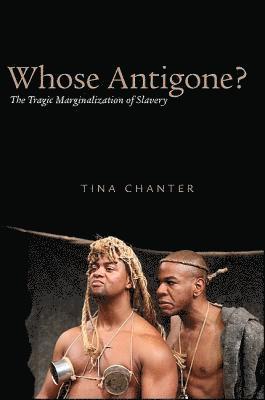
    Whose Antigone?

    The Tragic Marginalization of Slavery

    AvTina Chanter

    Inbunden, Engelska, 2011

    1 241 kr

    Tillfälligt slut

    Fler format och utgåvor

    Häftad

    Tillf. slut

    Beskrivning

    Argues for the importance of the neglected theme of slavery in Antigone.In this groundbreaking book, Tina Chanter challenges the philosophical and psychoanalytic reception of Sophocles' Antigone, which has largely ignored the issue of slavery. Drawing on textual and contextual evidence, including historical sources, she argues that slavery is a structuring theme of the Oedipal cycle, but one that has been written out of the record.Chanter focuses in particular on two appropriations of Antigone: The Island, set in apartheid South Africa, and Tègònni, set in nineteenth-century Nigeria. Both plays are inspired by the figure of Antigone, and yet they rework her significance in important ways that require us to return to Sophocles' "original" play and attend to some of the motifs that have been marginalized. Chanter explores the complex set of relations that define citizens as opposed to noncitizens, free men versus slaves, men versus women, and Greeks versus barbarians. Whose Antigone? moves beyond the narrow confines critics have inherited from German idealism to reinvigorate debates over the meaning and significance of Antigone, situating it within a wider argument that establishes the salience of slavery as a structuring theme.

    Produktinformation

    • Utgivningsdatum:2011-07-01
    • Mått:152 x 229 x 15 mm
    • Vikt:499 g
    • Format:Inbunden
    • Språk:Engelska
    • Antal sidor:275
    • Förlag:State University of New York Press
    • ISBN:9781438437552

    Utforska kategorier

    • Dramatik inom Skönlitteratur
    • Slaveri inom Historia och arkeologi
    • Filosofi inom Filosofi och religion

    Mer om författaren

    Tina Chanter is Professor of Philosophy at DePaul University. She is author of The Picture of Abjection: Film, Fetish, and the Nature of Difference; Gender: Key Concepts in Philosophy; Time, Death, and the Feminine: Levinas with Heidegger; and Ethics of Eros: Irigaray's Rewriting of the Philosophers. She is also the coeditor (with Pleshette DeArmitt) of Sarah Kofman's Corpus and (with Ewa Płonowska Ziarek) of Revolt, Affect, Collectivity: The Unstable Boundaries of Kristeva's Polis, both also published by SUNY Press, and the editor of Feminist Interpretations of Emmanuel Levinas.

    Recensioner i media

    "…Chanter's central point about slavery remains simply, powerful and transformative … this is a book that challenges us, in a way that is historically and methodologically subtle, to take 'race' seriously as a philosophical and aesthetic concern." — Radical Philosophy"Readers will learn a great deal from this beautiful, impassioned, and erudite book." — Mary Beth Mader, author of Sleights of Reason: Norm, Bisexuality, Development

    Innehållsförteckning

    • Preface Acknowledgments List of Abbreviated Titles 1. Introduction: The Shadowy Others of Antigone’s Legacy 2. Antigone’s Liminality: Hegel’s Racial Purification of Tragedy and the Naturalization of SlaveryHegel’s Prohibition of Slavery as a Tragic TopicSculpting Antigone’s Ethics from the Gods of "Nature" The Simplicity, Solidity, and Plasticity of Tragic Heroes in a Pre-Legal Era Art Must Be Purer than Life 3. The Performative Politics and Rebirth of Antigone in Ancient Greece and Modern South Africa: The Island The Incessant Renaissance of Antigone Performative and Political Reflections on Greek Tragedy Intervening in Fetishistic Readings of AntigoneAntigone’s "False Titties": The Island Concluding Remarks4. Exempting Antigone from Ancient Greece: Multiplying and Racializing Genealogies in Tègònni: An African Antigone Butler and Mader: Making Polynices Only a Brother Citizens, Substitutes, and Slaves A Story to Pass On? Antigone’s Mythological African Sister, Tègònni5. Agamben, Antigone, Irigaray: The Fetishistic Ruses of Sovereignty in Contemporary Politics 6. Concluding Reflections: What If Oedipus or Polynices Had Been Slaves? Synopses of The Island and Tègònni Notes BibliographyIndex