• Fri frakt över 249 kr
  • •
  • Snabba leveranser
  • •
  • Billiga böcker
Kundservice

Du är på sajten för privatpersoner.

Företag, bibliotek eller offentlig verksamhet?

Du handlar på classic.bokus.com, där alla dina funktioner finns intakta.
Till classic.bokus.com
Bokus logotyp. Gå till startsidan.
  • Erbjudanden
  • Nyheter
  • Student
  • Topplistor
  • Barn & ungdom
  • Bokus Play
  • E-böcker
  • Pocketböcker
  • Spel & pussel

10% rabatt på allt med kod NYSTART10 →

Sidfot

Mina sidor

    Hjälp

    • Kundservice
    • Vanliga frågor och svar
    • Frakt och leverans
    • Retur vid ångerrätt
    • Reklamera vara
    • Betalning
    • Köpvillkor
    • Allmänna villkor
    • Information om webbplatsens tillgänglighet

    Om Bokus

    • Om oss
    • Pressrum
    • För studenter
    • För företag
    • För bibliotek och offentlig verksamhet
    • För leverantörer
    • Hållbarhet

    Populärt

    • Aktuella erbjudanden
    • Presentkort
    • Studentlitteratur
    • Nya böcker
    • Topplistor
    • Signerade böcker
    • Engelska böcker

    Inspiration

    • Boktips
    • BookTok
    • Populära bokserier
    • Barnbokskaraktärer
    • Populära författare
    Logotyp för Bokus
    Följ oss på Facebook (extern länk)Följ oss på Instagram (extern länk)Följ oss på YouTube (extern länk)Följ oss på TikTok (extern länk)
    bokus @ CookiesAnpassa cookiesIntegritetspolicyKöpvillkor
    Till Citymail hemsida (extern länk)Till Budbee hemsida (extern länk)Till Postnord hemsida (extern länk)Till Schenker hemsida (extern länk)Till Early Bird hemsida (extern länk)Till Walleys hemsida (extern länk)
    1. Skönlitteratur
    2. Litteraturvetenskap
    3. Litteraturvetenskap

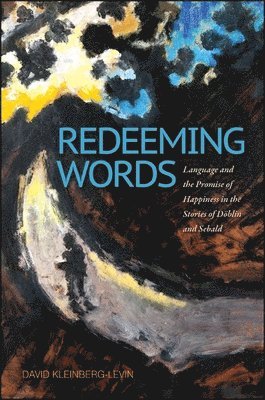
    Redeeming Words

    Language and the Promise of Happiness in the Stories of Döblin and Sebald

    AvDavid Michael Kleinberg-Levin

    Häftad, Engelska, 2014

    Del i serien SUNY series, Intersections: Philosophy and Critical Theory

    471 kr

    Tillfälligt slut

    Fler format och utgåvor

    Inbunden

    1 436 kr

    Beskrivning

    Probing study of how literature can redeem the revelatory, redemptive powers of language.In this probing look at Alfred Döblin's 1929 novel Berlin Alexanderplatz and the stories of W. G. Sebald, Redeeming Words offers a philosophical meditation on the power of language in literature. David Kleinberg-Levin draws on the critical theory of Benjamin and Adorno; the idealism and romanticism of Kant, Hegel, Hölderlin, Novalis, and Schelling; and the nineteenth- and twentieth-century thought of Nietzsche, Heidegger, and Derrida. He shows how Döblin and Sebald-writers with radically different styles working in different historical moments-have in common a struggle against forces of negativity and an aim to bring about in response a certain redemption of language. Kleinberg-Levin considers the fast-paced, staccato, and hard-cut sentences of Döblin and the ghostly, languorous, and melancholy prose fiction of Sebald to articulate how both writers use language in an attempt to recover and convey this utopian promise of happiness for life in a time of mourning.

    Produktinformation

    • Utgivningsdatum:2014-07-02
    • Mått:152 x 229 x 17 mm
    • Vikt:535 g
    • Format:Häftad
    • Språk:Engelska
    • Serie:SUNY series, Intersections: Philosophy and Critical Theory
    • Antal sidor:384
    • Förlag:State University of New York Press
    • ISBN:9781438447803

    Utforska kategorier

    • Litteraturvetenskap inom Skönlitteratur
    • Filosofiska discipliner inom Filosofi och religion

    Mer om författaren

    David Kleinberg-Levin is Professor Emeritus of Philosophy at Northwestern University. His many books include Gestures of Ethical Life: Reading Hölderlin's Question of Measure After Heidegger; Before the Voice of Reason: Echoes of Responsibility in Merleau-Ponty's Ecology and Levinas's Ethics, also published by SUNY Press; and Redeeming Words and the Promise of Happiness: A Critical Theory Approach to Wallace Stevens and Vladimir Nabokov.

    Recensioner i media

    "Redeeming Words is an elegant, highly learned, and incisive exploration of how language—and thus the greatest literature of our time—both registers the experience of the loss of utopia and affirms hope by making the loss more clear. It takes as its theme the most profound reflections on the role of words in a time of abandonment and disenchantment. Kleinberg-Levin argues not only that words communicate this sense of loss but constitute it by failing to achieve total mastery and transparency and self-consciously thematizing the corruption and also affirmative power of words. At the deepest level, this study analyzes words and what the very existence of words can confer to individuals and communities." — Peter Fritzsche, author of The Turbulent World of Franz Göll: An Ordinary Berliner Writes the Twentieth Century

    Innehållsförteckning

    • AcknowledgmentsProloguePart I. Alfred Döblin’s Berlin Alexanderplatz: Language as the Causality of Fate 1. Fatality: Character as Fate2. Natural History3. Döblin’s Conception of the Modern Novel4. The Language of Fate5. Language as the Causality of Freedom6. Paradise in Words: The Promise of HappinessPart II. Damals: The Melancholy Science of Memory in W. G. Sebald’s Stories 1. Telling Stories: A Question of Transmissibility2. Natural History: Becoming in Dissolution3. Of Humans and Other Animals4. As Time Goes By: Words from the Embers of Remembering5. Stoicism, Skepticism, and the Unhappy Consciousness: Sebald’s Phenomenology of Spirit6. Beauty: Symbol of Morality in a Phenomenology of Spirit7. On a Journey through DisenchantmentEpilogueNotesBibliographyIndex