Häftad, Engelska, 2017
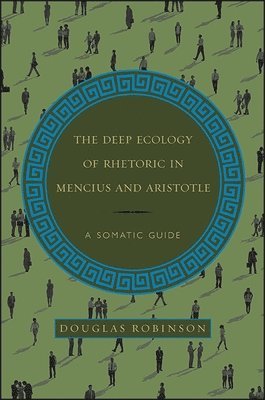
Deep Ecology of Rhetoric in Mencius and Aristotle
487 kr
Skickas inom 5-8 vardagar
Beskrivning
Discusses philosophers Mencius and Aristotle as socio-ecological thinkers.Mencius (385–303/302 BCE) and Aristotle (384–322 BCE) were contemporaries, but are often understood to represent opposite ends of the philosophical spectrum. Mencius is associated with the ecological, emergent, flowing, and connected; Artistotle with the rational, static, abstract, and binary. Douglas Robinson argues that in their conceptions of rhetoric, at least, Mencius and Aristotle are much more similar than different: both are powerfully socio-ecological, espousing and exploring collectivist thinking about the circulation of energy and social value through groups. The agent performing the actions of pistis, "persuading-and-being-persuaded," in Aristotle and zhi, "governing-and-being-governed," in Mencius is, Robinson demonstrates, not so much the rhetor as an individual as it is the whole group. Robinson tracks this collectivistic thinking through a series of comparative considerations using a theory that draws impetus from Arne Naess's "ecosophical" deep ecology and from work on rhetoric powered by affective ecologies, but with details of the theory drawn equally from Mencius and Aristotle.
Produktinformation
- Utgivningsdatum: 2017-01-02
- Mått: 152 x 229 x 20 mm
- Vikt: 445 g
- Format: Häftad
- Språk: Engelska
- Antal sidor: 338
- Förlag: State University of New York Press
- Serie: SUNY series in Chinese Philosophy and Culture
- ISBN: 9781438461069
Utforska kategorier
Betyg & recensioner
0 recensioner
Inga recensioner tillgängliga.