• Fri frakt över 249 kr
  • •
  • Snabba leveranser
  • •
  • Billiga böcker
Kundservice

Du är på sajten för privatpersoner.

Företag, bibliotek eller offentlig verksamhet?

Du handlar på classic.bokus.com, där alla dina funktioner finns intakta.
Till classic.bokus.com
Bokus logotyp. Gå till startsidan.
  • Erbjudanden
  • Nyheter
  • Student
  • Topplistor
  • Barn & ungdom
  • Bokus Play
  • E-böcker
  • Pocketböcker
  • Spel & pussel

10% rabatt på allt med kod NYSTART10 →

Sidfot

Mina sidor

    Hjälp

    • Kundservice
    • Vanliga frågor och svar
    • Frakt och leverans
    • Retur vid ångerrätt
    • Reklamera vara
    • Betalning
    • Köpvillkor
    • Allmänna villkor
    • Information om webbplatsens tillgänglighet

    Om Bokus

    • Om oss
    • Pressrum
    • För studenter
    • För företag
    • För bibliotek och offentlig verksamhet
    • För leverantörer
    • Hållbarhet

    Populärt

    • Aktuella erbjudanden
    • Presentkort
    • Studentlitteratur
    • Nya böcker
    • Topplistor
    • Signerade böcker
    • Engelska böcker

    Inspiration

    • Boktips
    • BookTok
    • Populära bokserier
    • Barnbokskaraktärer
    • Populära författare
    Logotyp för Bokus
    Följ oss på Facebook (extern länk)Följ oss på Instagram (extern länk)Följ oss på YouTube (extern länk)Följ oss på TikTok (extern länk)
    bokus @ CookiesAnpassa cookiesIntegritetspolicyKöpvillkor
    Till Citymail hemsida (extern länk)Till Budbee hemsida (extern länk)Till Postnord hemsida (extern länk)Till Schenker hemsida (extern länk)Till Early Bird hemsida (extern länk)Till Walleys hemsida (extern länk)
    1. Samhälle och politik
    2. Politik och statsskick
    3. Statsvetenskap och politisk teori

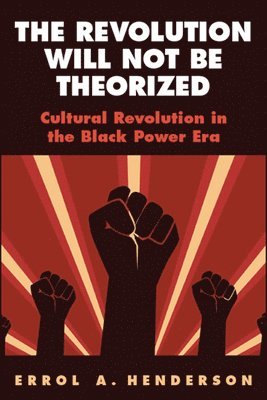
    Revolution Will Not Be Theorized

    Cultural Revolution in the Black Power Era

    AvErrol A. Henderson

    Häftad, Engelska, 2020

    Del i serien SUNY Press Open Access

    527 kr

    Beställningsvara. Skickas inom 5-8 vardagar. Fri frakt över 249 kr.

    Fler format och utgåvor

    Inbunden

    Tillf. slut

    Beskrivning

    Studies the revolutionary theory of the Black Power Movement in the 1960s through ʼ70s, placing it within the broader social theory of black revolution in the United States since the nineteenth century.The study of the impact of Black Power Movement (BPM) activists and organizations in the 1960s through ʼ70s has largely been confined to their role as proponents of social change; but they were also theorists of the change they sought. In The Revolution Will Not Be Theorized Errol A. Henderson explains this theoretical contribution and places it within a broader social theory of black revolution in the United States dating back to nineteenth-century black intellectuals. These include black nationalists, feminists, and anti-imperialists; activists and artists of the Harlem Renaissance; and early Cold War–era black revolutionists. The book first elaborates W. E. B. Du Bois's thesis of the "General Strike" during the Civil War, Alain Locke's thesis relating black culture to political and economic change, Harold Cruse's work on black cultural revolution, and Malcolm X's advocacy of black cultural and political revolution in the United States. Henderson then critically examines BPM revolutionists' theorizing regarding cultural and political revolution and the relationship between them in order to realize their revolutionary objectives. Focused more on importing theory from third world contexts that were dramatically different from the United States, BPM revolutionists largely ignored the theoretical template for black revolution most salient to their case, which undermined their ability to theorize a successful black revolution in the United States.This book is freely available in an open access edition thanks to TOME (Toward an Open Monograph Ecosystem)—a collaboration of the Association of American Universities, the Association of University Presses, and the Association of Research Libraries—and the generous support of Pennsylvania State University.

    Produktinformation

    • Utgivningsdatum:2020-01-02
    • Mått:152 x 229 x 34 mm
    • Vikt:599 g
    • Format:Häftad
    • Språk:Engelska
    • Serie:SUNY Press Open Access
    • Antal sidor:514
    • Förlag:State University of New York Press
    • ISBN:9781438475424

    Utforska kategorier

    • Statsvetenskap och politisk teori inom Samhälle och politik
    • Amerikas historia inom Historia och arkeologi

    Mer om författaren

    Errol A. Henderson is Associate Professor of Political Science at Pennsylvania State University. He is the author of several books, including African Realism? International Relations Theory and Africa's Wars in the Postcolonial Era.

    Recensioner i media

    "Errol A. Henderson's masterful and powerful book lays bare the complex dynamics of the revolutionary black nationalist tradition in the US empire. It is the best treatment we have of the theoretical contributions of Malcolm X, Harold Cruse, Grace Boggs, and others that attempt to connect revolutionary efforts to black cultural institutions. His fascinating reflections on reverse civilizationism are worth the book! And Henderson's magisterial work helps bring back revolutionary theory and praxis in our grim neofascist times!" — Cornel West"This book is not only one of the most intellectually ambitious works but also the most comprehensive examination of revolutionary theory in the Black Power Era. A monumental accomplishment. Bravo!" — Komozi Woodard, author of A Nation within a Nation: Amiri Baraka (LeRoi Jones) and Black Power Politics

    Innehållsförteckning

    • AcknowledgmentsIntroduction: The Revolution Will Not Be Theorized1. Malcolm X and the Revolutionary Turn in the Civil Rights Movement2. Black Nationalism: Civilizationism and Reverse Civilizationism3. The General Strike and the Slave Revolution of the U.S. Civil War4. Cultural Revolution and Cultural Evolution5. Theorizing Cultural Revolution in the Black Power Era6. RAM, Us, the Black Panther Party7. Republic of New Africa, League of Revolutionary Black Workers8. CAP, Shrine of the Black Madonna/Pan-African Orthodox Christian ChurchConclusion: Black Revolutionary Theory in the BPMNotesReferencesIndex