• Fri frakt över 249 kr
  • •
  • Snabba leveranser
  • •
  • Billiga böcker
Kundservice

Du är på sajten för privatpersoner.

Företag, bibliotek eller offentlig verksamhet?

Du handlar på classic.bokus.com, där alla dina funktioner finns intakta.
Till classic.bokus.com
Bokus logotyp. Gå till startsidan.
  • Erbjudanden
  • Nyheter
  • Student
  • Topplistor
  • Barn & ungdom
  • Bokus Play
  • E-böcker
  • Pocketböcker
  • Spel & pussel

10% rabatt på allt med kod: NYSTART10 →

Sidfot

Mina sidor

    Hjälp

    • Kundservice
    • Vanliga frågor och svar
    • Frakt och leverans
    • Retur vid ångerrätt
    • Reklamera vara
    • Betalning
    • Köpvillkor
    • Allmänna villkor
    • Information om webbplatsens tillgänglighet

    Om Bokus

    • Om oss
    • Pressrum
    • För studenter
    • För företag
    • För bibliotek och offentlig verksamhet
    • För leverantörer
    • Hållbarhet

    Populärt

    • Aktuella erbjudanden
    • Presentkort
    • Studentlitteratur
    • Nya böcker
    • Topplistor
    • Signerade böcker
    • Engelska böcker

    Inspiration

    • Boktips
    • BookTok
    • Populära bokserier
    • Barnbokskaraktärer
    • Populära författare
    Logotyp för Bokus
    Följ oss på Facebook (extern länk)Följ oss på Instagram (extern länk)Följ oss på YouTube (extern länk)Följ oss på TikTok (extern länk)
    bokus @ CookiesAnpassa cookiesIntegritetspolicyKöpvillkor
    Till Citymail hemsida (extern länk)Till Budbee hemsida (extern länk)Till Postnord hemsida (extern länk)Till Schenker hemsida (extern länk)Till Early Bird hemsida (extern länk)Till Walleys hemsida (extern länk)
    1. Skönlitteratur
    2. Litteraturvetenskap
    3. Litteraturteori

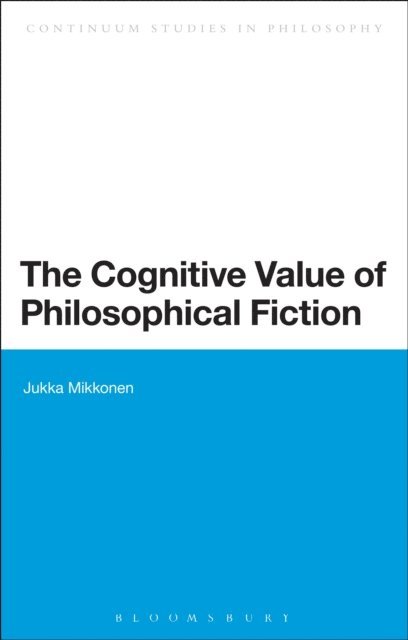
    Cognitive Value of Philosophical Fiction

    AvJukka Mikkonen

    E-bok
    Engelska, 2013

    Del i serien Bloomsbury Studies in Philosophy

    677 kr

    Läs direkt i Bokus Reader – eller ladda ned till din enhet

    Fler format och utgåvor

    E-bok

    677 kr

    Inbunden

    2 401 kr

    Häftad

    630 kr

    Beskrivning

    Can literary fictions convey significant philosophical views, understood in terms of propositional knowledge? This study addresses the philosophical value of literature by examining how literary works impart philosophy truth and knowledge and to what extent the works should be approached as communications of their authors.Beginning with theories of fiction, it examines the case against the prevailing 'pretence' and 'make-believe' theories of fiction hostile to propositional theories of literary truth. Tackling further arguments against the cognitive function and value of literature, this study illustrates how literary works can contribute to knowledge by making assertions and suggestions and by providing hypotheses for the reader to assess.Through clear analysis of the concept of the author, the role of the authorial intention and the different approaches to the 'meaning' of a literary work, this study provides an historical survey to the cognitivist-anti-cognitivist dispute, introducing contemporary trends in the discussion before presenting a novel approach to recognizing the cognitive function of literature. An important contribution to philosophical studies of literature and knowledge.

    Produktinformation

    • Utgivningsdatum:2013-02-14
    • Språk:Engelska
    • Antal sidor:224
    • Filformat:EPUB
    • Kopieringsskydd:LCP
    • ISBN:9781441129703
    • Förlag:Bloomsbury Publishing PLC (Digital)
    • Serie:Bloomsbury Studies in Philosophy

    Utforska kategorier

    • Litteraturteori inom Skönlitteratur
    • Filosofiska discipliner inom Filosofi och religion

    Mer om författaren

    Jukka Mikkonen is a postgraduate researcher in the Department of Philosophy at the University of Tampere, Finland.

    Recensioner i media

    Jukka Mikkonen contributes a welcome new voice, at once meticulous and creative, to contemporary discussion of what has become known as "philosophy through literature". In The Cognitive Value of Philosophical Fiction intentionalist semantics is shown to be capable of taking significant account both of characteristically literary uses of language and of literary activity as a range of social practices. In part through seeking to defuse the well-known objections, Mikkonen uses this semantics to develop a powerful case for a nuanced version of the claim that certain forms of imaginative literature offer genuine and distinctive cognitive gains, with particular attention to how it is that they do so. -- Martin Warner, Associate Fellow of the Department of Philosophy at the University of Warwick, UK Jukka Mikkonen offers a well-informed overview of the discussion about literature and knowledge in analytic aesthetics and a distinctive theory of his own, pointing to three ways for literary works to contribute to knowledge by communicating truths. This is a sensible and perceptive analysis of one of the classical problems in the theory of literary art. -- Anders Pettersson, Professor at University of Umea, Sweden It would be hard to find anyone better informed than Jukka Mikkonen about recent analytical philosophical debates on fiction and cognition. He is a reliable and perceptive guide to the whole terrain. -- Peter Lamarque, Professor of Philosophy at University of York, UK There is plenty to admire in this elegant little book. It offers one of the most thorough explorations in print of how works of literary fiction can engage in an important kind of philosophical labor. The Cognitive Value of Philosophical Fiction is a must-read for anyone with a serious interest in the intersection of philosophy and literary studies. -- John Gibson, Associate Professor of Philosophy at University of Louisville, USA In short, the book is not only an interesting contribution for readers who are already familiar with the debate, but also a valuable source for those looking for an introduction to the field. -- Wolfgang Huemer, Universita di Parma Notre Dame Philosophical Review

    Innehållsförteckning

    • 1. Introduction: Cognition, Knowledge and Truth \ 2. Fictive Use of Language \ 3. Literature and Truth \ 4. Meaning and Interpretation \ 5. Conclusion \ Epilogue: The Grey Zone \ Bibliography \ Index