• Fri frakt över 249 kr
  • •
  • Snabba leveranser
  • •
  • Billiga böcker
Kundservice

Du är på sajten för privatpersoner.

Företag, bibliotek eller offentlig verksamhet?

Du handlar på classic.bokus.com, där alla dina funktioner finns intakta.
Till classic.bokus.com
Bokus logotyp. Gå till startsidan.
  • Erbjudanden
  • Nyheter
  • Student
  • Topplistor
  • Barn & ungdom
  • Bokus Play
  • E-böcker
  • Pocketböcker
  • Spel & pussel

10% rabatt på allt med kod NYSTART10 →

Sidfot

Mina sidor

    Hjälp

    • Kundservice
    • Vanliga frågor och svar
    • Frakt och leverans
    • Retur vid ångerrätt
    • Reklamera vara
    • Betalning
    • Köpvillkor
    • Allmänna villkor
    • Information om webbplatsens tillgänglighet

    Om Bokus

    • Om oss
    • Pressrum
    • För studenter
    • För företag
    • För bibliotek och offentlig verksamhet
    • För leverantörer
    • Hållbarhet

    Populärt

    • Aktuella erbjudanden
    • Presentkort
    • Studentlitteratur
    • Nya böcker
    • Topplistor
    • Signerade böcker
    • Engelska böcker

    Inspiration

    • Boktips
    • BookTok
    • Populära bokserier
    • Barnbokskaraktärer
    • Populära författare
    Logotyp för Bokus
    Följ oss på Facebook (extern länk)Följ oss på Instagram (extern länk)Följ oss på YouTube (extern länk)Följ oss på TikTok (extern länk)
    bokus @ CookiesAnpassa cookiesIntegritetspolicyKöpvillkor
    Till Citymail hemsida (extern länk)Till Budbee hemsida (extern länk)Till Postnord hemsida (extern länk)Till Schenker hemsida (extern länk)Till Early Bird hemsida (extern länk)Till Walleys hemsida (extern länk)
    1. Naturvetenskap och teknik
    2. Matematik och naturvetenskap
    3. Biologi
    4. Människans biologi

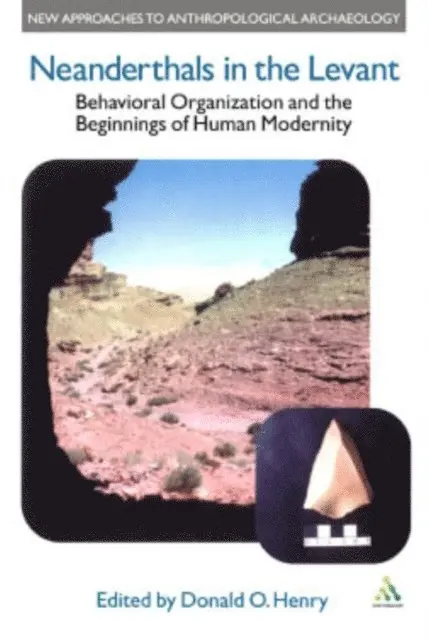
    Neanderthals in the Levant

    Behavioural Organization and the Beginnings of Human Modernity

    AvDonald O. Henry

    E-bok
    PDF, Engelska, 2003

    Del i serien New Approaches to Anthropological Archaeology

    483 kr

    Läs direkt i Bokus Reader – eller ladda ned till din enhet (PDF kräver ofta zoom och scroll på små skärmar).

    Beskrivning

    The volume traces the controversy that revolves around the bio-cultural relationships of Archaic (Neanderthal) and Modern humans at global and regional, Levantine scales. The focus of the book is on understanding the degree to which the behavioral organization of Archaic groups differed from Moderns. To this end, a case study is presented for a 44-70,000 year old, Middle Paleolithic occupation of a Jordanian rockshelter. The research, centering on the spatial analysis of artifacts, hearths and related data, reveals how the Archaic occupants of the shelter structured their activities and placed certain conceptual labels on different parts of the site. The structure of Tor Faraj is compared to site structures defined for modern foragers, in both ethnographic and archaeological contexts, to measure any differences in behavioral organization. The comparisons show very similar structures for Tor Faraj and its modern cohorts. The implications of this finding challenge prevailing views in the emergence of modern human controversy in which Archaic groups are thought to have had inferior cognition and less complex behavioral-social organization than modern foragers. And, it is generally thought that such behaviors only emerged after the appearance of the Upper Paleolithic, dated some 10-20,000 years later than the occupation of Tor Faraj.

    Produktinformation

    • Utgivningsdatum:2003-10-01
    • Språk:Engelska
    • Antal sidor:338
    • Filformat:PDF
    • Kopieringsskydd:LCP
    • ISBN:9781441167194
    • Förlag:Continuum Publishing Corporation
    • Serie:New Approaches to Anthropological Archaeology

    Utforska kategorier

    • Människans biologi inom Naturvetenskap och teknik

    Mer om författaren

    Donald O. Henry is Professor Emeritus of Anthropology at the University of Tulsa, USA. He is the author of several books and numerous articles covering his over 25 years of archaeological research on prehistoric human ecology in the Near East.

    Recensioner i media

    'This is the most significant report of a Middle Paleolithic site of this region to appear in many years and it raises the bar considerably in terms of the depth of analysis and quality of presentation. Not at all just a laundry list of material recovered from Jordanian site of Tor Faraj, it is instead a tightly integrated collection of studies, ranging from site formation to behavioral interpretation, that builds on the best of current archaeological method and theory in the context of modern human origins. While an invaluable resource for all Middle Paleolithic scholars, it also serves as a model for the entire archaeological community of what modern research design, excavation, analysis, and reporting can be.' Professor Harold L. Dibble, Professor in Anthropology, University of Pennsylvania Museum, USA

    Innehållsförteckning

    • List of FiguresList of TablesList of ContributorsAcknowledgementsIntroduction1. The Emergence of Modern Humans: Issues and Debates (Donald O. Henry)2. The Levant and the Modern Human Debate (Donald O. Henry)Case Study3. A Case Study from Southern Jordan: Tor Faraj (Donald O. Henry)4. Human Behavior and the Stone Tools from Tor Faraj (Donald O. Henry)5. Small Lithic Debris Analysis (Teresa L. Armagan)6. Into the Mind of the Maker: Refitting Study and Technological Reconstructions (Yu. E. Demidenko and V. I. Usik)7. Middle Paleolithic Plant Exploitation: The Microbotanical Evidence (Arlene Miller Rosen)8. Formation Processes and Paleosurface Identification (Harold J. Hietala)9. Site Structure and Material Patterning in Space on the Tor Faraj Living Floors (Harold J. Hietala)Summary10. Behavioral Organization at Tor Faraj (Donald O. Henry)Appendix A: Alphabetical Listing of Attribute Definitions Used for the Tor Faraj Small Lithic Debris Study (Teresa L. Armagan)Appendix B: Small Lithic Debris Analysis Results TablesAppendix C: Cross-Cultural Data for Hearths in Rockshelters (Donald O. Henry)Appendix D: Analysis of Sediments for Zinc and Phosphate Ions (Thomas M. Harris)ReferencesIndex