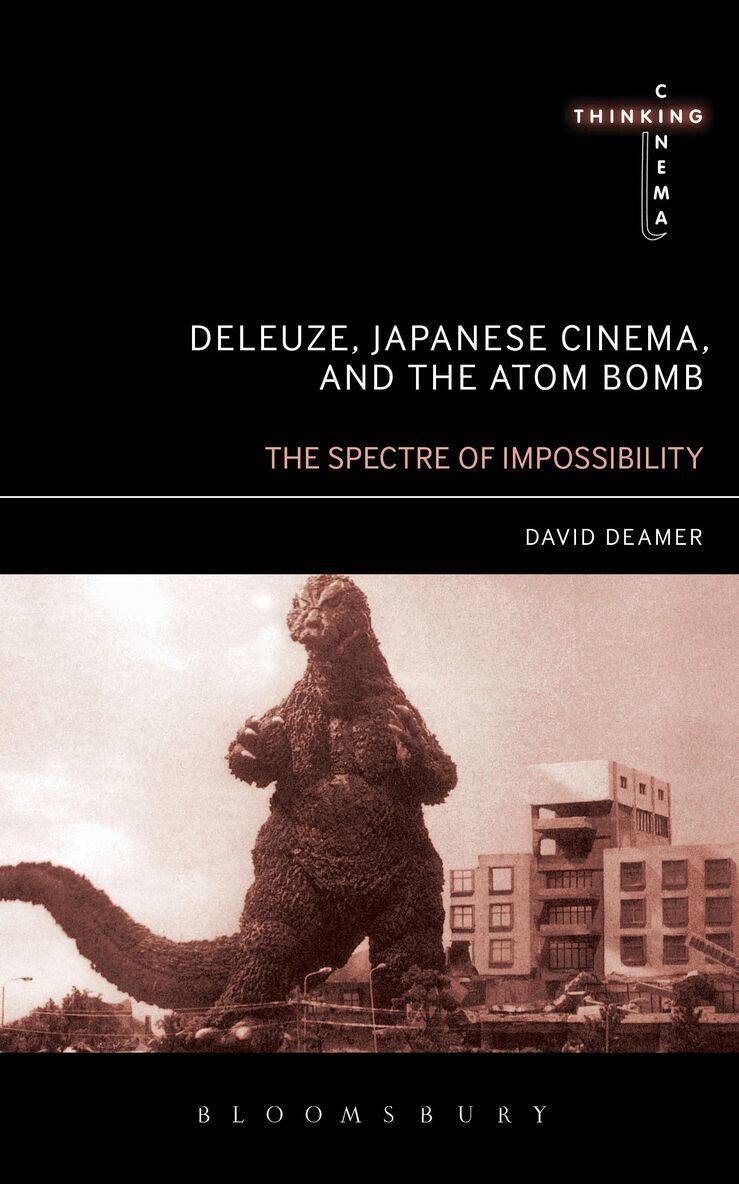
Inbunden, Engelska, 2014
Deleuze, Japanese Cinema, and the Atom Bomb
The Spectre of Impossibility
Av David Deamer
Del i serien Thinking Cinema
1977 kr
Beställningsvara. Skickas inom 10-15 vardagar. Fri frakt över 249 kr.
Beskrivning
Produktinformation
- Utgivningsdatum: 2014-09-25
- Mått: 152 x 229 x 28 mm
- Vikt: 645 g
- Format: Inbunden
- Språk: Engelska
- Serie: Thinking Cinema
- Antal sidor: 344
- Förlag: Bloomsbury Publishing Plc
- ISBN: 9781441178152
Utforska kategorier
Mer om författaren
David Deamer is Associate Lecturer in film at Manchester Metropolitan University, UK. He has published in Martin-Jones and Brown's Deleuze and Film; Bell and Colebrook's Deleuze and History; Deleuze Studies; and the online A/V Journal, of which he was co-founder. He blogs on Deleuze and cinema at www.daviddeamer.com.
Recensioner i media
This ambitious book brings together three different constellations: the national cinema of Japan; the atom bombs thrown on Hiroshima and Nagasaki; and Deleuze. Surprising though this may sound, the book patiently and expertly weaves these three strands together to the point of making us feel that the Deleuzian cineosis was conceived to address precisely this kind of historico-cinematic encounter. Moving away from reductive ideas of genre, Deamer tackles the complexity of a wide and extremely varied body of films united by the catastrophe of the atom bomb, allowing for a re-evaluation of forgotten gems as well as celebrated masterpieces. Unveiling not one but many Japans, this book testifies to the enduring power and infinite uses of Deleuze’s vision of cinema.
Betyg & recensioner
0 recensioner
Inga recensioner tillgängliga.