• Fri frakt över 249 kr
  • •
  • Snabba leveranser
  • •
  • Billiga böcker
Kundservice

Du är på sajten för privatpersoner.

Företag, bibliotek eller offentlig verksamhet?

Du handlar på classic.bokus.com, där alla dina funktioner finns intakta.
Till classic.bokus.com
Bokus logotyp. Gå till startsidan.
  • Erbjudanden
  • Nyheter
  • Student
  • Topplistor
  • Barn & ungdom
  • Bokus Play
  • E-böcker
  • Pocketböcker
  • Spel & pussel

Må bättre, för mindre! Upp till 50% rabatt på hälsoböcker

Sidfot

Mina sidor

    Hjälp

    • Kundservice
    • Vanliga frågor och svar
    • Frakt och leverans
    • Retur vid ångerrätt
    • Reklamera vara
    • Betalning
    • Köpvillkor
    • Allmänna villkor
    • Information om webbplatsens tillgänglighet

    Om Bokus

    • Om oss
    • Pressrum
    • För studenter
    • För företag
    • För bibliotek och offentlig verksamhet
    • För leverantörer
    • Hållbarhet

    Populärt

    • Aktuella erbjudanden
    • Presentkort
    • Studentlitteratur
    • Nya böcker
    • Topplistor
    • Signerade böcker
    • Engelska böcker

    Inspiration

    • Boktips
    • BookTok
    • Populära bokserier
    • Barnbokskaraktärer
    • Populära författare
    Logotyp för Bokus
    Följ oss på Facebook (extern länk)Följ oss på Instagram (extern länk)Följ oss på YouTube (extern länk)Följ oss på TikTok (extern länk)
    bokus @ CookiesAnpassa cookiesIntegritetspolicyKöpvillkor
    Till Citymail hemsida (extern länk)Till Budbee hemsida (extern länk)Till Postnord hemsida (extern länk)Till Schenker hemsida (extern länk)Till Early Bird hemsida (extern länk)Till Walleys hemsida (extern länk)
    1. Samhälle och politik
    2. Sociologi och antropologi
    3. Sociologi

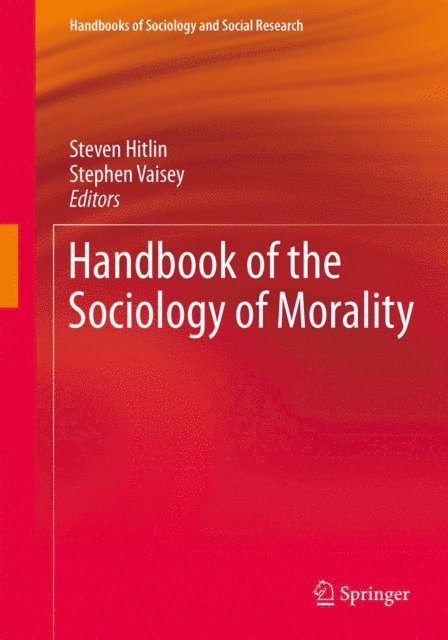
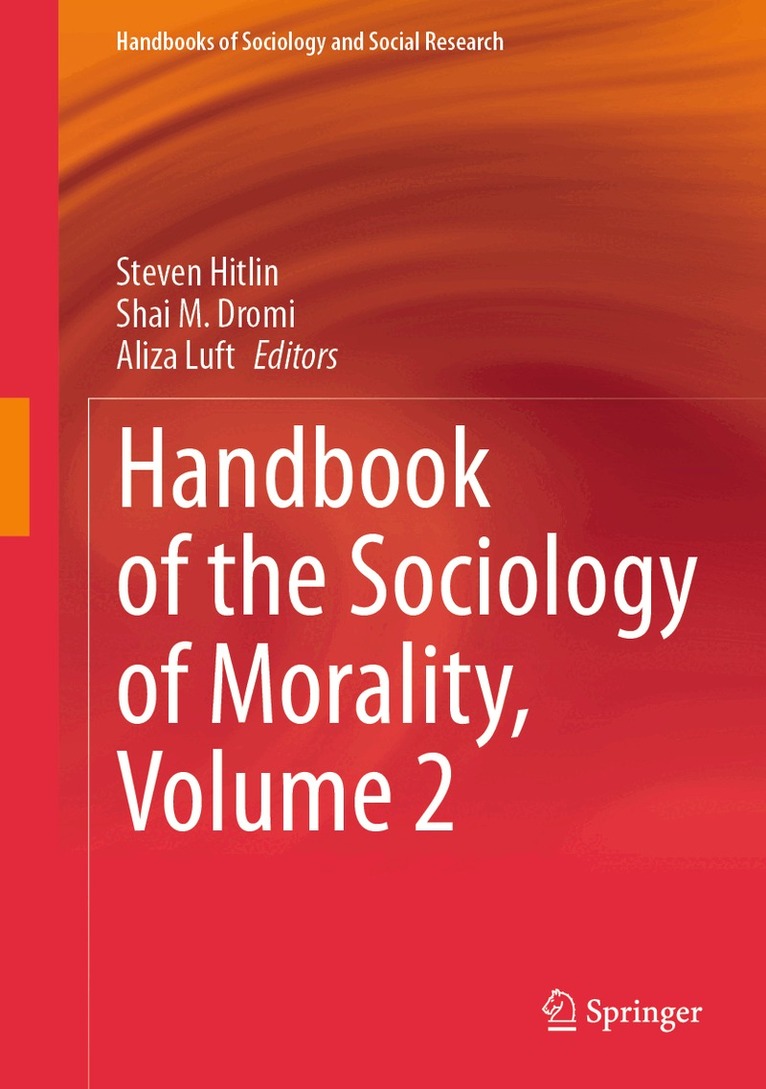
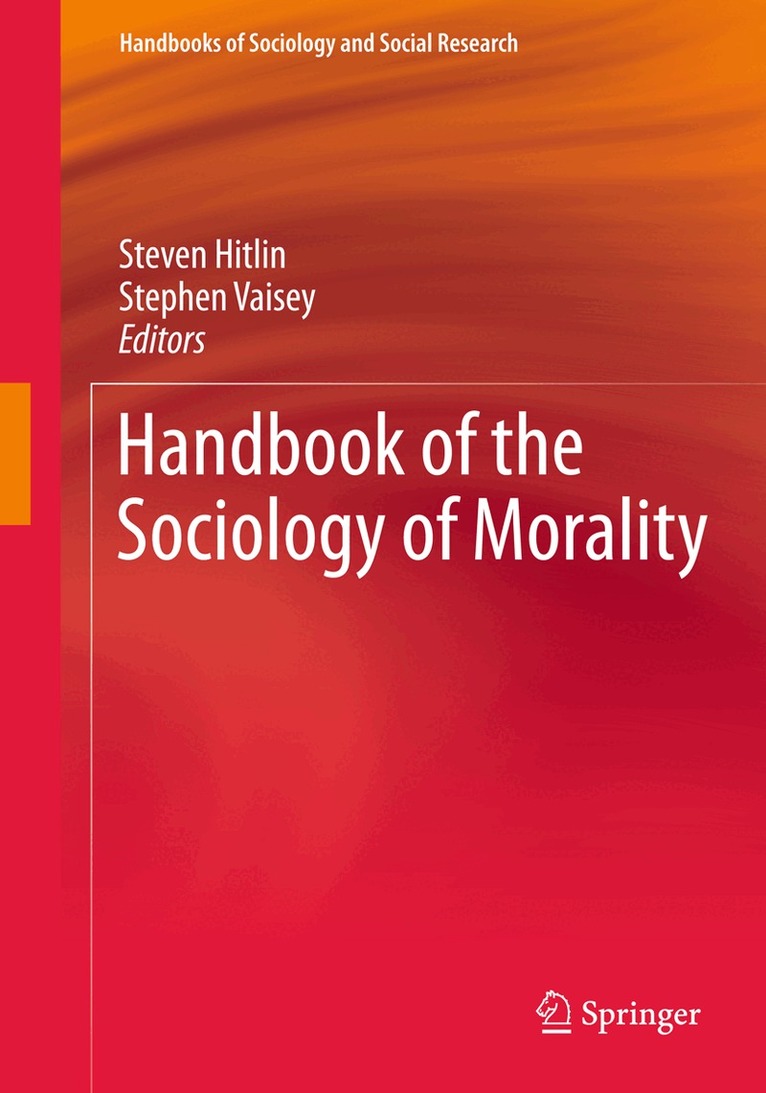
    Handbook of the Sociology of Morality

    AvSteven Hitlin,Stephen Vaisey

    Häftad, Engelska, 2012

    Del i serien Handbooks of Sociology and Social Research

    2 381 kr

    Beställningsvara. Skickas inom 10-15 vardagar. Fri frakt över 249 kr.

    Beskrivning

    Human beings necessarily understand their social worlds in moral terms, orienting their lives, relationships, and activities around socially-produced notions of right and wrong. Morality is sociologically understood as more than simply helping or harming others; it encompasses any way that individuals form understandings of what behaviors are better than others, what goals are most laudable, and what "proper" people believe, feel, and do. Morality involves the explicit and implicit sets of rules and shared understandings that keep human social groups intact. Morality includes both the "shoulds" and "should nots" of human activity, its proactive and inhibitive elements.At one time, sociologists were centrally concerned with morality, issues like social cohesion, values, the goals and norms that structure society, and the ways individuals get socialized to reproduce those concerns. In the last half-century, however, explicit interest in these topics has waned, and modern sociology has become uninterested in these matters and morality has become marginalized within the discipline. But a resurgence in the topic is happening in related disciplines – psychology, neurology, philosophy, and anthropology - and in the wider national discourse. Sociology has much to offer, but is not fully engaged in this conversation. Many scholars work on areas that would fall under the umbrella of a sociology of morality but do not self-identify in such a manner, nor orient their efforts toward conceptualizing what we know, and should know, along these dimensions.The Handbook of the Sociology of Morality fills a niche within sociology making explicit the shared concerns of scholars across the disciplines as they relate to an often-overlooked dimension of human social life. It is unique in social science as it would be the first systematic compilation of the wider social structural, cultural, cross-national, organizational, and interactional dimension of human moral (understood broadly) thought, feeling, and behavior.

    Produktinformation

    • Utgivningsdatum:2012-12-06
    • Mått:178 x 254 x 33 mm
    • Vikt:1 134 g
    • Format:Häftad
    • Språk:Engelska
    • Serie:Handbooks of Sociology and Social Research
    • Antal sidor:595
    • Upplaga:2010
    • Förlag:Springer-Verlag New York Inc.
    • ISBN:9781441968951

    Utforska kategorier

    • Sociologi inom Samhälle och politik
    • Filosofiska discipliner inom Filosofi och religion

    Mer om författaren

    Steve Hitlin received his Ph.D. from the University of Wisconsin-Madison and is now Assistant Professor of sociology at the University of Iowa. His research interests include social psychology, self and identity, values, morality, social theory, life course studies and gender. His primary focus is on contributing to the sociology of morality, including building bridges between scholars and disciplines around this enterprise. In 2009, he received a grant from the National Science Foundation to host an interdisciplinary conference on the sociology of morality. His research focuses on various dimensions of the social shaping of individual moral orientations, as well as helping to establish the importance of moral dimensions for properly understanding social actors. His other research programs have looked at the development and social psychological nature of racial identities and attempts to empirically measure “human agency” to engage core sociological debates.

    Innehållsförteckning

    • Sociological Perspectives on Morality (“What Is It”?).- Back to the Future.- The Cognitive Approach to Morality.- Four Concepts of Morality.- Adumbrations of a Sociology of Morality in the Work of Parsons, Simmel, and Merton.- The (Im)morality of War.- Social Order as Moral Order.- Sociological Contexts (“Where Does It Come From?”).- Natural Selection and the Evolution of Morality in Human Societies.- The Sacred and the Profane in the Marketplace.- Class and Morality.- The Unstable Alliance of Law and Morality.- Morality in Organizations.- Explaining Crime as Moral Actions.- What Does God Require? Understanding Religious Context and Morality.- The Duality of American Moral Culture.- Education and the Culture Wars.- The Creation and Establishment of Moral Vocabularies.- Morality in Action (“How Does It Work?”).- The Trouble with Invisible Men.- The Justice/Morality Link.- Toward an Integrated Science of Morality.- The Social Psychology of the Moral Identity.- Morality and Mind-Body Connections.- Moral Power.- Moral Dimensions of the Work–Family Nexus.- Moral Classification and Social Policy.- The Moral Construction of Risk.- Moral Discourse in Economic Contexts.- Morality in the Social Interactional and Discursive World of Everyday Life.- Future Directions for Sociological Science.- Morality, Modernity, and World Society.- The Social Construction of Morality?.- What’s New and What’s Old about the New Sociology of Morality.