• Fri frakt över 249 kr
  • •
  • Snabba leveranser
  • •
  • Billiga böcker
Kundservice

Du är på sajten för privatpersoner.

Företag, bibliotek eller offentlig verksamhet?

Du handlar på classic.bokus.com, där alla dina funktioner finns intakta.
Till classic.bokus.com
Bokus logotyp. Gå till startsidan.
  • Erbjudanden
  • Nyheter
  • Student
  • Topplistor
  • Barn & ungdom
  • Bokus Play
  • E-böcker
  • Pocketböcker
  • Spel & pussel

10% rabatt på allt med kod: NYSTART10 →

Sidfot

Mina sidor

    Hjälp

    • Kundservice
    • Vanliga frågor och svar
    • Frakt och leverans
    • Retur vid ångerrätt
    • Reklamera vara
    • Betalning
    • Köpvillkor
    • Allmänna villkor
    • Information om webbplatsens tillgänglighet

    Om Bokus

    • Om oss
    • Pressrum
    • För studenter
    • För företag
    • För bibliotek och offentlig verksamhet
    • För leverantörer
    • Hållbarhet

    Populärt

    • Aktuella erbjudanden
    • Presentkort
    • Studentlitteratur
    • Nya böcker
    • Topplistor
    • Signerade böcker
    • Engelska böcker

    Inspiration

    • Boktips
    • BookTok
    • Populära bokserier
    • Barnbokskaraktärer
    • Populära författare
    Logotyp för Bokus
    Följ oss på Facebook (extern länk)Följ oss på Instagram (extern länk)Följ oss på YouTube (extern länk)Följ oss på TikTok (extern länk)
    bokus @ CookiesAnpassa cookiesIntegritetspolicyKöpvillkor
    Till Citymail hemsida (extern länk)Till Budbee hemsida (extern länk)Till Postnord hemsida (extern länk)Till Schenker hemsida (extern länk)Till Early Bird hemsida (extern länk)Till Walleys hemsida (extern länk)
    1. Samhälle och politik
    2. Samhälle och kultur
    3. Sociala och etiska frågor

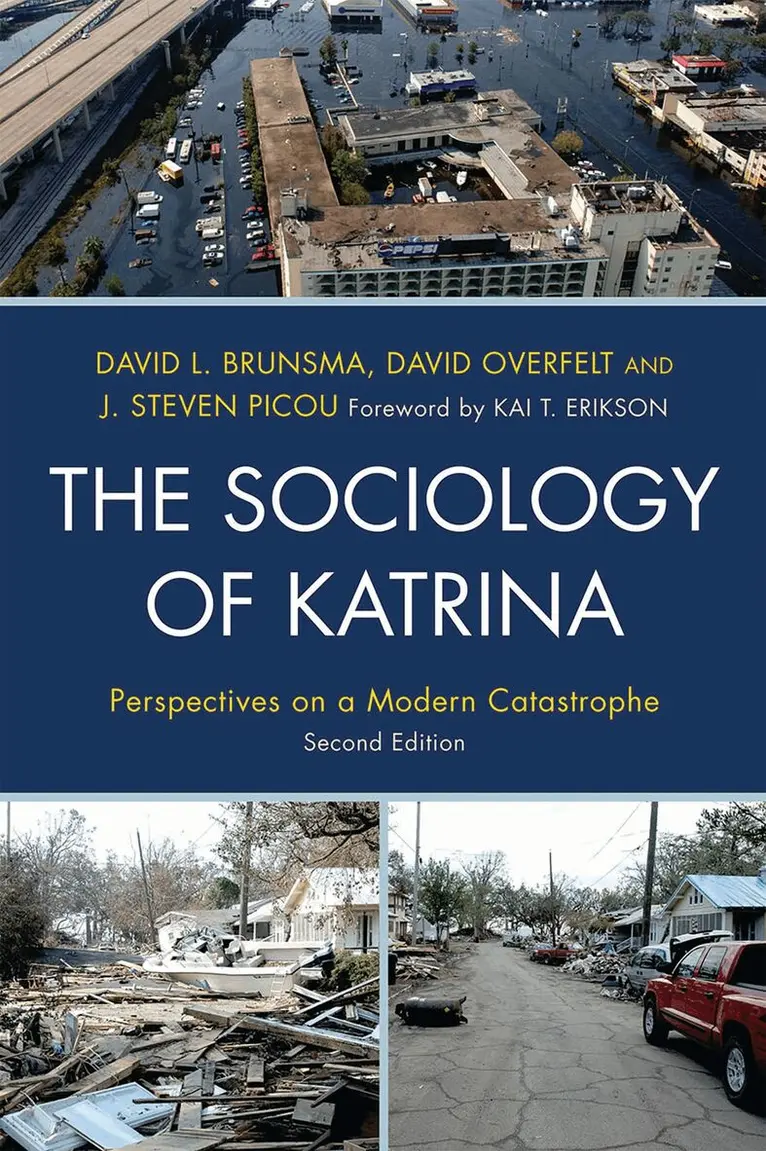
    Sociology of Katrina

    Perspectives on a Modern Catastrophe

    AvDavid L. Brunsma,David Overfelt

    Häftad, Engelska, 2010

    604 kr

    Beställningsvara. Skickas inom 10-15 vardagar. Fri frakt över 249 kr.

    Beskrivning

    The second edition of The Sociology of Katrina brings together the nation's top sociological researchers in an effort to deepen our understanding of the modern catastrophe that is Hurricane Katrina. Five years after the storm, its profound impact continues to be felt.This new edition explores emerging themes, as well as ongoing issues that continue to besiege survivors. The book has been updated and revised throughout—from data about recovery efforts and environmental conditions, to discussions of major social issues in education, health care, the economy, and crime. The authors thoroughly review the important topic of recovery, both in New Orleans and in the wider area of the Mississippi Gulf Coast. This new edition features a new chapter focused on the Katrina experience for people in the primary impact area, or "ground zero," five years after the storm. This chapter uncovers many challenges in overcoming the critical problems caused by the storm of the century.From this important update of the acclaimed first edition, it is apparent that "the storm is not over," as Katrina continues to generate political, economic, community, and personal controversy.

    Produktinformation

    • Utgivningsdatum:2010-09-16
    • Mått:156 x 231 x 20 mm
    • Vikt:531 g
    • Format:Häftad
    • Språk:Engelska
    • Antal sidor:390
    • Upplaga:2
    • Förlag:Bloomsbury Publishing Plc
    • ISBN:9781442206274

    Utforska kategorier

    • Sociala och etiska frågor inom Samhälle och politik
    • Socialt arbete och välfärd inom Samhälle och politik

    Mer om författaren

    David L. Brunsma is associate professor of sociology at the University of Missouri at Columbia.David Overfelt is a graduate of sociology at the University of Missouri at Columbia and a member of Sociologists Without Borders. J. Steven Picou is professor of sociology and chair of the Department of Sociology, Anthropology, and Social Work at the University of South Alabama in Mobile.

    Recensioner i media

    This second edition constitutes further in depth learning from the most destructive collision in American history between nature's hazard and socially constructed vulnerability, knowledge that is essential as societies head toward more confrontations.

    Innehållsförteckning

    • List of FiguresList of TablesForeword by Kai EriksonPreface to the First Edition by David L. BrunsmaPreface to the Second Edition by David L. BrunsmaIntroduction: Katrina as Paradigm Shift: Reflections on Disaster Research in the Twenty-First CenturyPart I: Framing Katrina: Context and ConstructionChapter 1: Finding and Framing Katrina: The Social Construction of DisasterChapter 2: Disaster as War: Militarism and the Social Construction of Disaster in New OrleansChapter 3: Crime and Hurricanes in New OrleansPart II: Experiencing EvacuationChapter 4: Families and Hurricane Response: Risk, Roles, Resources, Race, and Religion: A Framework for Understanding Family Evacuation Strategies, Stress, and Return MigrationChapter 5: Race, Class, and Capital amidst the Hurricane Katrina DiasporaChapter 6: Understanding Community-Based Disaster Response: Houston's Religious Congregations and Hurricane Katrina Relief EffortsPart III: Ongoing Disaster: Reaction and RecoveryChapter 7: Community Recovery from Hurricane Katrina: Storm Experiences, Property Damage, and the Human ConditionChapter 8: After the Levees Broke: Reactions of College Students to the Aftermath of Hurricane KatrinaChapter 9: Landscapes of Disaster and Place Orientation in the Aftermath of Hurricane KatrinaChapter 10: Using Research to Inform and Build Capacity Among Community-Based Organizations: Four Years of Gulf Coast Recovery Following Hurricane KatrinaChapter 11:Rebuilding New Orleans Neighborhoods after Hurricane Katrina: Toward a Theory of Social Structure and Cultural CreativityPart IV: Postdisaster Institutional ChangeChapter 12: Disaster Impacts on Education: Hurricane Katrina and the Adaptation and Recovery of New Orleans-Area Colleges and UniversitiesChapter 13: Heath Needs, Health Care, and KatrinaChapter 14: Immigration, Reconstruction and Settlement: Hurricane Katrina and the Emergence Immigrant CommunitiesPostscript: Considering KatrinaAppendix TablesReferencesIndexAbout the Editors and Contributors