• Fri frakt över 249 kr
  • •
  • Snabba leveranser
  • •
  • Billiga böcker
Kundservice

Du är på sajten för privatpersoner.

Företag, bibliotek eller offentlig verksamhet?

Du handlar på classic.bokus.com, där alla dina funktioner finns intakta.
Till classic.bokus.com
Bokus logotyp. Gå till startsidan.
  • Erbjudanden
  • Nyheter
  • Student
  • Topplistor
  • Barn & ungdom
  • Bokus Play
  • E-böcker
  • Pocketböcker
  • Spel & pussel

10% rabatt på allt med kod: NYSTART10 →

Sidfot

Mina sidor

    Hjälp

    • Kundservice
    • Vanliga frågor och svar
    • Frakt och leverans
    • Retur vid ångerrätt
    • Reklamera vara
    • Betalning
    • Köpvillkor
    • Allmänna villkor
    • Information om webbplatsens tillgänglighet

    Om Bokus

    • Om oss
    • Pressrum
    • För studenter
    • För företag
    • För bibliotek och offentlig verksamhet
    • För leverantörer
    • Hållbarhet

    Populärt

    • Aktuella erbjudanden
    • Presentkort
    • Studentlitteratur
    • Nya böcker
    • Topplistor
    • Signerade böcker
    • Engelska böcker

    Inspiration

    • Boktips
    • BookTok
    • Populära bokserier
    • Barnbokskaraktärer
    • Populära författare
    Logotyp för Bokus
    Följ oss på Facebook (extern länk)Följ oss på Instagram (extern länk)Följ oss på YouTube (extern länk)Följ oss på TikTok (extern länk)
    bokus @ CookiesAnpassa cookiesIntegritetspolicyKöpvillkor
    Till Citymail hemsida (extern länk)Till Budbee hemsida (extern länk)Till Postnord hemsida (extern länk)Till Schenker hemsida (extern länk)Till Early Bird hemsida (extern länk)Till Walleys hemsida (extern länk)
    1. Psykologi och pedagogik
    2. Psykologi
    3. Åldrandets psykologi

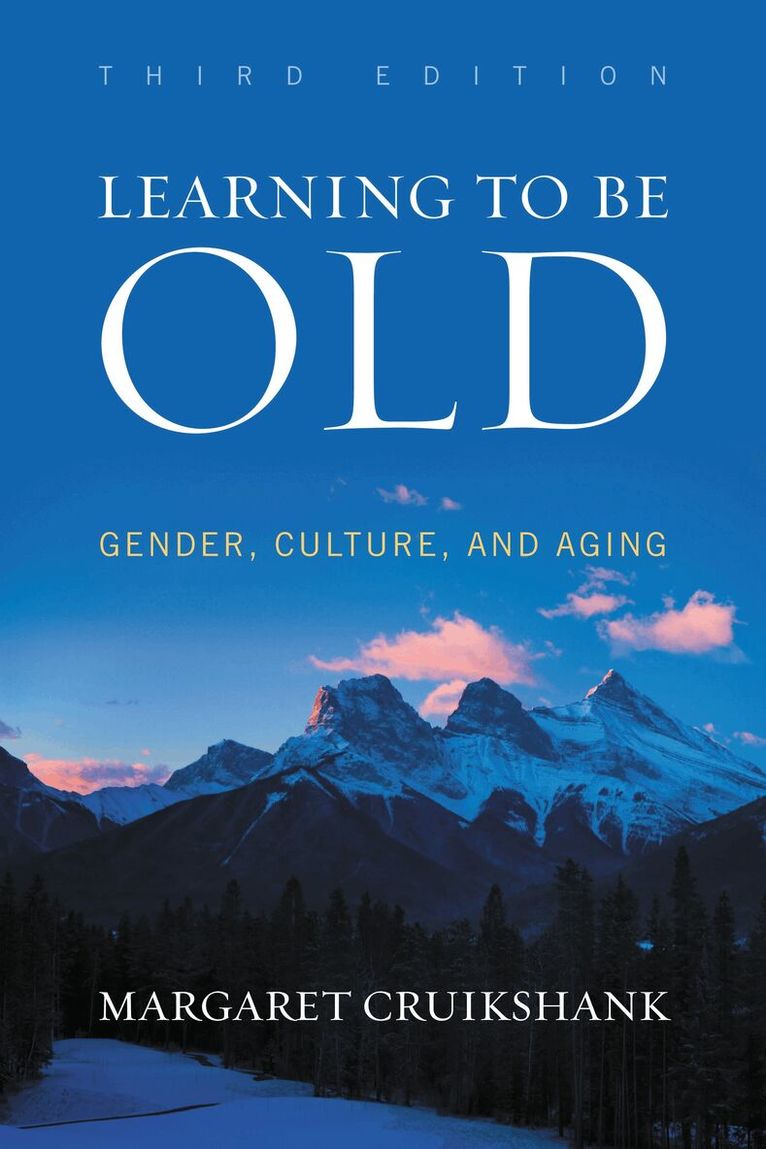
    Learning to Be Old

    Gender, Culture, and Aging

    AvMargaret Cruikshank

    Inbunden, Engelska, 2013

    1 625 kr

    Beställningsvara. Skickas inom 10-15 vardagar. Fri frakt över 249 kr.

    Fler format och utgåvor

    Häftad

    573 kr

    E-bok

    634 kr

    Beskrivning

    Margaret Cruikshank’s Learning to Be Old examines what it means to grow old in America today. The book questions social myths and fears about aging, sickness, and the other social roles of the elderly, the over-medicalization of many older people, and ageism. In this book, Cruikshank proposes alternatives to the ways aging is usually understood in both popular culture and mainstream gerontology. Learning to Be Old does not propose the ideas of “successful aging” or “productive aging,” but more the idea of “learning” how to age. Featuring new research and analysis, the third edition of Learning to be Old demonstrates, more thoroughly than the previous editions, that aging is socially constructed. Among texts on aging the book is unique in its clear focus on the differences in aging for women and men, as well as for people in different socioeconomic groups. Cruikshank is able to put aging in a broad context that not only focuses on how aging affects women but men, as well. Key updates in the third edition include changes in the health care system, changes in how long older Americans are working especially given the impact of the recession, and new material on the brain and mind-body interconnections. Cruikshank impressively challenges conventional ideas about aging in this third edition of Learning to be Old. This will be a must-read for everyone interested in new ideas surrounding aging in America today.

    Produktinformation

    • Utgivningsdatum:2013-02-14
    • Mått:160 x 235 x 22 mm
    • Vikt:517 g
    • Format:Inbunden
    • Språk:Engelska
    • Antal sidor:296
    • Upplaga:3
    • Förlag:Bloomsbury Publishing Plc
    • ISBN:9781442213647

    Utforska kategorier

    • Åldrandets psykologi inom Psykologi och pedagogik
    • Genusvetenskap inom Samhälle och politik
    • Sociala grupper och identitet inom Samhälle och politik

    Mer om författaren

    Margaret Cruikshank isretired from the women’s studies program and the graduate faculty of the University of Maine. She continues as a faculty associate of the Center on Aging.

    Recensioner i media

    Doug Kimmel, writing in the Division 44 Newsletter, Society for the Psychological Study of Lesbian, Gay, Bisexual, and Transgender Issues, a division of the American Psychological Association: This third edition of Cruikshank's widely-used text makes two main points: 'The first is that aging in North America is shaped more by culture than biology, more by beliefs, customs, and traditions than by bodily changes. In other words, it is socially constructed. The second is that awareness of social constructions and resistance to them is crucial for women's comfortable aging.' She develops these two themes while making significant important points about countercultural gerontology and presents a feminist's view of aging. . . . This book is a useful tool to challenge student thinking about conventional views of aging and to help them broaden their horizons about ethnicity, race, class, sexual orientation, and aging from the standpoint of an old lesbian who is not about to go quietly into that good night.

    Innehållsförteckning

    • AcknowledgmentsPrefaceIntroduction1: Cultural Myths and Aging2: Fear of an Aging Population3: Sickness and Other Social Roles of Old People4: Overmedicating Old Americans 5: Healthy Physical Aging6: The Politics of Healthy Aging7: Gender, Class, Ethnicity and Sexual Orientation8: Ageism9: Countercultural Gerontology10: A Feminist’s View of Gerontology and Women’s AgingConclusion: The Paradoxes of AgingReferencesAbout the Author