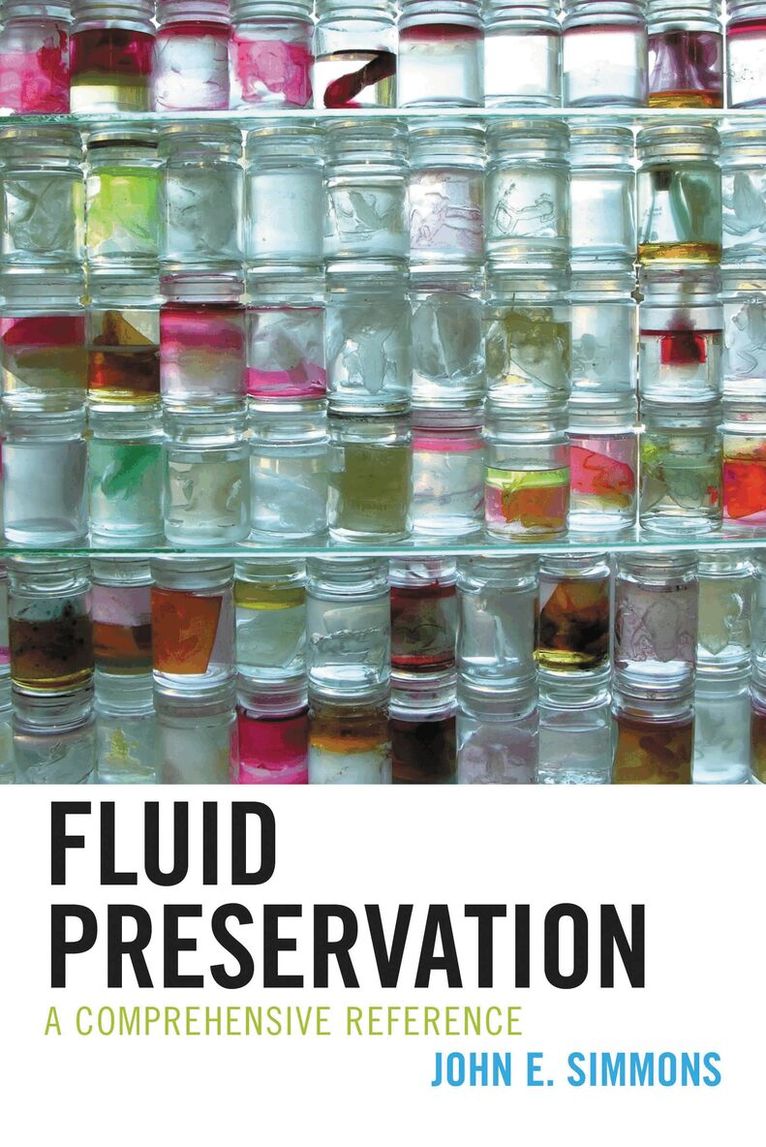
Inbunden, Engelska, 2014
Fluid Preservation
A Comprehensive Reference
1827 kr
Beställningsvara. Skickas inom 10-15 vardagar. Fri frakt över 249 kr.
Beskrivning
Produktinformation
- Utgivningsdatum: 2014-05-15
- Mått: 163 x 234 x 31 mm
- Vikt: 667 g
- Format: Inbunden
- Språk: Engelska
- Antal sidor: 364
- Förlag: Bloomsbury Publishing Plc
- ISBN: 9781442229655
Utforska kategorier
Mer om författaren
John Simmons holds a B.A. in systematic ecology and an M.A. in Historical Administration and Museum Studies. In 1986, he completed the Collections Care Pilot Training Program (funded by the Bay Foundation) to become one of 30 people in the country to receive specialized training in conservation and collections care. He has spent a total of 30 years as collections manager in two of the largest collections of fluid preserved specimens in the United States (the California Academy of Sciences and the Biodiversity Research Center at the University of Kansas). He has published extensively on collections care topics and conducted seminars, workshops, and training programs in the US, Latin America, Asia, the Middle East, and Europe on the care of natural history collections (his previous publications include the AAM standard reference on collections management policies).
Recensioner i media
Preservation techniques for biological specimens have often been handed down by oral tradition rather than subjected to rigorous scrutiny and long-term evaluation. This volume is an overview of procedures, chemicals, and containers, not a how-to manual. The initial chapter provides an interesting review of the history of preservation of plant/animal specimens, ranging from ancient practices to modern DNA extraction and preservation, and summarizes knowledge about long-term/indefinite fluid preservation of organic materials. Simmons addresses the merits and drawbacks of various protocols, temperatures, preservation fluids, sealants, and container types in preventing postmortem changes in tissues. Post-fixation processing, specimen repair, transfer to newer containers and solutions, and health/safety concerns are also covered. The second half of this volume contains well-organized, extensive tables, including a copious review of the literature, ranging from DNA preservation techniques to cultural references. The largest table is arranged alphabetically by author, with columns for specimen type and helpful directions and comments. Updating much of the information found in earlier books, this well-researched volume will be a valuable addition not only for collections serving museum curators and preservationists but also botanists, zoologists, chemists, and chemical engineers. Summing Up: Highly recommended. All students, researchers/faculty, and professionals/practitioners.
Betyg & recensioner
0 recensioner
Inga recensioner tillgängliga.