• Fri frakt över 249 kr
  • •
  • Snabba leveranser
  • •
  • Billiga böcker
Kundservice

Du är på sajten för privatpersoner.

Företag, bibliotek eller offentlig verksamhet?

Du handlar på classic.bokus.com, där alla dina funktioner finns intakta.
Till classic.bokus.com
Bokus logotyp. Gå till startsidan.
  • Erbjudanden
  • Nyheter
  • Student
  • Topplistor
  • Barn & ungdom
  • Bokus Play
  • E-böcker
  • Pocketböcker
  • Spel & pussel

10% rabatt på allt med kod: NYSTART10 →

Sidfot

Mina sidor

    Hjälp

    • Kundservice
    • Vanliga frågor och svar
    • Frakt och leverans
    • Retur vid ångerrätt
    • Reklamera vara
    • Betalning
    • Köpvillkor
    • Allmänna villkor
    • Information om webbplatsens tillgänglighet

    Om Bokus

    • Om oss
    • Pressrum
    • För studenter
    • För företag
    • För bibliotek och offentlig verksamhet
    • För leverantörer
    • Hållbarhet

    Populärt

    • Aktuella erbjudanden
    • Presentkort
    • Studentlitteratur
    • Nya böcker
    • Topplistor
    • Signerade böcker
    • Engelska böcker

    Inspiration

    • Boktips
    • BookTok
    • Populära bokserier
    • Barnbokskaraktärer
    • Populära författare
    Logotyp för Bokus
    Följ oss på Facebook (extern länk)Följ oss på Instagram (extern länk)Följ oss på YouTube (extern länk)Följ oss på TikTok (extern länk)
    bokus @ CookiesAnpassa cookiesIntegritetspolicyKöpvillkor
    Till Citymail hemsida (extern länk)Till Budbee hemsida (extern länk)Till Postnord hemsida (extern länk)Till Schenker hemsida (extern länk)Till Early Bird hemsida (extern länk)Till Walleys hemsida (extern länk)
    1. Historia och arkeologi
    2. Historia
    3. Historia: särskilda händelser och ämnen
    4. Socialhistoria och kulturhistoria

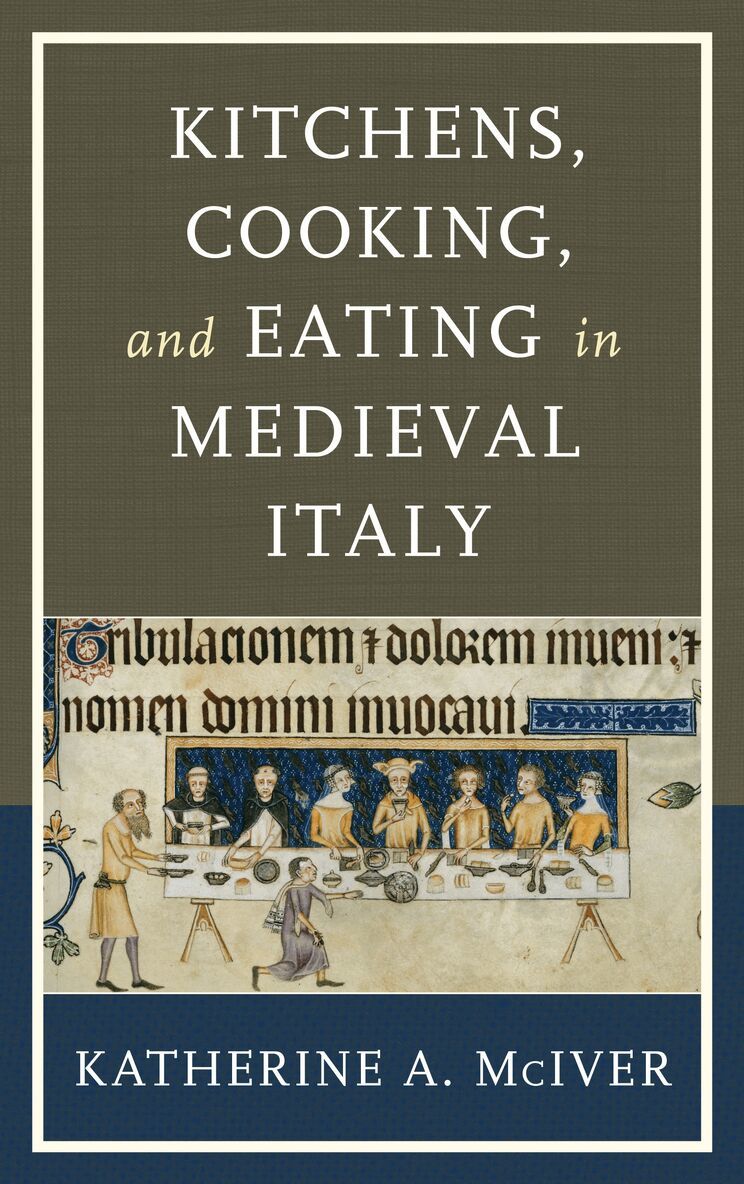
    Kitchens, Cooking, and Eating in Medieval Italy

    AvKatherine A. McIver

    Inbunden, Engelska, 2017

    Del i serien Historic Kitchens

    1 079 kr

    Beställningsvara. Skickas inom 10-15 vardagar. Fri frakt över 249 kr.

    Beskrivning

    The modern twenty-first century kitchen has an array of time saving equipment for preparing a meal: a state of the art stove and refrigerator, a microwave oven, a food processor, a blender and a variety of topnotch pots, pans and utensils. We take so much for granted as we prepare the modern meal – not just in terms of equipment, but also the ingredients, without needing to worry about availability or seasonality. We cook with gas or electricity – at the turn of the switch we have instant heat. But it wasn’t always so. Just step back a few centuries to say the 1300s and we’d find quite a different kitchen, if there was one at all. We might only have a fireplace in the main living space of a small cottage. If we were lucky enough to have a kitchen, the majority of the cooking would be done over an open hearth, we’d build a fire of wood or coal and move a cauldron over the fire to prepare a stew or soup. A drink might be heated or kept warm in a long-handled saucepan, set on its own trivet beside the fire. Food could be fried in a pan, grilled on a gridiron, or turned on a spit. We might put together a small improvised oven for baking. Regulating the heat of the open flame was a demanding task. Cooking on an open hearth was an all-embracing way of life and most upscale kitchens had more than one fireplace with chimneys for ventilation. One fireplace was kept burning at a low, steady heat at all times for simmering or boiling water and the others used for grilling on a spit over glowing, radiant embers. This is quite a different situation than in our modern era – unless we were out camping and cooking over an open fire.In this book Katherine McIver explores the medieval kitchen from its location and layout (like Francesco Datini of Prato two kitchens), to its equipment (the hearth, the fuels, vessels and implements) and how they were used, to who did the cooking (man or woman) and who helped. We’ll look at the variety of ingredients (spices, herbs, meats, fruits, vegetables), food preservation and production (salted fish, cured meats, cheese making) and look through recipes, cookbooks and gastronomic texts to complete the picture of cooking in the medieval kitchen. Along the way, she looks at illustrations like the miniatures from the Tacuinum Sanitatis (a medieval health handbook), as well as paintings and engravings, to give us an idea of the workings of a medieval kitchen including hearth cooking, the equipment used, how cheese was made, harvesting ingredients, among other things. She explores medieval cookbooks such works as Anonimo Veneziano, Libro per cuoco (fourtheenth century), Anonimo Toscano, Libro della cucina (fourteenth century), Anonimo Napoletano (end of thirteenth/early fourteenth century), Liber de coquina, Anonimo Medidonale, Due libri di cucina (fourteenth century), Magninus Mediolanensis (Maino de’ Maineri), Opusculum de saporibus (fourteenth century), Johannes Bockenheim, Il registro di cucina (fifteenth century), Maestro Martino’s Il Libro de arte coquinaria (fifteenth century) and Bartolomeo Sacchi, called Platina’s On Right Pleasure and Good Health (1470). This is the story of the medieval kitchen and its operation from the thirteenth-century until the late fifteenth-century.

    Produktinformation

    • Utgivningsdatum:2017-10-16
    • Mått:158 x 238 x 16 mm
    • Vikt:381 g
    • Format:Inbunden
    • Språk:Engelska
    • Serie:Historic Kitchens
    • Antal sidor:138
    • Förlag:Bloomsbury Publishing Plc
    • ISBN:9781442248946

    Utforska kategorier

    • Socialhistoria och kulturhistoria inom Historia och arkeologi
    • Kokböcker inom Mat och dryck

    Mer om författaren

    Katherine McIver is a professor emerita of art history at the University of Alabama at Birmingham. She is the author of Women, Art, and Architecture in Northern Italy, 1520-1580: Negotiating Power (winner of a Society for the Study of Early Modern Women Book Award), the editor and contributor of Wives, Widows, Mistresses, and Nuns in Early Modern Italy: Making the Invisible Visible through Art and Patronage (2012), and has also written about dining in Gastronomica and New Perspectives on the Early Modern Italian Domestic Interior. She is the author of Cooking and Eating in Renaissance Italy (Rowman, 2014).

    Recensioner i media

    Katherine A. McIver explores kitchens, cooking, food, and eating in medieval Italy by focusing her study on different sources (cookbooks, literary sources, and household inventories). She allows the reader to enter, understand, and appreciate food culture and history, which is not as easy or simple as one might think. Thanks to the richness and variety of the documentation, chapter by chapter the reader can imagine daily kitchen scenes, at whatever social and economic level: the hard work of the cook and his staff, the kitchen equipment, the preparation of meals and their ingredients, the idea of setting up feasts and banquets.

    Innehållsförteckning

    • 1 Cooking in the Middle Ages: An IntroductionThe Cook and the Written Word: Medieval CookbooksThe Literary Sources: Poems, Short Stories, Household Inventories and Personal Letters2 The Cook and his StaffHierarchy in the KitchenThe Datini Cook or Women in the Kitchen3 The Cook and his KitchenThe KitchenKitchen EquipmentThe Datini Kitchens4 The Cook and his ResourcesThe IngredientsFood Preparation TechniquesCooking Methods and Techniques5 Bringing the Meal TogetherPlanning and Making a MealOrchestrating and Serving the MealCooking and Eating with the Datini