• Fri frakt över 249 kr
  • •
  • Snabba leveranser
  • •
  • Billiga böcker
Kundservice

Du är på sajten för privatpersoner.

Företag, bibliotek eller offentlig verksamhet?

Du handlar på classic.bokus.com, där alla dina funktioner finns intakta.
Till classic.bokus.com
Bokus logotyp. Gå till startsidan.
  • Erbjudanden
  • Nyheter
  • Student
  • Topplistor
  • Barn & ungdom
  • Bokus Play
  • E-böcker
  • Pocketböcker
  • Spel & pussel

10% rabatt på allt med kod NYSTART10 →

Sidfot

Mina sidor

    Hjälp

    • Kundservice
    • Vanliga frågor och svar
    • Frakt och leverans
    • Retur vid ångerrätt
    • Reklamera vara
    • Betalning
    • Köpvillkor
    • Allmänna villkor
    • Information om webbplatsens tillgänglighet

    Om Bokus

    • Om oss
    • Pressrum
    • För studenter
    • För företag
    • För bibliotek och offentlig verksamhet
    • För leverantörer
    • Hållbarhet

    Populärt

    • Aktuella erbjudanden
    • Presentkort
    • Studentlitteratur
    • Nya böcker
    • Topplistor
    • Signerade böcker
    • Engelska böcker

    Inspiration

    • Boktips
    • BookTok
    • Populära bokserier
    • Barnbokskaraktärer
    • Populära författare
    Logotyp för Bokus
    Följ oss på Facebook (extern länk)Följ oss på Instagram (extern länk)Följ oss på YouTube (extern länk)Följ oss på TikTok (extern länk)
    bokus @ CookiesAnpassa cookiesIntegritetspolicyKöpvillkor
    Till Citymail hemsida (extern länk)Till Budbee hemsida (extern länk)Till Postnord hemsida (extern länk)Till Schenker hemsida (extern länk)Till Early Bird hemsida (extern länk)Till Walleys hemsida (extern länk)
    1. Samhälle och politik
    2. Politik och statsskick
    3. Internationella relationer

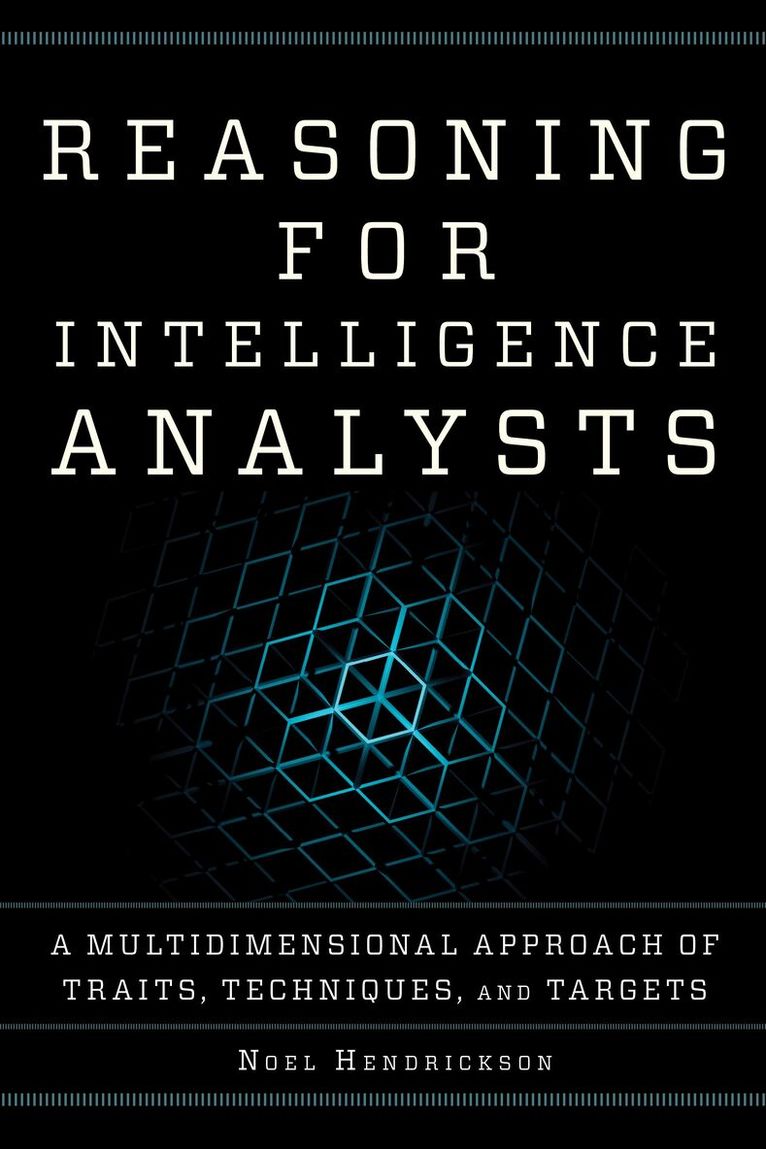
    Reasoning for Intelligence Analysts

    A Multidimensional Approach of Traits, Techniques, and Targets

    AvNoel Hendrickson

    Inbunden, Engelska, 2018

    Del i serien Security and Professional Intelligence Education Series

    1 396 kr

    Beställningsvara. Skickas inom 10-15 vardagar. Fri frakt över 249 kr.

    Fler format och utgåvor

    Häftad

    771 kr

    Beskrivning

    The goal of Reasoning for Intelligence Analysts is to address the three distinct dimensions of an analyst’s thinking: the person of the analyst (their traits), the processes they use (their techniques), and the problems they face (their targets). Based on a decade of academic research and university teaching in a program for aspiring intelligence analysts, this multidimensional approach will help the reader move beyond the traditional boundaries of accumulating knowledge or critical thinking with techniques to assess the unique targets of reasoning in the information age. This approach is not just a set of techniques, but covers all elements of reasoning by discussing the personal, procedural, and problem-specific aspects. It also addresses key challenges, such as uncertain data, irrelevant or misleading information, indeterminate outcomes, and significance for clients through an extensive examination of hypothesis development, causal analysis, futures exploration, and strategy assessment. Both critical and creative thinking, which are essential to reasoning in intelligence, are integrated throughout.Structured around independently readable chapters, this text offers a systematic approach to reasoning a long with an extensive toolkit that will serve the needs of both students and intelligence professionals.

    Produktinformation

    • Utgivningsdatum:2018-03-29
    • Mått:185 x 262 x 26 mm
    • Vikt:853 g
    • Format:Inbunden
    • Språk:Engelska
    • Serie:Security and Professional Intelligence Education Series
    • Antal sidor:356
    • Förlag:Bloomsbury Publishing Plc
    • ISBN:9781442272309

    Utforska kategorier

    • Internationella relationer inom Samhälle och politik

    Mer om författaren

    Noel Hendrickson is associate professor and a founding faculty member of the Intelligence Analysis Program at James Madison University. He earned a PhD in Philosophy from the University of Wisconsin-Madison, and has over a decade of experience teaching reasoning methods to aspiring intelligence analysts.

    Recensioner i media

    Dr. Hendrickson's book is a very much needed "how-to" for analysts, and their managers, who in this data-rich and tool-driven environment have too often lost the most important analytic skill: the ability to reason clearly. Hendrickson has developed a new vision specifically for the challenges facing intelligence analysis in applying reasoning to intelligence, in particular in futures analysis. This book should become a standard text for course on Logical Argumentation in Intelligence Analysis; I will use it in mine.

    Innehållsförteckning

    • AcknowledgementsAbout the AuthorIntroductionPart I: The Background to Reasoning for Intelligence AnalystsChapter 1: An Introduction to ReasoningChapter 2: An Introduction to Intelligence AnalysisChapter 3: An Introduction to the Information AgePart II: The Theory of Reasoning for Intelligence AnalystsParadigms of Reasoning in GeneralChapter 4: Important Extant Approaches to Reasoning The Structural, Informal Logical, and Elements of the Mind ParadigmsChapter 5: The Multidimensional Approach to ReasoningIntroducing the Personal, Procedural, and Problem-Specific DimensionsChapter 6: The Personal Dimension of ReasoningIdeal Reasoning as Virtues to EmbodyChapter 7: The Procedural Dimension of ReasoningIdeal Reasoning as Rules to FollowChapter 8: The Problem-Specific Dimension of ReasoningIdeal Reasoning as Questions to AskPart III: The Practice of Reasoning for Intelligence AnalystsMethods of Reasoning in GeneralChapter 9: How to Know Your Personal Characteristics as an AnalystThe Method of “Analytic Balance Check”Chapter 10: How to Know Your Process of Analysis The Method of “Analytic Process Reflection” Chapter 11: How to Know the Right Problem for Analysis The Method of “Analytic Problem Classification” Part IV: The Theory of Hypothesis Development for Intelligence AnalystsParadigms of Reasoning About “What is Happening?”Chapter 12: Important Extant Approaches to Hypothesis DevelopmentThe Falsificationist, Bayesian, and Explanationist ParadigmsChapter 13: The Multidimensional Approach to Hypothesis DevelopmentIntroducing the Idea, Information, and Implication DimensionsPart V: The Practice of Hypothesis Development for Intelligence AnalystsMethods of Reasoning About “What is Happening?”Chapter 14: How to Generate New Ideas The Method of “Dialectical Hypothesis Generation” Chapter 15: How to Develop the Most Probable HypothesisThe Method of “Triadic Hypothesis Development” Chapter 16: How to Recognize What Has Been Taken For GrantedThe Method of “Underlying Assumptions Triangulation” Part VI: The Theory of Causal Analysis for Intelligence AnalystsParadigms of Reasoning About “Why This is Happening?”Chapter 17: Important Extant Approaches to Causal AnalysisThe Probabilistic, Interventionist, and Systems Dynamics ParadigmsChapter 18: The Multidimensional Approach to Causal AnalysisIntroducing the Sequence, System, and Surprise DimensionsPart VII: The Practice of Causal Analysis for Intelligence AnalystsMethods of Reasoning About “Why This is Happening?”Chapter 19: How to Identify Individual ConnectionsThe Method of “Causal Influence Classification”Chapter 20: How to Identify Collective ConnectionsThe Method of “Causal Loop Diagramming”Chapter 21: How to Identify Unexpected Connections(And How Something is Partly an Unintended Consequence)The Method of “Background Shift Analysis”Part VIII: The Theory of Futures Exploration for Intelligence AnalystsParadigms of Reasoning About “When and Where Might This Change?”Chapter 22: Important Extant Approaches to Futures ExplorationThe Forecasting, Megatrend, and Scenario ParadigmsChapter 23: The Multidimensional Approach to Futures ExplorationIntroducing the Origin, Outreach, and Outcome DimensionsPart IX: The Practice of Futures Exploration for Intelligence AnalystsMethods of Reasoning About “When and Where Might This Change?”Chapter 24: How to Find the Most Plausible Origin of a Future PossibilityThe Method of “Convergent Scenario Development”(Future-Directed Counterfactual Reasoning, Stage I)Chapter 25: How to Integrate a Futures Estimate into the Bigger Picture (And Foresee Possible Unintended Consequences)The Method of “Ripple Effect Analysis”(Future-Directed Counterfactual Reasoning, Stage II)Chapter 26: How to Identify the Most Plausible Future OutcomesThe Method of “Divergent Scenario Development”(Future-Directed Counterfactual Reasoning, Stage III)Part X: The Theory of Strategy Assessment for Intelligence AnalystsParadigms of Reasoning About “How Can the Client Respond to It?”Chapter 27: Important Extant Approaches to Strategy AssessmentThe Risk, Ignorance, and Game Theory ParadigmsChapter 28: The Multidimensional Approach to Futures ExplorationIntroducing the Environment, Effect, and Expectation DimensionsPart XI: The Practice of Strategy Assessment for Intelligence AnalystsMethods of Reasoning About “How Can the Client Respond to It?”Chapter 29: How to Support Decision-Making Without Known Outcomes or ExpectationsThe Method of “Strategic Relevance Check” Chapter 30: How to Support Decision-Making About Known Outcomes With Unknown ExpectationsThe Method of “Decision Significance Comparison” Chapter 31: How to Support Decision-Making About Known Outcomes With Known ExpectationsThe Method of “Expectation Impact Analysis” ConclusionAbout the Author