• Fri frakt över 249 kr
  • •
  • Snabba leveranser
  • •
  • Billiga böcker
Kundservice

Du är på sajten för privatpersoner.

Företag, bibliotek eller offentlig verksamhet?

Du handlar på classic.bokus.com, där alla dina funktioner finns intakta.
Till classic.bokus.com
Bokus logotyp. Gå till startsidan.
  • Erbjudanden
  • Nyheter
  • Student
  • Topplistor
  • Barn & ungdom
  • Bokus Play
  • E-böcker
  • Pocketböcker
  • Spel & pussel

10% rabatt på allt med kod: NYSTART10 →

Sidfot

Mina sidor

    Hjälp

    • Kundservice
    • Vanliga frågor och svar
    • Frakt och leverans
    • Retur vid ångerrätt
    • Reklamera vara
    • Betalning
    • Köpvillkor
    • Allmänna villkor
    • Information om webbplatsens tillgänglighet

    Om Bokus

    • Om oss
    • Pressrum
    • För studenter
    • För företag
    • För bibliotek och offentlig verksamhet
    • För leverantörer
    • Hållbarhet

    Populärt

    • Aktuella erbjudanden
    • Presentkort
    • Studentlitteratur
    • Nya böcker
    • Topplistor
    • Signerade böcker
    • Engelska böcker

    Inspiration

    • Boktips
    • BookTok
    • Populära bokserier
    • Barnbokskaraktärer
    • Populära författare
    Logotyp för Bokus
    Följ oss på Facebook (extern länk)Följ oss på Instagram (extern länk)Följ oss på YouTube (extern länk)Följ oss på TikTok (extern länk)
    bokus @ CookiesAnpassa cookiesIntegritetspolicyKöpvillkor
    Till Citymail hemsida (extern länk)Till Budbee hemsida (extern länk)Till Postnord hemsida (extern länk)Till Schenker hemsida (extern länk)Till Early Bird hemsida (extern länk)Till Walleys hemsida (extern länk)
    1. Samhälle och politik
    2. Samhälle och kultur
    3. Kultur och medier
    4. Referensverk och tvärvetenskap

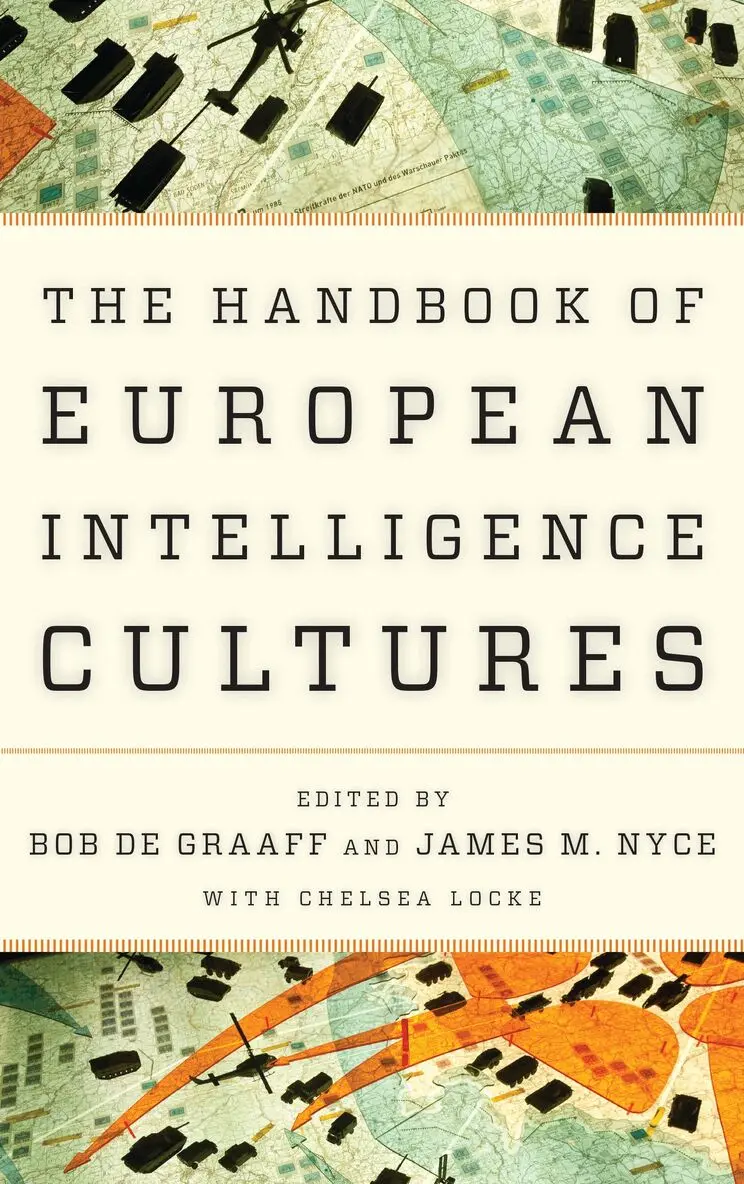
    Handbook of European Intelligence Cultures

    AvBob de Graaff,James M. Nyce

    Häftad, Engelska, 2018

    Del i serien Security and Professional Intelligence Education Series

    770 kr

    Beställningsvara. Skickas inom 10-15 vardagar. Fri frakt över 249 kr.

    Beskrivning

    National intelligence cultures are shaped by their country’s history and environment. Featuring 32 countries (such as Albania, Belgium, Croatia, Norway, Latvia, Montenegro), the work provides insight into a number of rarely discussed national intelligence agencies to allow for comparative study, offering hard to find information into one volume. In their chapters, the contributors, who are all experts from the countries discussed, address the intelligence community rather than focus on a single agency. They examine the environment in which an organization operates, its actors, and cultural and ideological climate, to cover both the external and internal factors that influence a nation’s intelligence community. The result is an exhaustive, unique survey of European intelligence communities rarely discussed.

    Produktinformation

    • Utgivningsdatum:2018-03-02
    • Mått:152 x 229 x 28 mm
    • Vikt:722 g
    • Format:Häftad
    • Språk:Engelska
    • Serie:Security and Professional Intelligence Education Series
    • Antal sidor:496
    • Förlag:Bloomsbury Publishing PLC
    • ISBN:9781786606570

    Utforska kategorier

    • Referensverk och tvärvetenskap inom Samhälle och politik
    • Politik och statsskick inom Samhälle och politik
    • Internationella relationer inom Samhälle och politik

    Mer om författaren

    Bob de Graaff is professor for Intelligence and Security studies at both The Netherlands Defense Academy and the University of Utrecht.James M. Nyce is professor in the Department of Anthropology, Ball State University, USA. He is also affiliated professor, Lund University, Sweden and has been visiting professor at the Swedish National Defence College 1998-2000, 2005-2011.About the ContributorsWilhelm Agrell, professor in Intelligence Analysis, Lund University, Sweden.Gordan Akrap, Croatia.Lars Erslev Andersen, research coordinator, Senior Researcher, Danish Institute for International Studies, Copenhagen. Gérald Arboit, senior researcher,French Centre for Intelligence Studies. Jordan Baev, professor and senior research fellow of security studies, Rakovski National Defense College; visiting professor, Sofia University; and Diplomatic Institute of Bulgarian Ministry of Foreign Affairs. Colonel Jacques Baud, currently seconded to NATO by the Swiss government. Siegfried Beer, director, Austrian Center for Intelligence, Propaganda and Security Studies..Dražen Cerovic, Faculty of Law, University of Montenegro.Dirk Van Daele, professor, Faculty of Law of the KU (Catholic University) Leuven, Belgium.Eric Denécé, director and founder of the French Centre for Intelligence Studies (CF2R). Antonio M. Díaz Fernández, professor of politics and administration, University of Cádiz, Spain. Arjan Dyrmishi, head of the Centre for European and Security Studies, the Institute for Democracy and Mediation, Tirana, Albania.Gunilla Eriksson, Swedish National Defence University.Laris Gaiser, researcher at ITSTIME, Catholic University of Sacred Heart, Milan, Italy. Peter Gill, honorary senior research fellow, University of Liverpool, UK.Artur Gruszczak, associate professor of political science, chair of national security, Faculty of International and Political Studies, Jagiellonian University, Krakow, Poland. JoséManuel Duarte de Jesus, invited professor, University of Lisbon, Universidade de Aveiro, Institute for High Military Studies, and NOVA University, Portugal. Nenad Koprivica, executive director, Centre for Democracy and Human Rights CEDEM, Montenegro.Juho Kotakallio, historian, Finland.Wolfgang Krieger, professor (ret.) of Modern history and history of international relations, Universität Marburg, Germany. Jakob Thor Kristjánsson, independent security analyst and researcher, Akureyri Akademia, Iceland. Taras Kuzio, senior research associate, Canadian Institute of Ukrainian Studies, University of Alberta.Marco Lombardi, director of ITSTIME, the research center of the Catholic University of Sacred Heart, Milan,Italy.Eero Medijainen, professor of Contemporary History, University of Tartu, Estonia.Matej Medvecký, researcher, Institute for Military History, Slovakia.John M. Nomikos, director, Research Institute for European and American Studies, Athens, Greece. Eunan O’Halpin, professor of contemporary Irish history, Trinity College, Dublin. Maid Pajevic, head of Department for the Agency for Education and Professional Training, Ministry of Security, Bosnia-Herzegovina. Predrag Petrovic, deputy director, Belgrade Centre for Security Policy, Serbia. Iztok Prezelj, associate professor and head of the Chair of Defence Studies, Faculty of Social Sciences, University of Ljubljana, Slovenia.Teresa Ferreira Rodrigues, associate professor, NOVA University, Lisbon, Portugal. JergušSivoš, Nation's Memory Institute, Slovakia. Prokop Tomek, senior researcher, Military History Institute, Prague, Czech Republic. Miroslav Tudjman, professor of Information Science, University of Zagreb, Croatia.Vaidotas Urbelis, Defence Policy Director, Lithuanian Ministry of National Defence. Danijela Vujosevic, project manager, Centre for Democracy and Human Rights CEDEM, Montenegro.Larry L. Watts, former sector reform advisor to the Romanian Presidency and Defense Ministry (1991-2004), University of Bucharest, Romania.Njord Wegge, senior social science advisor to The Norwegian Parliamentary Intelligence Oversight Committee.

    Recensioner i media

    A precise, country-by-country overview of European intelligence-gathering methods and security initiatives, this analysis reframes spying in the decades following the Cold War and the dismantling of the Berlin Wall and the rise of terrorism. By compiling commentary from 38 contributors, the editors offer differing approaches to surveillance, anti-radicalization, and border control. Charts, such as the investigative setups in Bosnia, Romania, Montenegro, Slovenia, Portugal, and Luxembourg, simplify chain of command and departmental links. Insights into the security measures of 32 countries offer a basis for comparison and for identification of strengths and weaknesses. This unusual survey of European internal defense systems pinpoints the diverse nature of ideological backgrounds and future threats. Each contributor reveals internal elements unique to politics and culture, for example, Estonia’s emerging independence from Russia, Greece’s need for technological direction, and Spain’s foreign policy in the post-Franco milieu. . . . A valuable text for large public libraries and college and university collections.

    Innehållsförteckning

    • List of abbreviationsIntroduction (Bob de Graaff & James M. Nyce)Albania: Change and Continuity (Arjan Dyrmishi)Austria: An Intelligence Hub Coming Out of the Shadows (Siegfried Beer)Belgium: A Modern Legal and Policy Framework for Intelligence Services with a Long Tradition (Dirk van Daele)Bosnia and Herzegovina: Historical Development of the Intelligence and Security System (Maid Pajevic)Bulgaria: A Centenary Unknown History (Jordan Baev)Croatia: Construction and Deconstruction of the Croatian Intelligence Community (1990-2014) (Gordan Akrap & Miroslav Tudman)Czech Republic: The Czech Parth Between Totalitarianism and Democracy (Prokop Tomek)Denmark: From State Security to Security State. The Invention of Preventive Security (Lars Erslev Andersen)Estonia: Intelligence and Security in the 20th Century (Iero Medijainen)Finland: The Intelligence Services in a Cultural and Historical Context (Juho Kotakallio)France: The Intelligence Services’Historical and Cultural Context (Eric Denécé)Germany: An Intelligence Community with a Fraught History (Wolfgang Krieger)Greece: The Need for Modernization in an Unstable Environment (John Nomikos)Iceland: a Small State Learning the Intelligence Ropes (Jakob Thor Kristjansson)Ireland: Plus Ca Change, 1945-2015 (Eunan O’Halpin)Italy: From Secret Services to Intelligence (Marco Lombardi & Laris Gaiser)Lithuania: The Challenge of Merging the Present and the Past (Vaidotas Urbelis)Luxembourg: A Country Which Did Not Need an Intelligence Service? (Gérald Arboit)Montenegro: Trends and Patterns in the intelligence sector (Dražen Cerovic, Nenad Koprivica & Danijela Vujoševic)The Netherlands: Allmost Full Circle (Bob de Graaff)Norway and the intelligence community: Peaceful State, Crucial Geography, Upheaval and Reform (Njord Wegge)Poland: The Special Services since the Independence (Artur Gruszczak)Portugal: Peculiarities of the Portuguese Intelligence Services (Teresa Rodrigues and JoséDuarte de Jesus)Romania: An Introduction to its Intelligence Services (Larry L. Watts)Serbia: An Awkward Legacy (Predrag Petrovic)Slovakia: State Security and Intelligence since 1945 (Matej Medvecký, JergušSivoš)Slovenia: The Intelligence System, Its Development, and Some Key Challenges (Iztok Prezelj)Spain: Intelligence in Context Today (Antonio M. Díaz-Fernández)Sweden: Delicate Liaison (Wilhelm Agrell and Gunilla Eriksson)Switzerland: Intelligence in the New Security Paradigm (Jacques Baud)Ukraine: KGB to Security Service of Ukraine (SBU) (Taras Kuzio)United Kingdom: Organization and Oversight after Snowden (Peter Gill)