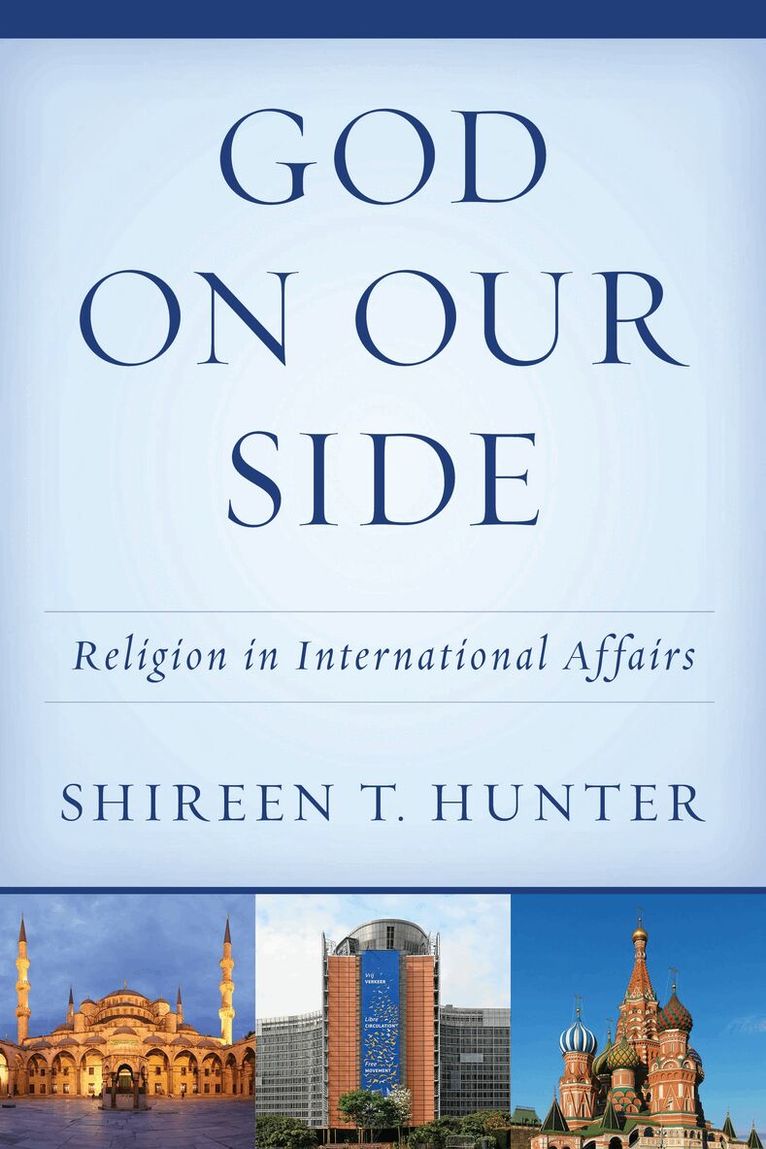
Inbunden, Engelska, 2016
God on Our Side
Religion in International Affairs
1427 kr
Beställningsvara. Skickas inom 10-15 vardagar. Fri frakt över 249 kr.
Beskrivning
Produktinformation
- Utgivningsdatum: 2016-10-12
- Mått: 160 x 239 x 22 mm
- Vikt: 526 g
- Format: Inbunden
- Språk: Engelska
- Antal sidor: 274
- Förlag: Bloomsbury Publishing Plc
- ISBN: 9781442272576
Utforska kategorier
Mer om författaren
Shireen T. Hunter is research professor at the Prince Alwaleed Bin Talal Center for Muslim-Christian Understanding at Georgetown University. Her books include Iran Divided: The Historical Roots of Iranian Debates on Identity, Culture, and Governance in the Twenty-First Century, a Choice Outstanding Academic title.
Recensioner i media
Have students of international relations underplayed the role of religion? Hunter says no, but the resurgence of religion in domestic politics during the past 40 years requires a systematic framework to isolate this impact on foreign policy. The end of the Cold War, the breakup of the Soviet Union and Yugoslavia, and Western intervention in Afghanistan and Iraq have forced many states, old and new, to reshape their national identities—often by recalling a religiously infused past. Cosmopolitan/universalistic ideals retreated as religious conflict and ethnic sorting created new states and political movements. And the competition of non-state actors, ranging from the United Nations, NGOs, and terrorist entities, have especially pressured weak states to shape religiously inflected ideologies to enhance and consolidate their power. Three case studies—Russia’s policy toward the Yugoslav crisis, Turkey’s policy toward the Bosnian War, and European policy toward Turkish membership in the EU—constitute the core of the book. Both Russian and Turkish foreign policy demonstrate the continued centrality of security and national interest in their responses to the Yugoslav breakup. Europe’s resistance to Turkish membership, ironically, is suffused with secularized forms of Christianity.Summing Up:Recommended. Upper-division undergraduates through faculty.
Betyg & recensioner
0 recensioner
Inga recensioner tillgängliga.