• Fri frakt över 249 kr
  • •
  • Snabba leveranser
  • •
  • Billiga böcker
Kundservice

Du är på sajten för privatpersoner.

Företag, bibliotek eller offentlig verksamhet?

Du handlar på classic.bokus.com, där alla dina funktioner finns intakta.
Till classic.bokus.com
Bokus logotyp. Gå till startsidan.
  • Erbjudanden
  • Nyheter
  • Student
  • Topplistor
  • Barn & ungdom
  • Bokus Play
  • E-böcker
  • Pocketböcker
  • Spel & pussel

10% rabatt på allt med kod: NYSTART10 →

Sidfot

Mina sidor

    Hjälp

    • Kundservice
    • Vanliga frågor och svar
    • Frakt och leverans
    • Retur vid ångerrätt
    • Reklamera vara
    • Betalning
    • Köpvillkor
    • Allmänna villkor
    • Information om webbplatsens tillgänglighet

    Om Bokus

    • Om oss
    • Pressrum
    • För studenter
    • För företag
    • För bibliotek och offentlig verksamhet
    • För leverantörer
    • Hållbarhet

    Populärt

    • Aktuella erbjudanden
    • Presentkort
    • Studentlitteratur
    • Nya böcker
    • Topplistor
    • Signerade böcker
    • Engelska böcker

    Inspiration

    • Boktips
    • BookTok
    • Populära bokserier
    • Barnbokskaraktärer
    • Populära författare
    Logotyp för Bokus
    Följ oss på Facebook (extern länk)Följ oss på Instagram (extern länk)Följ oss på YouTube (extern länk)Följ oss på TikTok (extern länk)
    bokus @ CookiesAnpassa cookiesIntegritetspolicyKöpvillkor
    Till Citymail hemsida (extern länk)Till Budbee hemsida (extern länk)Till Postnord hemsida (extern länk)Till Schenker hemsida (extern länk)Till Early Bird hemsida (extern länk)Till Walleys hemsida (extern länk)
    1. Medicin
    2. Medicin: allmänt
    3. Medicinhistoria

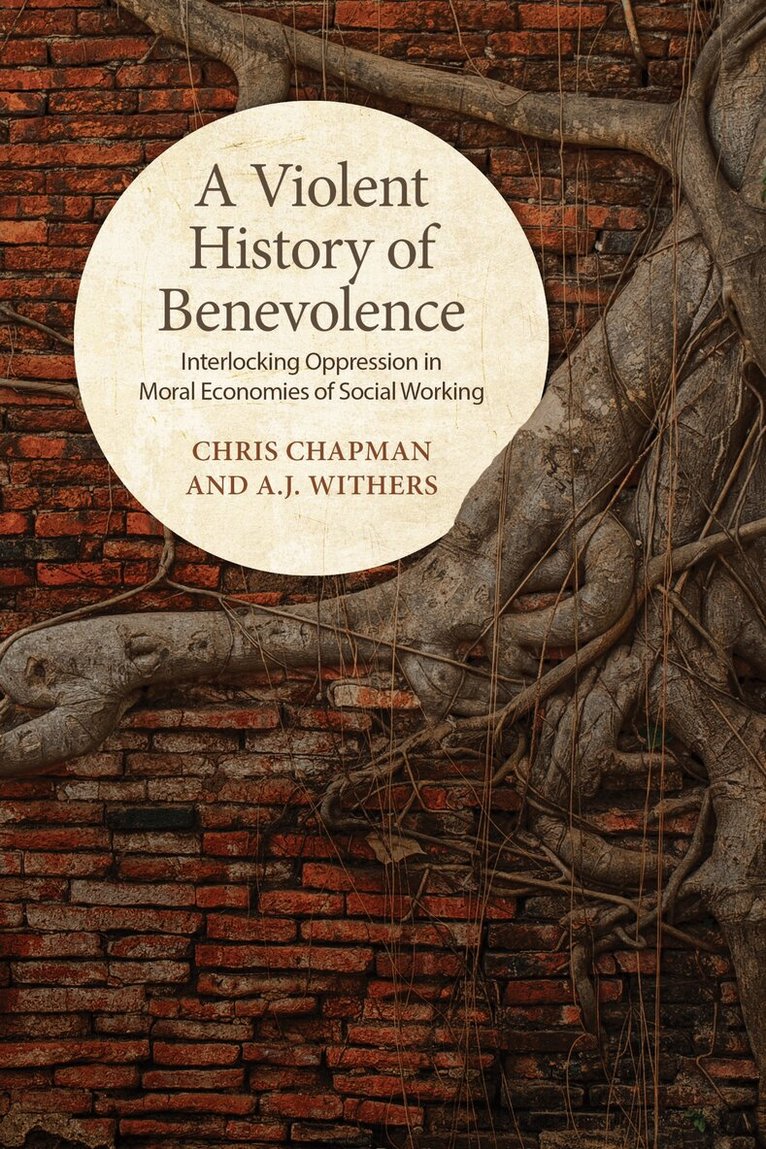
    Violent History of Benevolence

    Interlocking Oppression in the Moral Economies of Social Working

    AvChris Chapman,A.J. Withers

    Inbunden, Engelska, 2019

    1 261 kr

    Beställningsvara. Skickas inom 5-8 vardagar. Fri frakt över 249 kr.

    Fler format och utgåvor

    E-bok

    553 kr

    E-bok

    553 kr

    Häftad

    500 kr

    Beskrivning

    A Violent History of Benevolence traces how normative histories of liberalism, progress, and social work enact and obscure systemic violences. Chris Chapman and A.J. Withers explore how normative social work history is structured in such a way that contemporary social workers can know many details about social work’s violences, without ever imagining that they may also be complicit in these violences. Framings of social work history actively create present-day political and ethical irresponsibility, even among those who imagine themselves to be anti-oppressive, liberal, or radical.The authors document many histories usually left out of social work discourse, including communities of Black social workers (who, among other things, never removed children from their homes involuntarily), the role of early social workers in advancing eugenics and mass confinement, and the resonant emergence of colonial education, psychiatry, and the penitentiary in the same decade. Ultimately, A Violent History of Benevolence aims to invite contemporary social workers and others to reflect on the complex nature of contemporary social work, and specifically on the present-day structural violences that social work enacts in the name of benevolence.

    Produktinformation

    • Utgivningsdatum:2019-02-22
    • Mått:159 x 235 x 38 mm
    • Vikt:900 g
    • Format:Inbunden
    • Språk:Engelska
    • Antal sidor:536
    • Förlag:University of Toronto Press
    • ISBN:9781442637313

    Utforska kategorier

    • Medicinhistoria inom Medicin
    • Sociologi inom Samhälle och politik
    • Historia inom Historia och arkeologi

    Mer om författaren

    Chris Chapman is an associate professor of Social Work at York University. A.J Withers is a PhD candidate in the School of Social Work at York University, and an organizer with the Ontario Coalition Against Poverty.

    Innehållsförteckning

    • List of IllustrationsAcknowledgmentsIntroductionSocial Working, Interlocking Oppression, and Moral EconomiesA Brief Discussion of Some Indigenous Social Workings on This LandOrganization and Structure of A Violent History of BenevolencePart One: Deconstructing Social Work and Social Work History1 Troubling the Standard Account of Social WorkThe Standard AccountThe Pull of the Other Side of the RiverCharity Organization Societies: Beyond Friendly Visiting to the PoorSettlement Houses and Jane AddamsThe New "Social Work"What the Established Riverbanks ObscureContemporary Charity Organization and the Continued Polarity of the Riverbanks"Mingling" as Continued Solution to Structural ViolenceConclusion2 White Supremacy and the Erasure of Racialized Social WorkersSocial Work History as White Social Work HistoryBlack Churches: Bestowing Charity and Organizing for Change"Separate Spheres" and Women’s ClubsThe Great Migration: Migrant Assistance and the Shift towards Black IncarcerationBlack Settlement HousesWoman’s Christian Temperance UnionAnti-LynchingIda B. Wells-BarnettWhite Social Work and Anti-LynchingMaggie L. Walker and the Independent Order of St LukeThe Social Work Profession, Social Science, and EducationBlack Social Work in CanadaSettlements in CanadaAnti-Slavery Societies and Black Immigrant AssistanceSocial ServicesClass Stratification and How It Interlocked with Racism and Social WorkEarly Women Social Workers and Gender RolesSubjugated Community-Based Social Workings Beyond Black and WhiteConclusion3 Social Work as Displacement, Denigration, CisheteropatriarchalizationProfessional Social Work as the Delegitimization of Local Practices and PeopleCentring Imperialist Displacement; Decentring Ruling Class White ExceptionalityCisheteropatriarchalization as an Advancing White Ruling Class Moral EconomyEarly Professional Social Work and CisheteropatriarchyThe Ethic of the Healing Power of Domination and Imagined Moral SuperiorityAn Initial Shift in the Ethic of Relating Across Difference: The Knights HospitallerClaims of Relative Innocence, Part One: Progressive and Secular Dividing PracticesClaims of Relative Innocence, Part Two: Knowing It Was Wrong ConclusionPart Two: Interlocking Genealogies of the Ethic of the Healing Power of Domination and Imagined Moral Superiority4 Knowing Better: Liberalism, Instrumental Violence, and Making New HumansWhat We Like to Say; What We Actually DoClaims of Relative Innocence, Part Three: Interpreting Others’ MotivationsFurther Standardizing Instrumental Violence: The Theresian Criminal ConstitutionKant’s Enlightened Morality: Rational Self-Assurance and the Birth of the "New Man"Gentle Instrumental Violences, Part One: Rationalizing Colonial EducationGentle Instrumental Violences, Part Two: Continual Observation and Coerced PenitenceGentle Instrumental Violences, Part Three: Psychiatry, Unchaining, and Moral TreatmentSurveillance, Sorting, and Scientific StratificationThe Validation and Invalidation of the Invalid: Emergent Social Welfare PolicyThe Validation and Invalidation of the "Indian": 1800s White Settler Colonial PolicyLegislated Exclusions: Racialized and Disablist Immigration PoliciesConclusion5 Rehabilitation/EugenicsThe Moral Economy of RehabilitationThe Origins of Rehabilitation before the First World WarSoldiers, Sailors, and SamenessMedical, Economic, and Civil RehabilitationOvercoming DisabilityNationalizing RehabilitationProfessional Social Work and RehabilitationRehabilitation and the Enforcement of CisheteronormativityRehabilitation/Eugenics and Whiteness/Nationality/CitizenshipConclusion6 Assimilation/GenocideThe Moral Economy of AssimilationDestroying LivesThe Unquestionable Good of Imposing Whiteness onto OthersDestroying LifeworldsWhite Supremacy and CareConclusion7 What If It Isn’t Getting Better? What Do We Do Then?The Significance of Implicating Ourselves in Interlocking Legacies of ViolenceIs It Getting Better?Still "Forcibly Transferring Children of the Group to Another Group"Towards Addressing the Chronic Gap between What We Say and What We DoNavigating Inherently Oppressive Systems: The Everyday Life of Many a Social WorkerMoving Forward: Learning from Social Movements and Displaced PracticesDisability Justice and the Democratic Redistribution of Dependence and CareConclusionConclusion: The Varied Paths That Brought Us HereTimeline: Selected Events from the Age of Enlightenment through the Progressive EraNotesReferencesIndex