• Fri frakt över 249 kr
  • •
  • Snabba leveranser
  • •
  • Billiga böcker
Kundservice

Du är på sajten för privatpersoner.

Företag, bibliotek eller offentlig verksamhet?

Du handlar på classic.bokus.com, där alla dina funktioner finns intakta.
Till classic.bokus.com
Bokus logotyp. Gå till startsidan.
  • Erbjudanden
  • Nyheter
  • Student
  • Topplistor
  • Barn & ungdom
  • Bokus Play
  • E-böcker
  • Pocketböcker
  • Spel & pussel

10% rabatt på allt med kod: NYSTART10 →

Sidfot

Mina sidor

    Hjälp

    • Kundservice
    • Vanliga frågor och svar
    • Frakt och leverans
    • Retur vid ångerrätt
    • Reklamera vara
    • Betalning
    • Köpvillkor
    • Allmänna villkor
    • Information om webbplatsens tillgänglighet

    Om Bokus

    • Om oss
    • Pressrum
    • För studenter
    • För företag
    • För bibliotek och offentlig verksamhet
    • För leverantörer
    • Hållbarhet

    Populärt

    • Aktuella erbjudanden
    • Presentkort
    • Studentlitteratur
    • Nya böcker
    • Topplistor
    • Signerade böcker
    • Engelska böcker

    Inspiration

    • Boktips
    • BookTok
    • Populära bokserier
    • Barnbokskaraktärer
    • Populära författare
    Logotyp för Bokus
    Följ oss på Facebook (extern länk)Följ oss på Instagram (extern länk)Följ oss på YouTube (extern länk)Följ oss på TikTok (extern länk)
    bokus @ CookiesAnpassa cookiesIntegritetspolicyKöpvillkor
    Till Citymail hemsida (extern länk)Till Budbee hemsida (extern länk)Till Postnord hemsida (extern länk)Till Schenker hemsida (extern länk)Till Early Bird hemsida (extern länk)Till Walleys hemsida (extern länk)
    1. Samhälle och politik
    2. Samhälle och kultur

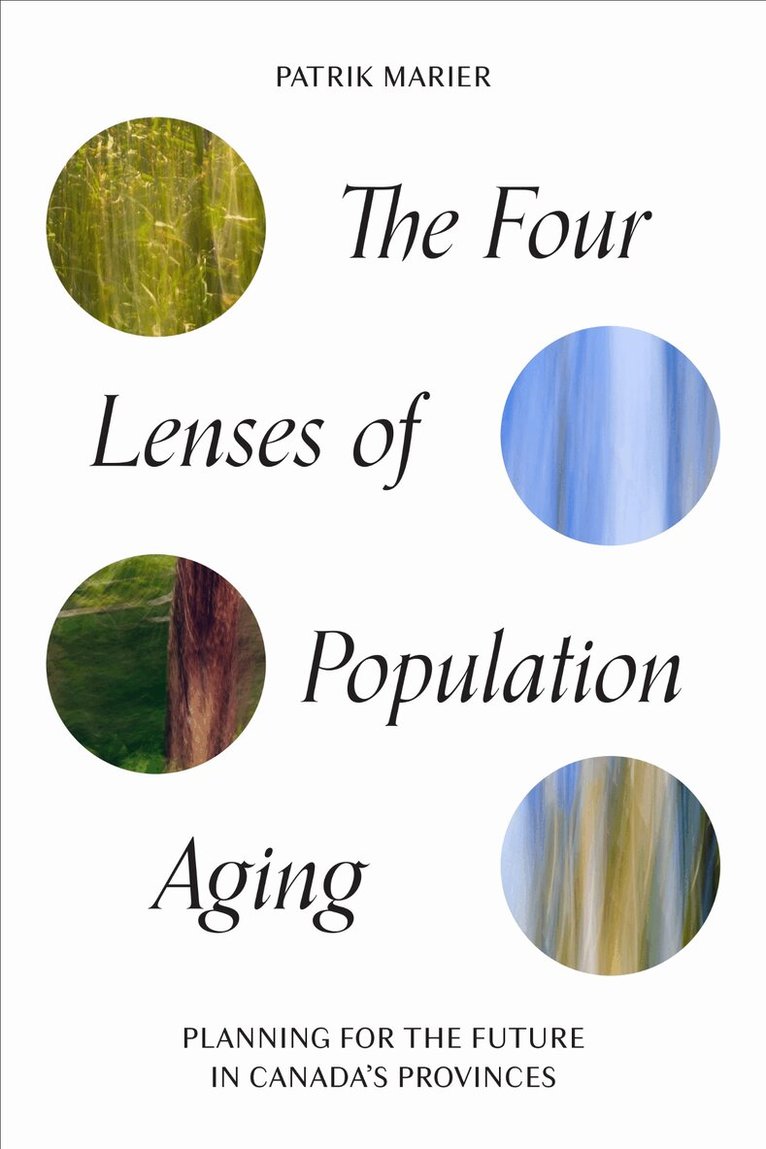
    Four Lenses of Population Aging

    Planning for the Future in Canada's Provinces

    AvPatrik Marier

    Inbunden, Engelska, 2021

    Del i serien IPAC Series in Public Management and Governance

    869 kr

    Beställningsvara. Skickas inom 5-8 vardagar. Fri frakt över 249 kr.

    Fler format och utgåvor

    Häftad

    417 kr

    E-bok

    505 kr

    E-bok

    505 kr

    Beskrivning

    With its implications for health care, the economy, and an assortment of other policy areas, population aging is one of the most pressing issues facing governments and society today, and confronting its complex reality is becoming increasingly urgent, particularly in the age of COVID-19. In The Four Lenses of Population Aging, Patrik Marier looks at how Canada’s ten provinces are preparing for an aging society. Focusing on a wide range of administrative and policy challenges, this analysis explores multiple actions from the development of strategic plans to the expansion of long-term care capacity. To enhance this analysis, Marier adopts four lenses: the intergenerational, the medical, the social gerontological, and the organizational. By comparing the unique insights and contributions of each lens, Marier draws attention to the vital lessons and possible solutions to the challenges of an aging society.Drawing on over a hundred interviews with senior civil servants and thousands of policy documents, The Four Lenses of Population Aging is a significant contribution to public administration, provincial politics, and comparative public policy literatures, and a timely resource for policymakers and general readers seeking an informed perspective on a timely and important issue.

    Produktinformation

    • Utgivningsdatum:2021-05-07
    • Mått:159 x 236 x 25 mm
    • Vikt:660 g
    • Format:Inbunden
    • Språk:Engelska
    • Serie:IPAC Series in Public Management and Governance
    • Antal sidor:368
    • Förlag:University of Toronto Press
    • ISBN:9781442644397

    Utforska kategorier

    • Samhälle och kultur inom Samhälle och politik
    • Sociala grupper och identitet inom Samhälle och politik
    • Offentlig förvaltning inom Samhälle och politik

    Mer om författaren

    Patrik Marier is a professor in the Department of Political Science at Concordia University.

    Recensioner i media

    "Marier’s new book is a treat for gerontologists as well as for policy-oriented readers who might appreciate this study of how different provinces have implemented policy responses to issues arising from population aging. The book is a tremendous accomplishment based on more than ten years of research in ten provinces, including analyses of public documents and 125 key informant interviews."- Laura M. Funk, University of Manitoba (Canadian Journal on Aging)

    Innehållsförteckning

    • IntroductionFacing the consequences of an aging populationPurpose of this bookWhy focus on Canadian provinces?Why focus on civil servants?MethodsContentTHEORETICAL UNDERPINNINGChapter 1 – The Lenses of Population AgingIntroductionThe Intergenerational LensGenerational accountingDependency ratioMusgrave rule Generational politicsThe Medical LensPopulation aging – a rising number of seniors with special needsGeriatrics – a marginalised specialty in medicineHealth promotion or how to age successfullyThe Social Gerontology LensThe "new" or "positive" gerontologyCritical gerontologyPolitical economyThe Organizational LensConclusion – Policy Lenses in Public AdministrationChapter  2 – Population Aging as Policy ProblemsIntroductionLinking policy problems with population aging lensesDefining what is the problemCausalitySeverityNoveltyProximityComplexityProblem populationSolutions to policy problemsSolvabilityMonetarizationGovernmental capacityInterdependenciesInteractions between the lenses: Co-existence, complementarity, and competitionIntergenerational and medical lensesIntergenerational and social gerontology lensesIntergenerational and organizational lensesMedical and social gerontology lensesMedical and organizational lensesSocial gerontology and organizational lensesConclusionChapter 3 – The Politics of the Long ViewIntroductionThe rise and fall of planningThe fallThe revival: Old wines in new bottles?Thinking and action with a long view in the public sectorWhat is the long viewHow to promote the long view within the public sector?What facilitate or impede the long view in Canadian provinces?Politicization of the civil serviceLeadershipPolicy capacity within the civil serviceProfessionalization of the long viewInstitutional mechanismsConclusionPUBLIC POLICY AND POPULATION AGINGChapter 4 - PensionsIntroductionHistorical overview and current structure of Canada’s pension policyCPP/QPPOccupational pensionsPrivate alternativesWhat solutions for pensions? CPP, ORPP, and new occupational toolsWhat is wrong with the Canadian pension system?The Harper years: Lack of consensus led to multiple provincial initiativesProvincial commissions on occupational pension plansPooled registered pension plans and Québec’s Voluntary Registered Savings ProgramProvincial earnings-related pension schemes: The longevity pension and the ORPPThe longevity pensionThe Ontario Retirement Pension PlanThe Liberal years: Improving the CPP, occupational pension plans, and new alternativesA lens analysis of the pension debatesConclusionChapter 5 – Health and Residential CareIntroductionHealth care expenditureOverview of health care expenditure in Canadian provincesPopulation aging and health care expendituresViews from civil servantsLong Term Care – Residential careA continuum of care?The geopolitical and economic realities of residential careHuman resourcesAnalysing the four lenses in health policyThe intergenerational lens embedded within the crowding out problem definitionDominance of the medical lens and the marginalisation of the social gerontology lensOrganizational lens – Expanding the health perspective into other bureausCOVID-19 and the Long-Term Care Crisis of 2020ConclusionChapter 6 – Home Care Services and CaregivingIntroductionHome care services in Canadian provincesWhat is home care?The Canadian context of home care – common challengesClassifying home care models in CanadaThe role of partisan politicsHome care as policy failure?CaregivingA De-familializing model?Caregiving policies across Canada and recent developmentsImpact on health status, labour market, and retirement incomeHome care as a universal solution for population aging?Intergenerational lensMedical lensSocial gerontology lensOrganizational lensConclusionPUBLIC ADMINISTRATION AND POPULATION AGINGChapter 7 – Central Agencies and Inter-Ministerial CoordinationIntroductionThe organizational lens and policy problemsCentral agenciesExecutive councilMonitoring the consequences of population aging in QuébecA unique initiative spearhead by a central agency in Nova ScotiaFinance MinistriesInter-ministerial coordinationAlberta’s approach to aging populationInformal channelsConclusionChapter 8 – Offices for SeniorsIntroductionThe Creation (and Expansion) of Offices for SeniorsA diversity of organizational settingsCouncils on agingWhat Do Offices for Seniors Do?Dissemination of informationConsultationsCoordination of seniors’ related issues and programsPolicy instruments and policy inputThe Tension Between the Social and Medical LensesEmbracing healthy agingA return to the Ministry of Health?Still a social perspective?Long Term ViewFacilitating a long term perspectiveObstacles to implement a long term horizonA Third Wave of Offices for Seniors? Seniors’ Advocate OfficesConclusion: Divergent Path for Seniors’ OfficesCONCLUSIONConclusionRevisiting the four lenses of population agingIntergenerational lensMedical lensSocial gerontology lensOrganizational lensRevisiting the theoretical expectations on the long viewFederalism, population aging, and policy diffusion and learningThe continuing marginalisation of social policies and its consequences in the context of an aging population and the challenges of COVID-19