• Fri frakt över 249 kr
  • •
  • Snabba leveranser
  • •
  • Billiga böcker
Kundservice

Du är på sajten för privatpersoner.

Företag, bibliotek eller offentlig verksamhet?

Du handlar på classic.bokus.com, där alla dina funktioner finns intakta.
Till classic.bokus.com
Bokus logotyp. Gå till startsidan.
  • Erbjudanden
  • Nyheter
  • Student
  • Topplistor
  • Barn & ungdom
  • Bokus Play
  • E-böcker
  • Pocketböcker
  • Spel & pussel

10% studentrabatt med kod TERM26

Sidfot

Mina sidor

    Hjälp

    • Kundservice
    • Vanliga frågor och svar
    • Frakt och leverans
    • Retur vid ångerrätt
    • Reklamera vara
    • Betalning
    • Köpvillkor
    • Allmänna villkor
    • Information om webbplatsens tillgänglighet

    Om Bokus

    • Om oss
    • Pressrum
    • För studenter
    • För företag
    • För bibliotek och offentlig verksamhet
    • För leverantörer
    • Hållbarhet

    Populärt

    • Aktuella erbjudanden
    • Presentkort
    • Studentlitteratur
    • Nya böcker
    • Topplistor
    • Signerade böcker
    • Engelska böcker

    Inspiration

    • Boktips
    • BookTok
    • Populära bokserier
    • Barnbokskaraktärer
    • Populära författare
    Logotyp för Bokus
    Följ oss på Facebook (extern länk)Följ oss på Instagram (extern länk)Följ oss på YouTube (extern länk)Följ oss på TikTok (extern länk)
    bokus @ CookiesAnpassa cookiesIntegritetspolicyKöpvillkor
    Till Citymail hemsida (extern länk)Till Budbee hemsida (extern länk)Till Postnord hemsida (extern länk)Till Schenker hemsida (extern länk)Till Early Bird hemsida (extern länk)Till Walleys hemsida (extern länk)
    1. Skönlitteratur
    2. Litteraturvetenskap
    3. Litteraturvetenskap

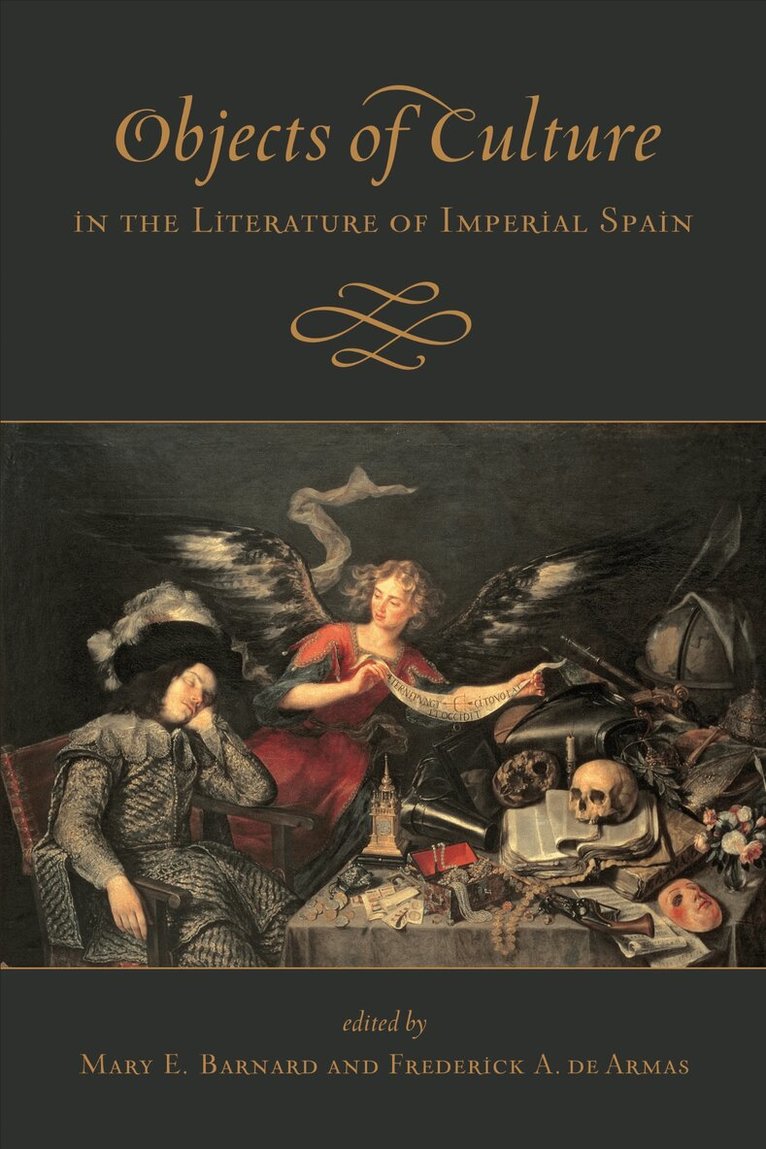
    Objects of Culture in the Literature of Imperial Spain

    AvMary E. Barnard,Frederick A. de Armas

    E-bok
    PDF, Engelska, 2013

    Del i serien Toronto Iberic

    653 kr

    Läs direkt i Bokus Reader – eller ladda ned till din enhet (PDF kräver ofta zoom och scroll på små skärmar).

    Fler format och utgåvor

    Inbunden

    921 kr

    E-bok

    653 kr

    Häftad

    496 kr

    Beskrivning

    Collecting and displaying finely crafted objects was a mark of character among the royals and aristocrats in Early Modern Spain: it ranked with extravagant hospitality as a sign of nobility and with virtue as a token of princely power. Objects of Culture in the Literature of Imperial Spain explores how the writers of the period shared the same impulse to collect, arrange, and display objects, though in imagined settings, as literary artefacts.These essays examine a variety of cultural objects described or alluded to in books from the Golden Age of Spanish literature, including clothing, paintings, tapestries, playing cards, monuments, materials of war, and even enchanted bronze heads. The contributors emphasize how literature preserved and transformed objects to endow them with new meaning for aesthetic, social, religious, and political purposes ­– whether to perpetuate certain habits of thought and belief, or to challenge accepted social and moral norms.

    Produktinformation

    • Utgivningsdatum:2013-03-28
    • Språk:Engelska
    • Antal sidor:352
    • Filformat:PDF
    • Kopieringsskydd:LCP
    • ISBN:9781442664272
    • Förlag:University of Toronto Press
    • Serie:Toronto Iberic
    • Vikt:1 g

    Utforska kategorier

    • Litteraturvetenskap inom Skönlitteratur

    Mer om författaren

    Mary E. Barnard is an associate professor of Spanish and Comparative Literature at Pennsylvania State University.Frederick A. de Armas is Robert O. Anderson Distinguished Service Professor at the University of Chicago..

    Recensioner i media

    ‘A number of essays are eminently legible, providing for exemplary and informative readings for advanced undergraduate students; other essays will appeal to graduate students and specialists alike.’- Sanda Munjic (Hispanic Review vol 83:03:2015) ‘There are other books on the topic of material culture in the Spanish Golden Age, but this one adds to them the triptych representation of luxury, signified and disrupting objects…The essays are based on deep knowledge of previous criticism and provide an insightful perspective on the connections between the use of objects and the category of genre.’ - Juan Pablo Gil-Osle (Renaissance Quarterly vol 67:01:2014)