• Fri frakt över 249 kr
  • •
  • Snabba leveranser
  • •
  • Billiga böcker
Kundservice

Du är på sajten för privatpersoner.

Företag, bibliotek eller offentlig verksamhet?

Du handlar på classic.bokus.com, där alla dina funktioner finns intakta.
Till classic.bokus.com
Bokus logotyp. Gå till startsidan.
  • Erbjudanden
  • Nyheter
  • Student
  • Topplistor
  • Barn & ungdom
  • Bokus Play
  • E-böcker
  • Pocketböcker
  • Spel & pussel

10% rabatt på allt med kod: NYSTART10 →

Sidfot

Mina sidor

    Hjälp

    • Kundservice
    • Vanliga frågor och svar
    • Frakt och leverans
    • Retur vid ångerrätt
    • Reklamera vara
    • Betalning
    • Köpvillkor
    • Allmänna villkor
    • Information om webbplatsens tillgänglighet

    Om Bokus

    • Om oss
    • Pressrum
    • För studenter
    • För företag
    • För bibliotek och offentlig verksamhet
    • För leverantörer
    • Hållbarhet

    Populärt

    • Aktuella erbjudanden
    • Presentkort
    • Studentlitteratur
    • Nya böcker
    • Topplistor
    • Signerade böcker
    • Engelska böcker

    Inspiration

    • Boktips
    • BookTok
    • Populära bokserier
    • Barnbokskaraktärer
    • Populära författare
    Logotyp för Bokus
    Följ oss på Facebook (extern länk)Följ oss på Instagram (extern länk)Följ oss på YouTube (extern länk)Följ oss på TikTok (extern länk)
    bokus @ CookiesAnpassa cookiesIntegritetspolicyKöpvillkor
    Till Citymail hemsida (extern länk)Till Budbee hemsida (extern länk)Till Postnord hemsida (extern länk)Till Schenker hemsida (extern länk)Till Early Bird hemsida (extern länk)Till Walleys hemsida (extern länk)
    1. Filosofi och religion
    2. Filosofi
    3. Filosofiska discipliner

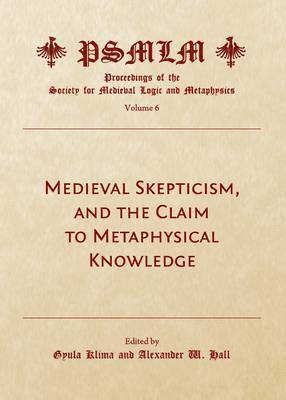
    Demonic Temptations of Medieval Nominalism (Volume 9

    Proceedings of the Society for Medieval Logic and Metaphysics)

    AvGyula Klima,Gyula Klima

    Inbunden, Engelska, 2011

    Del i serien Proceedings of the Society for Medieval Logic and Metaphysics

    947 kr

    Tillfälligt slut

    Beskrivning

    This volume presents three sets of papers discussing the medieval problem of singular cognition, nominalist epistemology, and the metaphysics of the great medieval nominalist philosopher, John Buridan. The first group of essays concerns issues surrounding the possibility of singular cognition in light of the cognitive psychology of Thomas Aquinas and Duns Scotus, as well as the latter's "argument from indifference" as developed by William Ockham to support his own, nominalist epistemology. However, Ockham's epistemology, worked out in detail by John Buridan, seems to have implications concerning the possibility of "Demon Skepticism" (later popularized by Descartes), which in turn poses a threat to the consistency of the nominalist cognitive psychology in general, as discussed in the second group of essays. Finally, the third group of essays explores some intriguing, but "weird" implications of the nominalist approach to epistemology in the metaphysics of John Buridan.

    Produktinformation

    • Utgivningsdatum:2011-12-23
    • Mått:148 x 212 x undefined mm
    • Format:Inbunden
    • Språk:Engelska
    • Serie:Proceedings of the Society for Medieval Logic and Metaphysics
    • Antal sidor:165
    • Förlag:Cambridge Scholars Publishing
    • ISBN:9781443833745

    Utforska kategorier

    • Filosofiska discipliner inom Filosofi och religion

    Mer om författaren

    Gyula Klima is Professor of Philosophy at Fordham University, New York, USA; Doctor of the Hungarian Academy of Sciences; Founding Member and Director of the Society for Medieval Logic and Metaphysics, and Editor of its Proceedings. Professor Klima's most recent book is John Buridan in OUP's Great Medieval Thinkers series.Alexander W. Hall is Associate Professor of Philosophy at Clayton State University, Georgia, USA; Assistant Director of the Society for Medieval Logic and Metaphysics, and Managing Editor of its Proceedings. Hall's recent scholarship includes Natural Theology in the Middle Ages in the Oxford Handbook of Natural Theology (OUP, 2012).

    Recensioner i media

    "The Proceedings of the Society for Medieval Logic and Metaphysics has established itself as a major venue for the publication of high-quality original articles on medieval philosophy. Particularly welcome is its frequent practice of publishing papers in dialogue with each other. It exemplifies magnificently the ways in which medieval and contemporary philosophy can be brought into fruitful conversation."– Richard Cross, University of Notre Dame, Indiana, USA"In the past ten years, the Society for Medieval Logic and Metaphysics has established a unique presence in both philosophy and medieval studies. By providing a venue for the discussion and publication of original philosophical and historiographical studies on the metaphysical insights of medieval authors from a logical perspective, it has opened a heretofore unexploited and much welcome niche of research."– Jorge J. E. Gracia, State University of New York at Buffalo, New York, USA"It is my pleasure to recommend to you the nine volumes, thus far, of the Proceedings of the Society for Medieval Logic and Metaphysics. . . . By focusing on both logic and metaphysical themes, the articles often shed new light on themes and figures that often escaped the notice of previous scholarship. . . . The volumes are a treasure trove in a field that is once again enjoying a renewed interest with academe."– Lloyd A. Newton, Benedictine College, Kansas, USA"The study of medieval philosophy is now flourishing as never before, and these volumes showcase the very best of that work. Among the contributors to these volumes are many of the leading figures in the field, and the topics under investigation are fundamental to philosophy."– Robert Pasnau, University of Colorado at Boulder, USA"The Society for Medieval Logic and Metaphysics is an extremely important network for the study of medieval philosophy. . . . Every paper represents a significant contribution based on absolutely original research that meets a very high standard. All the papers actually promote insightful analysis of medieval texts and thought-provoking discussion of philosophical topics."– Fabrizio Amerini, University of Parma, Italy