Gyula Klima - Böcker
Visar alla böcker från författaren Gyula Klima. Handla med fri frakt och snabb leverans.
13 produkter
13 produkter
765 kr
Skickas inom 5-8 vardagar
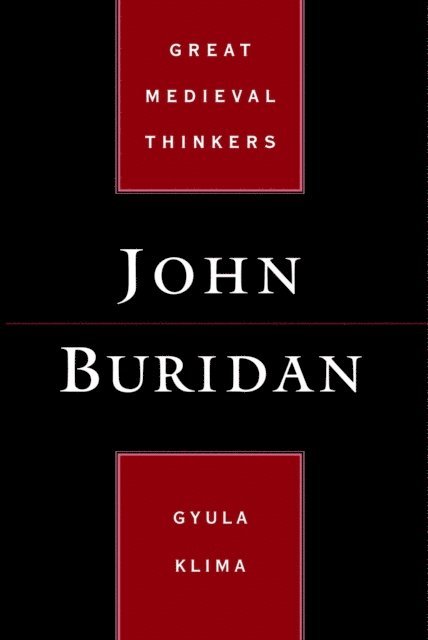
This is a brief, accessible introduction to the thought of the philosopher John Buridan (ca. 1295-1361). Little is known about Buridan's life, most of which was spent studying and then teaching at the University of Paris. Buridan's works are mostly by-products of his teaching. They consist mainly of commentaries on Aristotle, covering the whole extent of Aristotelian philosophy, ranging from logic to metaphysics, to natural science, to ethics and politics. Aside from these running commentaries on Aristotle's texts, Buridan wrote influential question-commentaries. These were a typical genre of the medieval scholastic output, in which the authors systematically and thoroughly discussed the most problematic issues raised by the text they were lecturing on. The question-format allowed Buridan to work out in detail his characteristically nominalist take on practically all aspects of Aristotelian philosophy, using the conceptual tools he developed in his works on logic. Buridan's influence in the late Middle Ages can hardly be overestimated. His ideas quickly spread not only through his own works, but to an even larger extent through the work of his students and younger colleagues, such as Nicholas Oresme, Marisilius of Inghen, and Albert of Saxony, who in turn became very influential themselves, and turned Buridan's ideas into standard textbook material in the curricula of many late medieval European universities. With the waning of scholasticism Buridan's fame quickly faded. Gyula Klima argues, however, that many of Buridan's academic concerns are strikingly similar to those of modern philosophy and his work sometimes quite directly addresses modern philosophical questions.
550 kr
Skickas inom 5-8 vardagar
This is a brief, accessible introduction to the thought of the philosopher John Buridan (ca. 1295-1361). Little is known about Buridan's life, most of which was spent studying and then teaching at the University of Paris. Buridan's works are mostly by-products of his teaching. They consist mainly of commentaries on Aristotle, covering the whole extent of Aristotelian philosophy, ranging from logic to metaphysics, to natural science, to ethics and politics. Aside from these running commentaries on Aristotle's texts, Buridan wrote influential question-commentaries. These were a typical genre of the medieval scholastic output, in which the authors systematically and thoroughly discussed the most problematic issues raised by the text they were lecturing on. The question-format allowed Buridan to work out in detail his characteristically nominalist take on practically all aspects of Aristotelian philosophy, using the conceptual tools he developed in his works on logic. Buridan's influence in the late Middle Ages can hardly be overestimated. His ideas quickly spread not only through his own works, but to an even larger extent through the work of his students and younger colleagues, such as Nicholas Oresme, Marisilius of Inghen, and Albert of Saxony, who in turn became very influential themselves, and turned Buridan's ideas into standard textbook material in the curricula of many late medieval European universities. With the waning of scholasticism Buridan's fame quickly faded. Gyula Klima argues, however, that many of Buridan's academic concerns are strikingly similar to those of modern philosophy and his work sometimes quite directly addresses modern philosophical questions.
1 570 kr
Skickas inom 10-15 vardagar
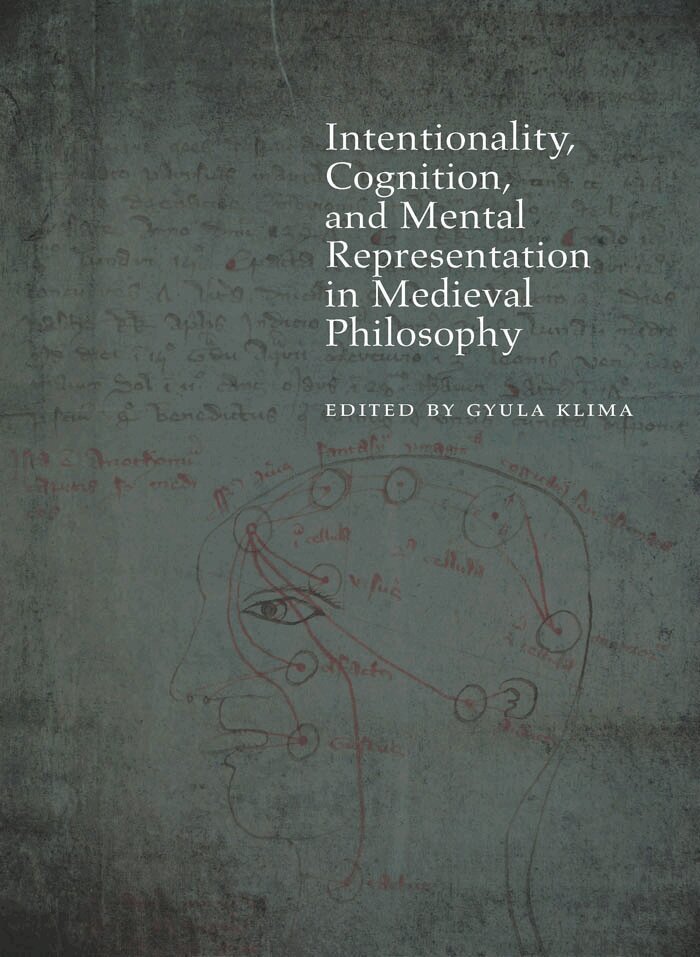
It is commonly supposed that certain elements of medieval philosophy are uncharacteristically preserved in modern philosophical thought through the idea that mental phenomena are distinguished from physical phenomena by their intentionality, their intrinsic directedness toward some object. The many exceptions to this presumption, however, threaten its viability.This volume explores the intricacies and varieties of the conceptual relationships medieval thinkers developed among intentionality, cognition, and mental representation. Ranging from Aquinas, Scotus, Ockham, and Buridan through less-familiar writers, the collection sheds new light on the various strands that run between medieval and modern thought and bring us to a number of fundamental questions in the philosophy of mind as it is conceived today.
460 kr
Skickas inom 10-15 vardagar
It is commonly supposed that certain elements of medieval philosophy are uncharacteristically preserved in modern philosophical thought through the idea that mental phenomena are distinguished from physical phenomena by their intentionality, their intrinsic directedness toward some object. The many exceptions to this presumption, however, threaten its viability.This volume explores the intricacies and varieties of the conceptual relationships medieval thinkers developed among intentionality, cognition, and mental representation. Ranging from Aquinas, Scotus, Ockham, and Buridan through less-familiar writers, the collection sheds new light on the various strands that run between medieval and modern thought and bring us to a number of fundamental questions in the philosophy of mind as it is conceived today.
781 kr
Skickas inom 10-15 vardagar
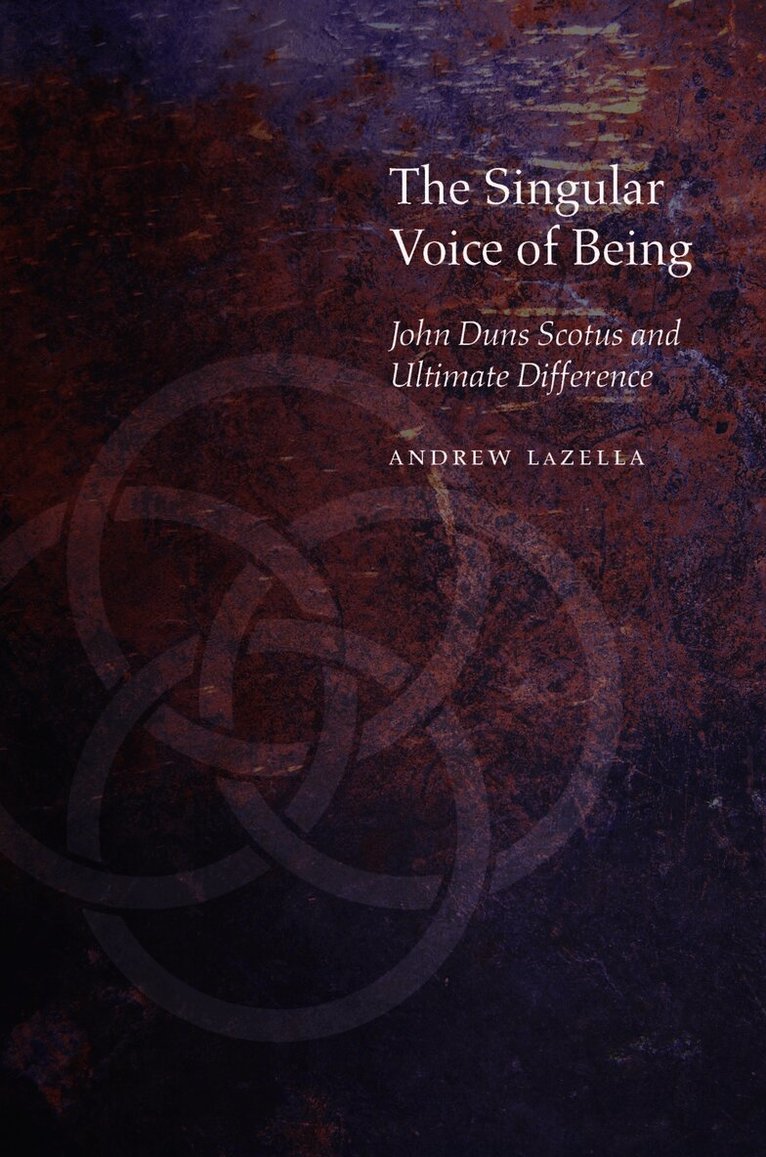
The Singular Voice of Being reconsiders John Duns Scotus's well-studied theory of the univocity of being in light of his less explored discussions of ultimate difference. Ultimate difference is a notion introduced by Aristotle and known by the Aristotelian tradition, but one that, this book argues, Scotus radically retrofits to buttress his doctrine of univocity. Scotus broadens ultimate difference to include not only specific differences, but also intrinsic modes of being (e.g., finite/infinite) and principles of individuation (i.e., haecceitates). Furthermore, he deepens it by divorcing it from anything with categorical classification, such as substantial form. Scotus uses his revamped notion of ultimate difference as a means of dividing being, despite the longstanding Parmenidean arguments against such division. The book highlights the unique role of difference in Scotus's thought, which conceives of difference not as a fall from the perfect unity of being but rather as a perfective determination of an otherwise indifferent concept. The division of being culminates in individuation as the final degree of perfection, which constitutes indivisible (i.e., singular) degrees of being. This systematic study of ultimate difference opens new dimensions for understanding Scotus's dense thought with respect to not only univocity, but also to individuation, cognition, and acts of the will.
1 190 kr
Skickas inom 7-10 vardagar
This collection of readings with extensive editorial commentary brings together key texts of the most influential philosophers of the medieval era to provide a comprehensive introduction for students of philosophy. Features the writings of Augustine, Thomas Aquinas, Boethius, John Duns Scotus and other leading medieval thinkers Features several new translations of key thinkers of the medieval era, including John Buridan and Averroes Readings are accompanied by expert commentary from the editors, who are leading scholars in the field
453 kr
Skickas inom 7-10 vardagar
This collection of readings with extensive editorial commentary brings together key texts of the most influential philosophers of the medieval era to provide a comprehensive introduction for students of philosophy. Features the writings of Augustine, Thomas Aquinas, Boethius, John Duns Scotus and other leading medieval thinkers Features several new translations of key thinkers of the medieval era, including John Buridan and Averroes Readings are accompanied by expert commentary from the editors, who are leading scholars in the field
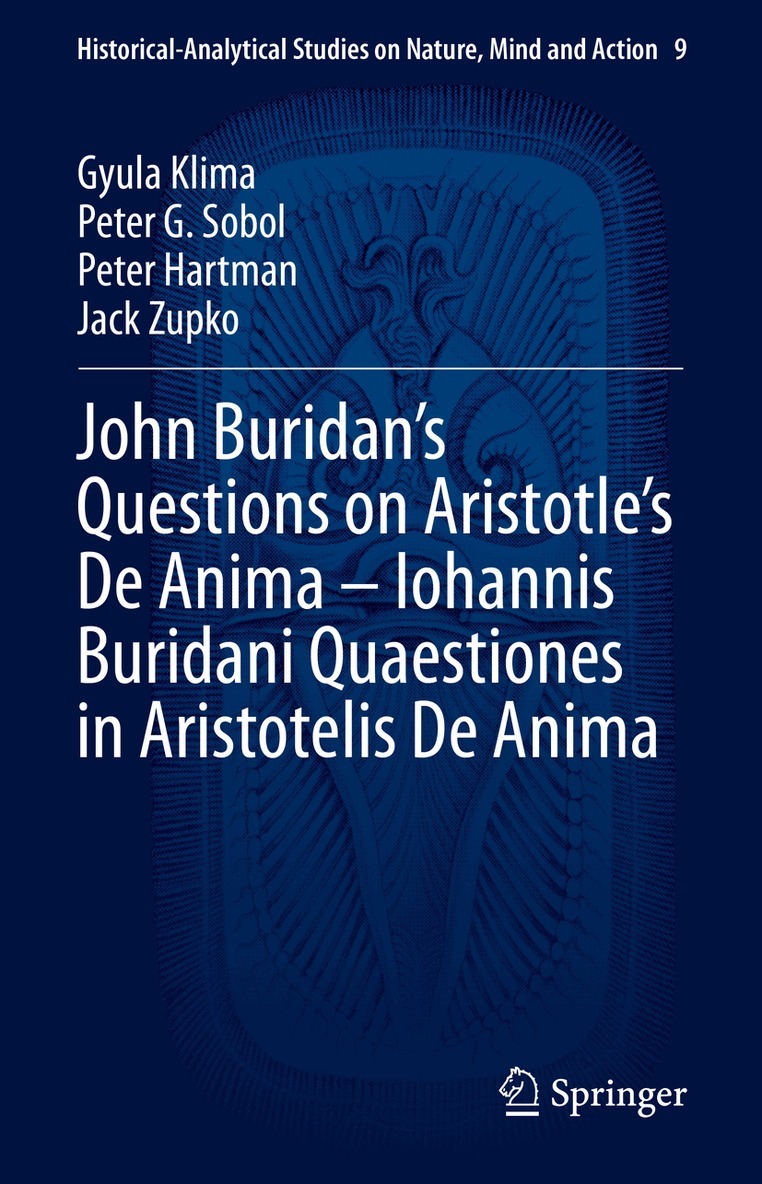
John Buridan’s Questions on Aristotle’s De Anima – Iohannis Buridani Quaestiones in Aristotelis De Anima
Inbunden, Engelska, 2023
1 381 kr
Skickas inom 10-15 vardagar
This book provides the Latin text and its annotated English translation of the question-commentary of John Buridan (ca. Buridan was the most influential Parisian nominalist philosopher of his time. This volume completes the project of a volume published earlier in the same series: “Questions on the Soul by John Buridan and Others”.
John Buridan's Questions on Aristotle's De Anima - Iohannis Buridani Quaestiones in Aristotelis De Anima
Engelska, 2023
634 kr
Skickas inom 5-8 vardagar
John Buridan’s Questions on Aristotle’s De Anima – Iohannis Buridani Quaestiones in Aristotelis De Anima
Häftad, Engelska, 2024
1 381 kr
Skickas inom 10-15 vardagar
This book provides the Latin text and its annotated English translation of the question-commentary of John Buridan (ca. Buridan was the most influential Parisian nominalist philosopher of his time. This volume completes the project of a volume published earlier in the same series: “Questions on the Soul by John Buridan and Others”.
Del 10 - Historical-Analytical Studies on Nature, Mind and Action
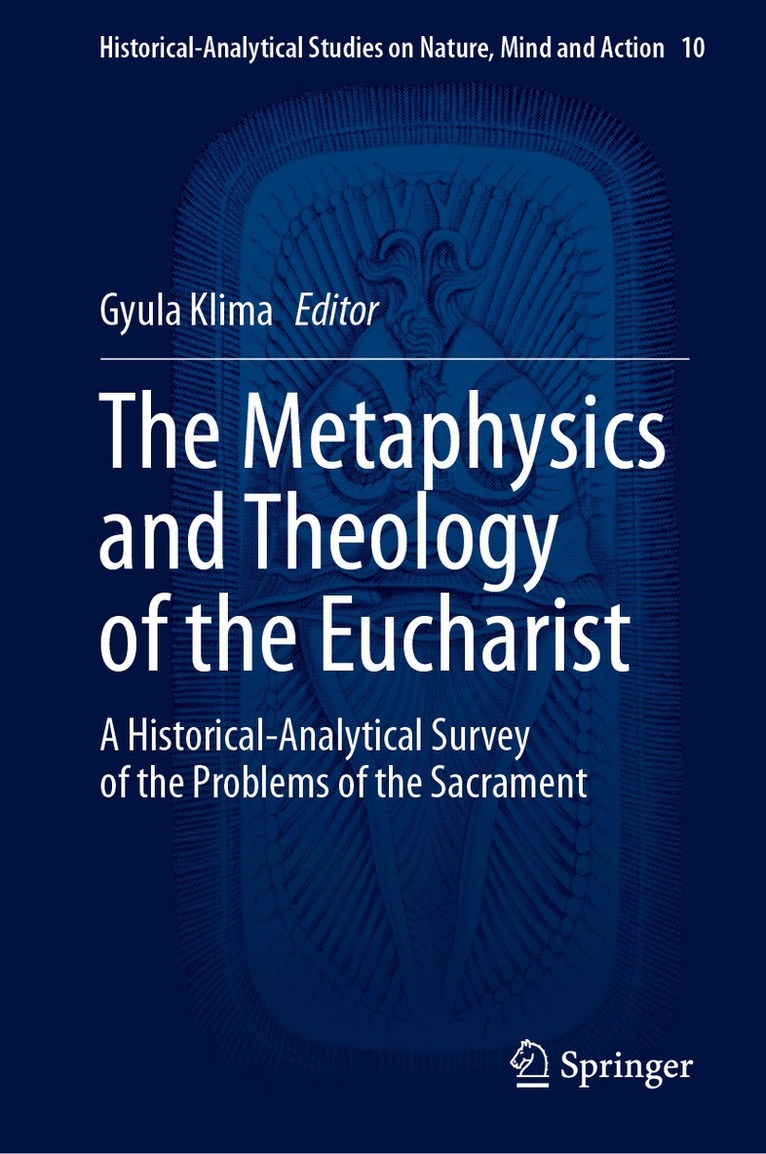
Metaphysics and Theology of the Eucharist
A Historical-Analytical Survey of the Problems of the Sacrament
Inbunden, Engelska, 2024
1 578 kr
Skickas inom 10-15 vardagar
This volume is about the most mind-boggling sacrament of the Christian faith, also referred to as the Sacrament of the Altar, the Eucharist: in its Roman Catholic interpretation, the conversion of the substance of the bread and wine into the body and blood of Christ for Holy Communion.
Del 3 - Historical-Analytical Studies on Nature, Mind and Action
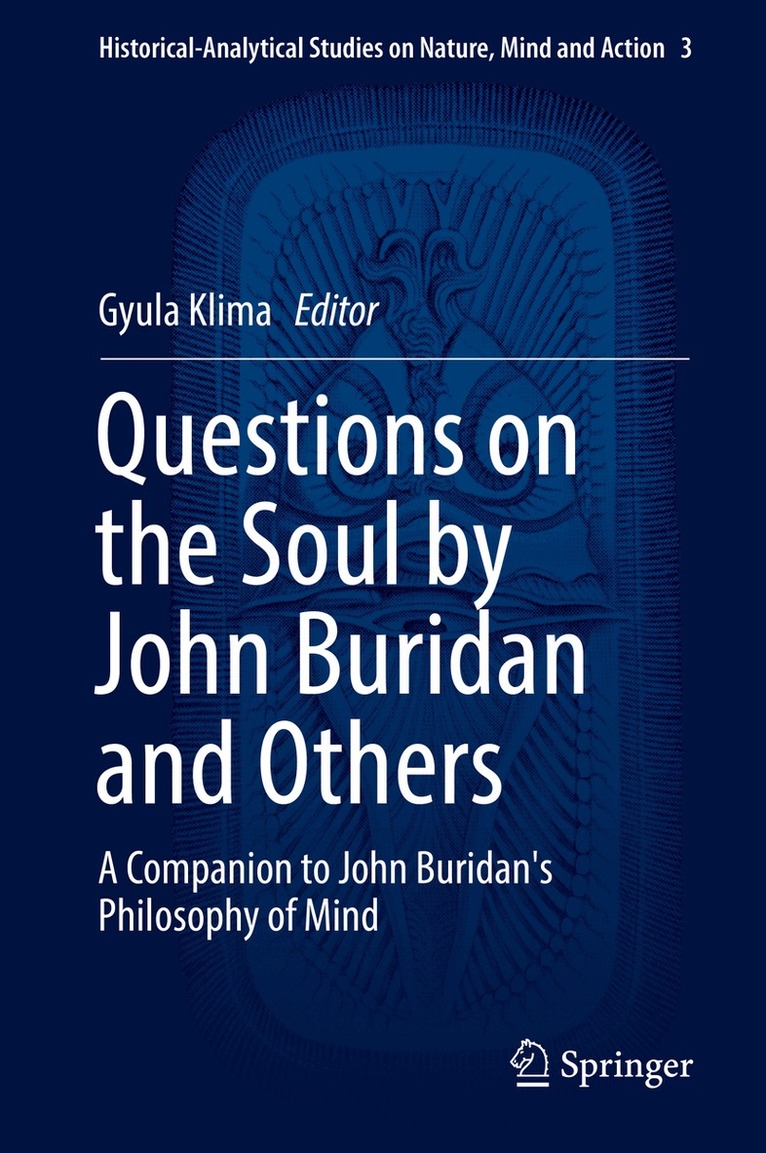
Questions on the Soul by John Buridan and Others
A Companion to John Buridan's Philosophy of Mind
Inbunden, Engelska, 2017
1 064 kr
Skickas inom 10-15 vardagar
This volume features essays that explore the insights of the 14th-century Parisian nominalist philosopher, John Buridan. It serves as a companion to the Latin text edition and annotated English translation of his question-commentary on Aristotle’s On the Soul. The contributors survey Buridan’s work both in its own historical-theoretical context and in relation to contemporary issues.The essays come in three main sections, which correspond to the three books of Buridan’s Questions. Coverage first deals with the classification of the science of the soul within the system of Aristotelian sciences, and surveys the main issues within it.The next section examines the metaphysics of the soul. It considers Buridan’s peculiar version of Aristotelian hylomorphism in dealing with the problem of what kind of entity the soul (in particular, the human soul) is, and what powers and actions it has, on the basis of which we can approach the question of its essence.The volume concludes with a look at Buridan’s doctrine of the nature and functions of the human intellect. Coverage in this section includes the problem of self-knowledge in Buridan’s theory, Buridan’s answer to the traditional medieval problem concerning the primary object of the intellect, and his unique treatment of logical problems in psychological contexts.
Del 3 - Historical-Analytical Studies on Nature, Mind and Action
Questions on the Soul by John Buridan and Others
A Companion to John Buridan's Philosophy of Mind
Häftad, Engelska, 2018
1 064 kr
Skickas inom 10-15 vardagar
This volume features essays that explore the insights of the 14th-century Parisian nominalist philosopher, John Buridan. It serves as a companion to the Latin text edition and annotated English translation of his question-commentary on Aristotle’s On the Soul. The contributors survey Buridan’s work both in its own historical-theoretical context and in relation to contemporary issues.The essays come in three main sections, which correspond to the three books of Buridan’s Questions. Coverage first deals with the classification of the science of the soul within the system of Aristotelian sciences, and surveys the main issues within it.The next section examines the metaphysics of the soul. It considers Buridan’s peculiar version of Aristotelian hylomorphism in dealing with the problem of what kind of entity the soul (in particular, the human soul) is, and what powers and actions it has, on the basis of which we can approach the question of its essence.The volume concludes with a look at Buridan’s doctrine of the nature and functions of the human intellect. Coverage in this section includes the problem of self-knowledge in Buridan’s theory, Buridan’s answer to the traditional medieval problem concerning the primary object of the intellect, and his unique treatment of logical problems in psychological contexts.